

Toxic Fruits for Dogs: Symptoms, Danger Levels, and Emergency Protocol
What to Do Right Now: Step-by-Step Emergency Guide
When a pet ingests potentially toxic produce, minutes matter. Follow this systematic approach to assess risk and secure emergency vet treatment.
1.Identify the Fruit & Parts Consumed:
Crucial for calculating toxic dose.
Determine exact species and specific components eaten (e.g., cherry flesh vs. pits/stems, whole avocado vs. pit, green unripened fruit vs. ripe flesh). Check if products contained artificial additives like xylitol.
2.Estimate the Ingested Amount & Time Window:
Helps the vet choose decontam strategy.
Note the approximate weight or count of items consumed and exact elapsed time. Decontamination procedures like activated charcoal or emesis (induced vomiting) are most effective within 1 to 2 hours of ingestion.
3.Gather Dog’s Baseline Info:
Weight dictates toxicity threshold.
Obtain an accurate, recent body weight (in lbs or kg) and record pre-existing health conditions, especially renal (kidney) or hepatic (liver) issues.
4.Contact Veterinary Emergency Services:
Do not wait for clinical signs.
Call your local emergency clinic or a dedicated poison hotline. Provide the fruit type, estimated amount consumed, time frame, and dog’s weight.
Toxic Fruits Breakdown: Why They Are Dangerous & Toxic Doses
Not all fruit, hazards present the same mechanism of action. Certain fruits cause rapid metabolic failure, while others pose structural, gastrointestinal, or neurological risks.
1. Grapes, Raisins, and Currants
- Toxic Mechanism: Tartaric acid and potassium bitartrate present in vitis species cause rapid necrosis of renal tubular epithelium, leading to acute kidney failure.
- Toxic Dose: No known “safe” dose exists. Idiosyncratic reactions mean a single raisin can prove fatal in a large dog, while another dog might tolerate several. However, documented toxic thresholds start as low as 0.1 to 0.3 oz per kg of body weight (approx. 1–2 grapes per 10 lbs).
- Key Symptoms: Vomiting within 2–6 hours, lethargy, severe abdominal pain, hypercalcemia, and progressive decrease in urine production (oliguria) progressing to complete lack of urination (anuria).
2. Cherries, Peaches, Plums, and Apricots (Stone Fruits)
- Toxic Mechanism: While the flesh is generally non-toxic, the pits, stems, and leaves contain cyanogenic glycosides (amygdalin). When crushed or chewed, this compound releases hydrogen cyanide, which inhibits cellular respiration by blocking cytochrome c oxidase.
- Toxic Dose: Chewing 1–2 pits can release lethal amounts of cyanide in small dogs. Intact, swallowed pits present a primary risk of physical gastrointestinal obstruction rather than acute poisoning.
- Key Symptoms: Bright red mucous membranes (gums), dilated pupils, rapid breathing (tachypnea), severe laboring for breath, muscle tremors, seizures, and collapse.
3. Avocados
- Toxic Mechanism: Contains persin, a fungicidal toxin found predominantly in the pit, skin, and leaves, with minor concentrations in the flesh. Persin disrupts cardiac cell function and causes fluid accumulation in tissue.
- Toxic Dose: The flesh holds low persin levels and rarely causes fatal toxicity in dogs (unlike birds or horses), but high-fat content can induce acute pancreatitis. The large, round pit poses a high mechanical risk for esophageal or intestinal blockage.
- Key Symptoms: Mild to moderate gastrointestinal distress (vomiting, diarrhea), abdominal discomfort, or signs of blockage (retching, inability to keep fluids down).
4. Unripe Tomatoes and Green Potatoes
- Toxic Mechanism: Belonging to the Solanaceae (nightshade) family, green parts contain solanine and tomatine, glycoalkaloids that inhibit acetylcholinesterase, disrupting neural signaling and damaging intestinal walls.
- Toxic Dose: Fully ripe red tomatoes contain negligible tomatine. Toxicity typically requires consuming significant quantities of vine stems, leaves, or unripened green tomatoes.
- Key Symptoms: Drooling (hypersalivation), severe gastrointestinal upset, muscle weakness, confusion, bradycardia (slow heart rate), and drowsiness.
5. Citrus Fruits (Grapefruits, Lemons, Limes)
- Toxic Mechanism: High concentrations of citric acid and volatile essential oils (limonene, linalool) cause central nervous system depression and severe gastric irritation.
- Toxic Dose: Small tastes of flesh cause upset stomach; heavy ingestion of peels, seeds, or concentrated oil extracts causes system toxicity.
- Key Symptoms: Repeated vomiting, diarrhea, tremors, unsteady gait (ataxia), and severe lethargy.
6. Wild Berries and Exotic Fruits
- Wild Berries (Holly, Yew, Mistletoe): Contain varied toxic saponins and alkaloids that disrupt cardiac and GI systems.
- Star Fruit (Carambola): Contains soluble calcium oxalates which bind serum calcium, potentially causing acute oxalate nephropathy and hypocalcemia.
Toxic Dose Reference by Dog Body Weight
The severity of fruit poisoning depends heavily on the ratio of toxic compound to body weight.
| Fruit / Item | Toxin / Danger | Small Dog (10 lbs / 4.5 kg) | Medium Dog (30 lbs / 13.5 kg) | Large Dog (70 lbs / 32 kg) | Primary Clinical Risk |
| Grapes / Raisins | Tartaric Acid | 1–2 grapes or 1 raisin | 3–5 grapes or 3–5 raisins | >5 grapes or >8 raisins | Acute Renal Failure |
| Cherry Pits (Chewed) | Cyanogenic Glycosides | 1 crushed pit | 1–2 crushed pits | 3+ crushed pits | Cyanide Poisoning / Hypoxia |
| Avocado Pit / Skin | Persin / Obstruction | High blockage risk | Moderate blockage risk | Moderate blockage risk | Foreign Body Obstruction |
| Unripe Green Tomato | Tomatine / Solanine | 1 small green tomato | 2–3 green tomatoes | Multiple whole green tomatoes | Neurological & GI Toxicity |
| Xylitol (in fruit products) | Sugar Alcohol | >0.05 g/kg (Tiny drop) | >0.05 g/kg (~0.5g total) | >0.05 g/kg (~1.5g total) | Hypoglycemia & Liver Failure |
Symptom Timeline: What to Watch for Hour-by-Hour
Understanding the timeline of fruit poisoning helps determine whether an immediate trip to the emergency room is required or if home monitoring under vet guidance is appropriate.
Ingestion (Hour 0)
│
├── 0 to 2 Hours (Immediate Window)
│   ├── Nausea, excessive drooling, lip smacking
│   ├── Acute vomiting (may contain fruit pieces)
│   └── Restlessness or sudden lethargy
│   └── ⚠️ OPTIMAL WINDOW FOR VET DECONTAMINATION
│
├── 2 to 12 Hours (Early Systemic Phase)
│   ├── Severe diarrhea and abdominal pain
│   ├── Dilated pupils, red gums (Cyanide/Pits)
│   ├── Muscle tremors, loss of coordination (Ataxia)
│   └── Rapid heart rate or severe weakness
│
└── 24 to 72 Hours (Late Organ Failure Window)
    ├── Markedly decreased or absent urination (Renal Failure - Grapes)
    ├── Severe jaundice/yellowing eyes (Hepatic Failure - Xylitol)
    ├── Seizures, collapse, coma
    └── Permanent organ damage or mortality if untreated
Safe vs. Toxic Fruit Parts: Clearing Up Confusion
A frequent point of confusion is distinguishing between safe fruit flesh and hazardous seeds, pits, or rinds.
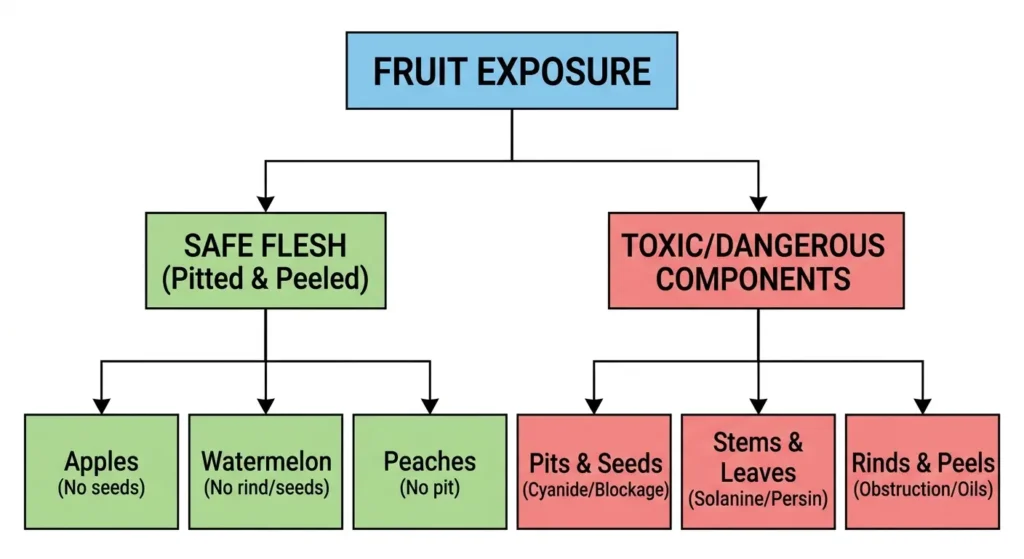
- Apples, Pears, and Plums: The flesh is rich in vitamins and safe. The seeds and pits contain cyanide-releasing compounds and should be completely removed before feeding.
- Watermelon and Cantaloupe: The inner flesh provides hydrating nutrients. Rinds and seeds must be removed as they cause intestinal impaction.
- Mangoes and Peaches: Nutrient-dense flesh is safe; large central pits present both choking and toxic chemical hazards.
Frequently Asked Questions
What fruits are toxic to dogs?
Grapes, raisins, currants, cherry pits/stems, unripe green tomatoes, citrus peels/seeds, and wild berries (such as holly or mistletoe berries) are toxic to dogs. In addition, fruits packaged with artificial sweeteners like xylitol are severely toxic.
My dog ate grapes, what do I do?
Treat grape ingestion as an immediate medical emergency. Call an emergency vet or pet poison helpline right away. Do not wait for symptoms to show, as kidney damage begins before visible signs occur.
How many grapes are toxic to a dog?
There is no established safe minimum. Toxicity is idiosyncratic; a single grape can trigger kidney failure in a susceptible dog regardless of size, while others may show higher tolerance. Assume any quantity is hazardous.
Are cherry pits poisonous to dogs?
Yes. Cherry pits contain cyanogenic glycosides, which release cyanide when crushed or chewed. Whole swallowed pits can also cause gastrointestinal obstructions in smaller breeds.
Can dogs eat avocado?
The pit, skin, and leaves contain persin and must be avoided. Small quantities of pure avocado flesh are generally non-toxic to dogs, though high fat content can cause stomach upset or pancreatitis.
What are symptoms of fruit poisoning in dogs?
Common early signs include vomiting, diarrhea, drooling, lethargy, and loss of appetite. Severe toxicity leads to muscle tremors, breathlessness, bright red gums, jaundice, hyper-salivation, and reduced urination.
Is fruit poisoning in dogs reversible?
Yes, if medical intervention occurs quickly. Early decontamination (within 1 to 2 hours) and aggressive IV fluid therapy can prevent permanent organ damage. Once complete acute kidney or liver failure sets in, prognosis becomes significantly guarded.
How long after eating toxic fruit do symptoms show?
Gastrointestinal signs (vomiting, nausea) often start within 1 to 2 hours. Neurological or cyanide symptoms can appear within 30 to 60 minutes. Severe kidney failure from grapes typically manifests between 24 and 48 hours post-ingestion.
(For additional details on safe feeding guidelines, nutrient profiles, and safe fruit alternatives, see our comprehensive pillar guide: Can Dogs Eat Fruits? The Complete Safe & Unsafe Guide)