
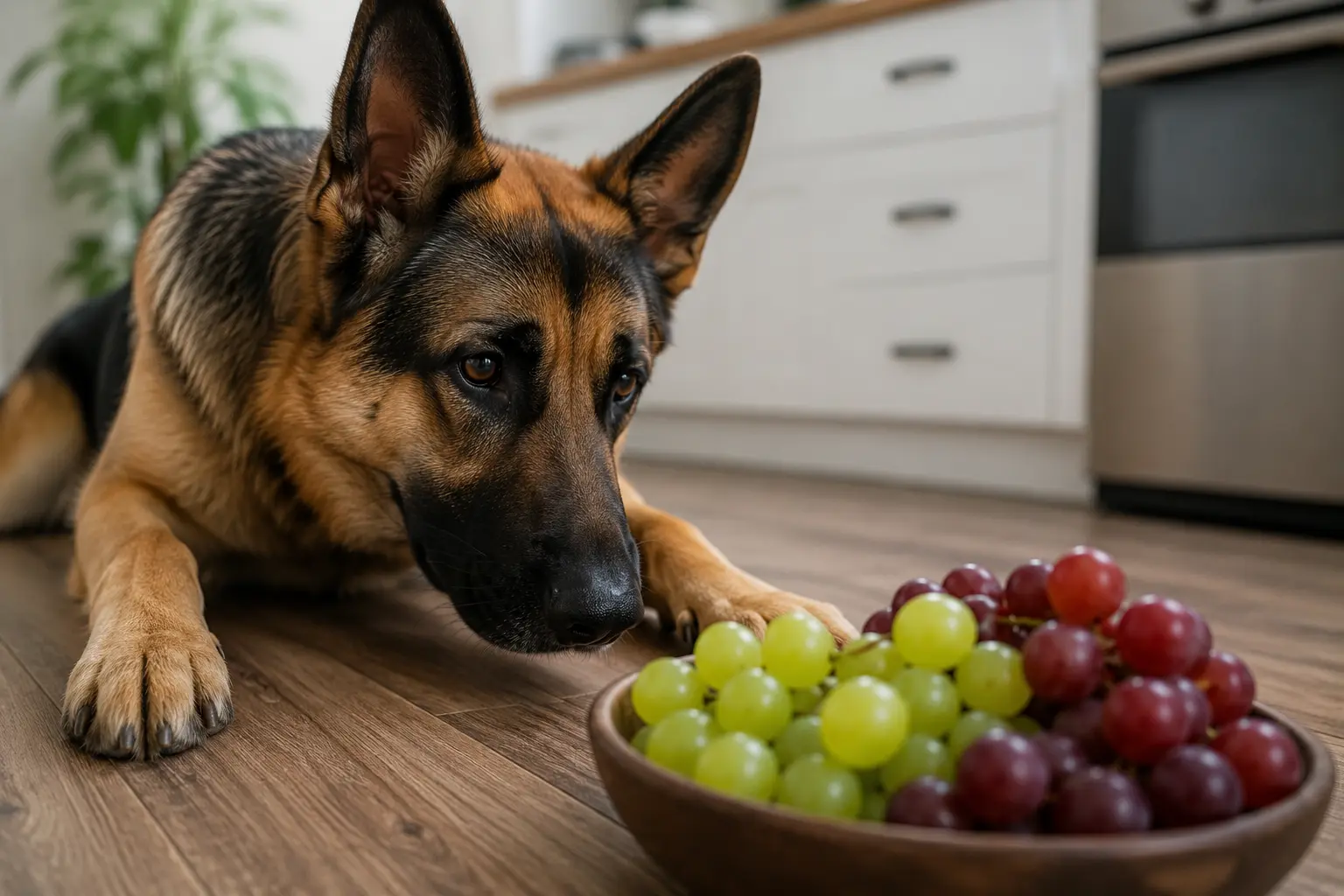
Can Dogs Eat Grapes? Why This Fruit Is Toxic — Vet Warning & Risks
No, dogs should never eat grapes or raisins under any circumstances. Unlike many fruits that are safe in moderation, grapes and raisins are classified as acutely toxic to dogs and can trigger sudden, irreversible kidney failure even in small amounts. This makes grapes one of the most dangerous foods a dog can ingest, alongside chocolate, xylitol, and onions.
If your dog has eaten grapes, raisins, or any grape-derived product, this is considered a veterinary emergency. Understanding why grapes are dangerous, what symptoms of grape toxicity in dogs look like, and how to respond quickly can be the difference between full recovery and permanent organ damage. For fruits that are genuinely dog-safe, see our master guide to safe fruits for dogs.
💡 Key Takeaways
- Zero Safe Amount: There is no known safe portion of grapes or raisins for dogs — even one grape can cause toxicity in a small dog.
- Kidney Failure Risk: Grape toxicity can cause acute kidney injury within 24–72 hours of ingestion.
- Raisins Are More Concentrated: Because raisins are dehydrated grapes, the toxic compounds are more concentrated by weight, making them equally or more dangerous.
- Act Immediately: Contact your veterinarian or the ASPCA Animal Poison Control Center (888-426-4435) right away if ingestion is suspected — do not wait for symptoms.
- Individual Sensitivity Varies: Some dogs have tolerated grapes with no visible effect, while others suffer severe toxicity from a single grape; there is no way to predict which dogs are at risk.
Why Are Grapes Toxic to Dogs?
Despite decades of veterinary case studies, the exact toxic compound in grapes has not been definitively isolated. Researchers and toxicologists at institutions such as the ASPCA Animal Poison Control Center have proposed several theories.
Leading Theories on the Toxic Compound
- Tartaric Acid: Recent veterinary toxicology research points to tartaric acid, a naturally occurring compound in grapes, as a likely primary culprit behind the kidney damage seen in affected dogs.
- Mycotoxins: Some researchers have theorized that a fungal contaminant on the grape skin may contribute to toxicity in certain cases.
- Individual Metabolic Sensitivity: Genetic and metabolic differences between dogs may explain why toxicity severity varies so widely from one dog to another.
Entities Affected: Kidneys and the Renal System
The primary target of grape toxicity is the canine renal system. Toxic compounds damage the kidney’s filtering structures (the renal tubules), which can rapidly progress to acute kidney injury (AKI) and, without prompt treatment, complete kidney failure.
[Image Placement: Diagram — Canine kidney anatomy highlighting the renal tubules affected by grape toxicity]
Symptoms of Grape or Raisin Toxicity in Dogs
Symptoms typically appear within 6–24 hours of ingestion and can escalate quickly. Recognizing early warning signs is critical for a positive outcome.
Early-Stage Symptoms (First 24 Hours)
- Vomiting, often within a few hours of ingestion
- Diarrhea
- Lethargy and unusual quietness
- Loss of appetite (anorexia)
- Abdominal pain or a hunched posture
Advanced-Stage Symptoms (24–72 Hours) — Signs of Kidney Failure
- Decreased or complete stoppage of urination (anuria)
- Increased thirst followed by reduced water intake
- Bad breath with a chemical or ammonia-like odor
- Tremors, seizures, or collapse in severe cases
What to Do If Your Dog Ate Grapes or Raisins
Time is the single most important factor in a dog’s outcome after grape ingestion. Follow these steps immediately.
Immediate Emergency Steps
- Step 1 – Do Not Wait for Symptoms: Call your veterinarian or an emergency animal hospital immediately, even if your dog seems fine.
- Step 2 – Note the Details: Try to estimate how many grapes or raisins were eaten and when, as this helps your vet determine treatment.
- Step 3 – Do Not Induce Vomiting at Home: Only induce vomiting under direct veterinary guidance — doing so incorrectly can cause additional harm.
- Step 4 – Expect Supportive Treatment: Vets typically induce vomiting, administer activated charcoal, and provide IV fluids for 48 hours to protect kidney function.
[Image Placement: Photo — A veterinarian administering IV fluid therapy to a dog]
Safe Fruit Alternatives to Grapes
If you’re looking for a dog-safe way to offer a sweet, juicy snack, these fruits are considered safe in moderation and make excellent grape substitutes:
- Blueberries — low-calorie and antioxidant-rich
- Seedless watermelon — hydrating and refreshing
- Sliced strawberries — rich in vitamin C
- Banana slices — potassium-rich in small portions
Frequently Asked Questions
How many grapes are toxic to a dog?
There is no established safe threshold. Toxicity has been documented after ingestion of as little as one grape per kilogram of body weight in sensitive dogs, so any amount should be treated as an emergency.
Are seedless grapes safer than seeded grapes?
No. Seedless grapes carry the same toxicity risk as seeded varieties because the toxic compound is present in the flesh and skin, not the seeds.
Is grape juice or wine also dangerous for dogs?
Yes. Grape juice, jelly, and wine all contain the same toxic compounds found in whole grapes and should never be given to dogs.
Can dogs build up a tolerance to grapes over time?
No. Toxicity does not depend on repeated exposure, and a dog that has eaten grapes safely before can still experience severe toxicity on a future occasion.
What if my dog only licked a grape?
Minimal contact such as licking is unlikely to cause toxicity, but it is still best to monitor your dog and contact your vet if you have concerns.
Final Verdict
Grapes and raisins should be treated as strictly off-limits for dogs of every breed and size. Because there is no proven safe dose and the consequence — kidney failure — can be fatal, prevention is the only reliable strategy. Store grapes, raisins, and foods containing them (such as trail mix or fruitcake) well out of reach, and keep the ASPCA Animal Poison Control Center number saved in your phone.
This article is reviewed for veterinary accuracy using current guidance from the ASPCA Animal Poison Control Center and AKC canine nutrition resources. It is intended for informational purposes only and does not replace personalized advice from your veterinarian.