

Can Dogs Eat Cantaloupe? Everything Owners Need to Know
Quick Answer
Yes, dogs can eat cantaloupe. It’s safe in moderation once you remove the seeds and rind and cut the flesh into small pieces. Cantaloupe is low in calories and high in water, fiber, and vitamins A, B6, and C — but its natural sugar means it should stay an occasional treat, especially for diabetic or overweight dogs.
Key Takeaways
- Cantaloupe flesh is safe for most healthy dogs in small amounts.
- Always remove the rind and seeds before serving.
- Treats (including cantaloupe) should be no more than 10% of daily calories.
- Diabetic, overweight, or insulin-resistant dogs should avoid it or eat very little.
- Rind is the biggest danger — it can cause choking or intestinal blockage.
- Introduce it slowly to check for stomach upset or allergic reaction.
Table of Contents
- Is Cantaloupe Safe for Dogs?
- Nutritional Benefits
- Health Risks
- Seeds and Rind: What’s Actually Dangerous
- How Much Cantaloupe Can a Dog Eat (Serving Chart)
- Step-by-Step: How to Prepare Cantaloupe for Your Dog
- Cantaloupe vs. Watermelon vs. Honeydew for Dogs
- Which Dogs Should Avoid Cantaloupe
- Common Mistakes Owners Make
- Myth vs. Fact
- Real Owner Scenarios
- Emergency: My Dog Ate Cantaloupe Rind or Seeds
- Expert Tips
- FAQs
- Final Verdict
1. Is Cantaloupe Safe for Dogs?
Cantaloupe is non-toxic to dogs and generally considered a safe fruit treat when it’s prepared correctly. Veterinary nutrition sources agree the flesh is fine for most healthy adult dogs — the concerns are almost entirely about how it’s served (seeds, rind, portion size) rather than the fruit itself.
2. Nutritional Benefits of Cantaloupe for Dogs
| Nutrient | Benefit for Dogs |
|---|---|
| Water (~90%) | Hydration, especially in hot weather |
| Fiber | Supports digestion, helps prevent constipation |
| Vitamin A | Vision, skin, and immune support |
| Vitamin C | Antioxidant, immune boost |
| Vitamin B6 | Brain and nervous system function |
| Potassium | Muscle and heart function |
| Low calorie count | Good low-fat alternative to processed treats |
3. Health Risks of Cantaloupe
- High natural sugar — can spike blood glucose, risky for diabetic dogs and a contributor to weight gain if overfed.
- Digestive upset — too much at once can cause loose stools, gas, or vomiting, particularly in dogs with sensitive stomachs.
- Choking/blockage — from swallowing rind or large chunks.
- Rare allergic reactions — itching, swelling, or GI symptoms after first exposure.
4. Seeds and Rind: What’s Actually Dangerous
Seeds: Not toxic, but a choking hazard and can contribute to a mild digestive upset if swallowed in quantity. Scoop them out before serving to be safe.
Rind: This is the real risk. The tough, fibrous skin is hard to digest and can cause gastrointestinal obstruction — a genuine emergency in some cases. Always cut it away completely; never let a dog chew on a cantaloupe half with the rind on.
5. How Much Cantaloupe Can a Dog Eat? (Serving Chart)
| Dog Size (Weight) | Safe Serving |
|---|---|
| Extra-small (2–20 lbs) | 1–2 small cubes |
| Small (21–30 lbs) | Up to 3 cubes |
| Medium (31–50 lbs) | Up to 5 cubes |
| Large (51–90 lbs) | Up to 6 cubes |
| Extra-large (91+ lbs) | A small handful |
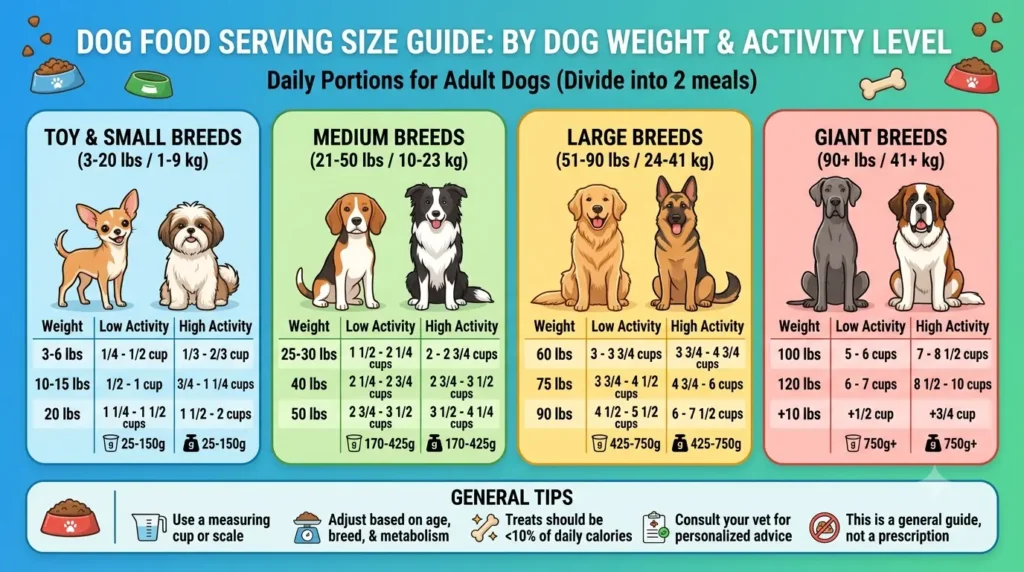
Treat this as a starting guideline, not a strict rule — total treats (cantaloupe included) should stay under 10% of your dog’s daily calorie intake.
6. Step-by-Step: How to Prepare Cantaloupe for Your Dog
- Wash the whole cantaloupe under running water to remove surface bacteria and pesticide residue.
- Cut it in half and scoop out all the seeds.
- Slice away the rind completely — none should remain on the flesh.
- Cut the flesh into bite-sized cubes appropriate to your dog’s size.
- Serve fresh, or freeze the cubes for a cooling summer treat.
- Store leftovers in an airtight container in the fridge for up to 5 days.
7. Cantaloupe vs. Watermelon vs. Honeydew for Dogs
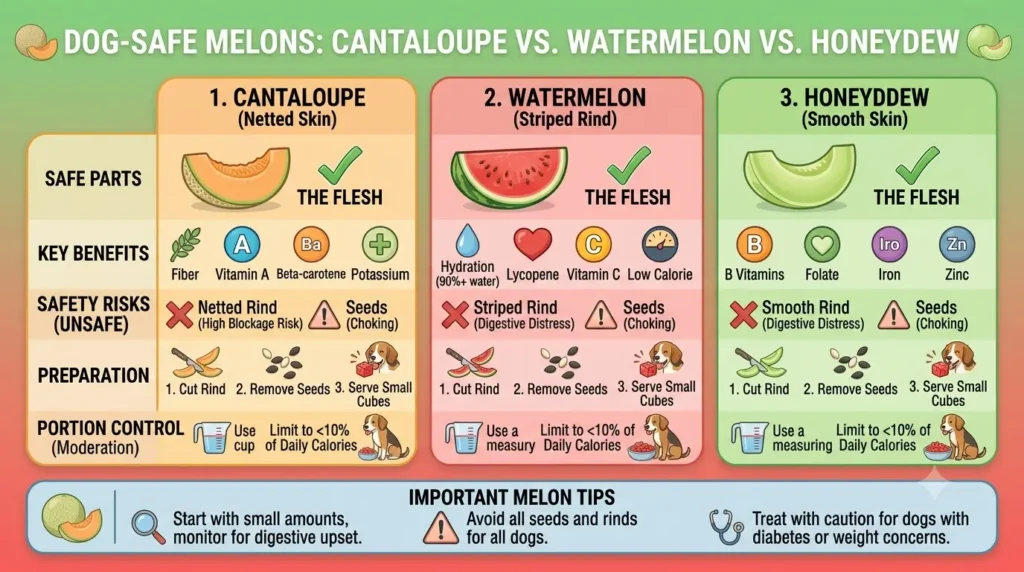
| Fruit | Safe? | Notes |
|---|---|---|
| Cantaloupe | Yes, in moderation | Remove seeds and rind; watch sugar for diabetic dogs |
| Watermelon | Yes, in moderation | Remove seeds and rind; even higher water content |
| Honeydew | Yes, in moderation | Same prep rules; slightly less sugar than cantaloupe |
All three melons follow the same core safety rules: flesh only, no rind, moderate portions.
Other Fruits Dogs Can Eat
Cantaloupe isn’t the only fruit that makes a safe, healthy dog treat. If you’re rotating treats or just curious what else is safe,
check out our guides on
can dogs eat blueberries,
can dogs eat mango, can dogs eat oranges — each covers the same kind of safe-serving breakdown as this article.
8. Which Dogs Should Avoid Cantaloupe
- Diabetic dogs (sugar content can spike blood glucose)
- Overweight or obese dogs on a calorie-restricted diet
- Dogs with a known fruit allergy or history of GI sensitivity
- Puppies being introduced to new foods for the first time — start with a tiny amount and watch closely
9. Common Mistakes Owners Make
- Leaving seeds in “because they’re small”
- Letting a dog chew on the rind directly from the melon half
- Feeding cantaloupe daily instead of as an occasional treat
- Not accounting for cantaloupe when tracking total daily treat calories
- Introducing a large portion the first time instead of a small test amount
10. Myth vs. Fact
| Myth | Fact |
|---|---|
| “Cantaloupe is toxic to dogs” | False — it’s non-toxic; risk comes from rind/seeds and overfeeding |
| “Seeds will poison my dog” | False — seeds aren’t toxic, just a choking risk |
| “Dogs can eat cantaloupe rind if it’s soft” | False — rind is always hard to digest, regardless of ripeness |
| “Any amount is fine since it’s ‘just fruit'” | False — sugar content matters, especially for diabetic/overweight dogs |
11. Real Owner Scenarios
Scenario A: A Labrador owner freezes cantaloupe cubes every summer as a low-calorie alternative to store-bought treats — works well since Labs are prone to weight gain.
Scenario B: A Chihuahua owner accidentally lets their dog nibble a rind piece left on the counter. No obstruction occurred, but a vet call confirmed monitoring for 24–48 hours was the right move.
Scenario C: An owner of a diabetic senior dog checked with their vet first and was advised to skip cantaloupe entirely in favor of lower-sugar options like cucumber.
12. Emergency: My Dog Ate Cantaloupe Rind or Seeds
- Seeds only, small amount: Usually not an emergency — monitor for vomiting or discomfort over the next 24 hours.
- Rind swallowed, especially a large piece: Contact your vet promptly. Watch for vomiting, straining, lack of appetite, lethargy, or a swollen abdomen — signs of possible intestinal blockage.
- Symptoms worsen or persist: Seek veterinary care immediately; blockages can become serious if untreated.
13. Expert Tips
- Freeze cubes in summer for a hydrating, low-mess treat.
- Puree cantaloupe and mix into food for picky eaters or dogs with dental issues.
- Introduce any new fruit with a single small piece and wait 24 hours before offering more.
- Keep a food journal if your dog has a sensitive stomach, so you can track reactions to new treats.
14. FAQs
Can dogs eat cantaloupe seeds? They’re not toxic, but they’re a choking hazard — remove them before serving.
Can dogs eat cantaloupe rind? No. The rind is hard to digest and can cause choking or intestinal blockage.
How much cantaloupe can a dog eat? A few small cubes depending on size — see the serving chart above. Keep total treats under 10% of daily calories.
Can diabetic dogs eat cantaloupe? Generally not recommended due to sugar content. Talk to your vet first.
Can puppies eat cantaloupe? Yes, in very small amounts once they’re eating solid food, introduced slowly.
Can dogs eat frozen cantaloupe? Yes — frozen cubes (seeds and rind removed) make a refreshing treat.
What happens if my dog eats too much cantaloupe? Possible digestive upset: gas, loose stools, or vomiting.
Is cantaloupe better than watermelon for dogs? Both are similarly safe; watermelon has slightly more water, cantaloupe has slightly more sugar.
Can dogs be allergic to cantaloupe? It’s rare but possible — watch for itching, swelling, or GI upset on first exposure.
My dog ate cantaloupe rind — should I worry? Monitor closely and call your vet, especially if a large piece was swallowed.
Can dogs eat cantaloupe every day? It’s better as an occasional treat, not a daily food.
Is cantaloupe good for a dog’s digestion? Yes — the fiber content supports healthy digestion in moderate amounts.
Cantaloupe pairs well with other melons and berries in a dog-safe fruit rotation. Learn more in our guides to watermelon and strawberries.
15. Final Verdict
Cantaloupe is a safe, hydrating, nutrient-rich treat for most healthy dogs when the seeds and rind are removed and portions stay small. Diabetic and overweight dogs should skip it or check with a vet first. Used correctly, it’s one of the better fruit treats you can offer — especially frozen on a hot day.