

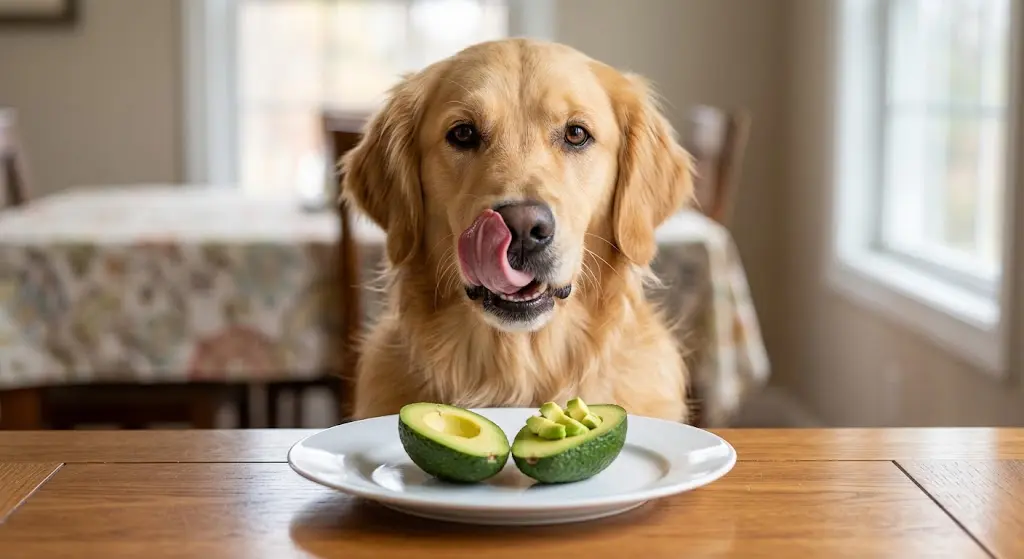
Can Dogs Eat Avocado?
Quick answer: Dogs can eat small amounts of avocado flesh without serious harm, but avocado is not risk-free. The fruit contains persin, a naturally occurring toxin that’s highly dangerous to birds and horses but far less potent in dogs. The pit, skin, and leaves carry the highest concentration and should never be given to dogs.
Key Takeaways
- Avocado flesh is low-risk in small amounts for most healthy adult dogs
- Persin is a real toxin, but dogs are significantly more resistant to it than birds or horses
- The pit, skin, and leaves are the genuinely dangerous parts — avoid entirely
- High fat content in avocado flesh can trigger pancreatitis in susceptible dogs
- If your dog ate avocado, the outcome depends heavily on which part and how much
- Always consult a vet before adding avocado to your dog’s regular diet
You’ve probably heard it both ways. One article says avocado is toxic to dogs — full stop. Another says a small amount is perfectly fine. Both cite veterinarians. Both sound authoritative. And if you’ve just watched your dog snatch a slice off the counter, neither answer is particularly helpful when you’re trying to decide whether to panic.
Here’s the truth: “Can dogs eat avocado?” is one of those questions where the technically correct answer depends entirely on which part of the avocado you’re talking about, how much your dog ate, and what breed you’re dealing with. The word “toxic” is accurate — but it’s also misleading when applied to dogs without context.
This guide answers the four most common ways people search this question: can dogs eat avocado, are avocados bad for dogs, is avocado toxic to dogs, and can dogs eat avocado safely. It’s written with input from veterinary toxicology sources, including data from the ASPCA Animal Poison Control Center, and grounded in species-specific science rather than generalized “toxic to animals” warnings.
By the end, you’ll know exactly which parts of the avocado are dangerous, what person actually does in a dog’s body, how much (if any) is safe, and what to do if your dog has already eaten some.
Are Avocados Safe for Dogs? (Why Vets Disagree)
Let’s name the contradiction directly: you may have read that avocado is toxic to dogs. You may have also read that it’s fine in small amounts. Both sources can cite a veterinarian. Here’s why they’re both partially right.
The disagreement comes down to what part of the plant is being discussed, and how the word “toxic” is being applied.
- “Can dogs eat avocados?” — Yes, in very small amounts of flesh only, with important caveats.
- “Are avocados bad for dogs?” — Some parts absolutely are. The flesh in moderation carries a lower risk.
- “Is avocado toxic to dogs?” — Technically yes. Persin is a real toxin. But dose and species matter enormously.
- “Can dogs eat avocados safely?” — Only with correct preparation, the right portion size, and the right parts.
The reason “toxic” gets applied so broadly is that avocado is genuinely and severely toxic to birds, horses, and rabbits. This broad “toxic to animals” label then migrates to dogs without accounting for the fact that dogs metabolize persin very differently. A compound that kills a parakeet in small quantities presents a far lower risk threshold in a 60-pound Labrador.
This is dose-dependent toxicity — “toxic” isn’t a binary switch. It describes a threshold. For dogs, that threshold is high enough that casual household exposure to avocado flesh is unlikely to cause serious harm. That doesn’t make avocado a smart snack choice, but it does mean your dog probably isn’t in immediate danger from a small nibble of flesh.
What Is Persin and Is It Actually Toxic to Dogs?
What Is Persin?
Can Dogs Eat Avocado? Vet-Reviewed Safety Guideis a fungicidal toxin produced naturally by the avocado plant (Persea americana). Its biological job is to protect the plant from fungal infection. It’s present throughout the entire plant—leaves, bark, skin, pit, and flesh—but in very different concentrations depending on the part.
The flesh of a ripe avocado contains the lowest concentration of persin. The leaves, bark, skin, and pit contain significantly more.
How Does Persin Affect Dogs Specifically?
Dogs metabolize persin differently than birds, horses, and rabbits. In birds and horses, persin causes serious cardiovascular damage, fluid accumulation, and respiratory distress—sometimes fatally, even in small amounts.
In dogs, persin at high doses primarily affects the heart muscle and mammary glands. But “high doses” requires substantially more avocado than a dog is likely to consume from a single household exposure. According to the ASPCA, dogs and cats are considered more resistant to persons than other species, though they are not immune.
Here’s the practical reality: for most dogs who sneak a piece of avocado flesh off the floor, the fat content is a more immediate concern than persin toxicity.
Is the Toxicity Dose Dependent or a Hard No?
Dose-dependent—and that distinction matters a lot. Unlike grapes and raisins, where even a tiny amount can trigger acute kidney failure in dogs, avocado flesh doesn’t follow a “one bite = danger” rule for most healthy adult dogs.
That said, treat it with caution. The dose-dependent nature of persin toxicity doesn’t mean avocado is safe — it means the risk scales with the amount consumed and the part ingested.
Avocado Nutritional Profile (per 100g)
| Nutrient | Amount | Relevance for Dogs |
| Calories | 160 kcal | High-calorie-dense |
| Total Fat | 14.7g | High — pancreatitis risk |
| Fiber | 6.7g | Moderate — can cause GI upset |
| Potassium | 485mg | Beneficial for muscle/nerve |
| Vitamin E | 2.1mg | Antioxidant benefit |
| Vitamin B6 | 0.3mg | Supports cell metabolism |
| Vitamin C | 10mg | Mild immune support |
| Vitamin K | 21mcg | Supports clotting |
Which Parts of the Avocado Are Dangerous?
Safe vs. Unsafe Parts
| Avocado Part | Person Level | Risk to Dogs | Verdict |
| Flesh (ripe) | Low | Low–Moderate (fat content) | Small amounts only |
| Skin | High | High | Avoid entirely |
| Pit/Seed | Very High + choking hazard | High | Never feed |
| Leaves | Very High | High | Never feed |
| Bark | Very High | High | No exposure |
Why the Pit Is Especially Dangerous
The pit carries a double risk. First, it contains a very high concentration of persin. Second, it presents a serious choking and intestinal obstruction hazard. Even a medium-sized dog could swallow an avocado pit whole — and unlike a grape seed, avocado pits are large enough to block the GI tract entirely. That’s a surgical emergency.
Dispose of pits immediately and securely. Not in an open trash can your dog can access.
What About Avocado Oil and Avocado-Based Dog Foods?
Commercially produced avocado oil contains negligible persin. The processing involved in oil extraction removes most of the toxin, which is why avocado oil is generally considered safe for dogs in small amounts.
Similarly, some premium dog foods include avocado-derived ingredients—and this is considered safe by manufacturers because the processing controls person levels and the quantities used are formulated carefully. This is a very different scenario from feeding your dog raw avocado from the kitchen counter.
Health Benefits of Avocado for Dogs
Avocados do contain nutrients that offer real benefits for dogs. This isn’t a case where something is all risk and no reward—but it is a case where the same benefits are available from safer foods.
Nutrient Benefits Table
| Nutrient | Benefit for Dogs | Caveat |
| Monounsaturated fats | Supports coat and skin health | High fat = pancreatitis risk |
| Vitamin E | Antioxidant, immune support | Achievable from safer sources |
| Potassium | Muscle and nerve function | Bananas offer this more safely |
| Fiber | Aids digestion | Can cause GI upset in excess |
| Folate & B vitamins | Cell function and metabolism | Found in many dog-safe vegetables |
The key point: none of these benefits require avocado specifically. Your dog’s regular diet likely covers most of these, and safer foods can fill the gaps.
Risks of Feeding Avocado to Dogs
Risks Summary Table
| Risk | Trigger | Severity | Signs to Watch |
| Persin toxicity | Skin, pit, leaves, large quantities of flesh | Moderate–High | Vomiting, respiratory distress, fluid retention |
| Pancreatitis | High fat content | Moderate–High | Vomiting, lethargy, hunched posture |
| GI upset | Fat and fiber combination | Mild | Loose stools, gas, vomiting |
| Choking/obstruction | Pit | Severe | Gagging, inability to eat, distress |
| Weight gain | Caloric density | Low–Moderate | Gradual weight increase |
Person Toxicity (at High Doses)
At high doses, persin can cause vomiting, diarrhea, respiratory distress, and fluid accumulation around the heart. Reaching this threshold requires considerably more avocado than most dogs would consume in a single encounter — but it’s not impossible if a dog gets into a bag of groceries or eats multiple avocados.
Pancreatitis
This is the most realistic everyday risk for most dogs eating avocado flesh. The high fat content can trigger pancreatitis — inflammation of the pancreas — especially in breeds already predisposed to it. Symptoms include vomiting, lethargy, hunched posture, and loss of appetite. Pancreatitis can range from uncomfortable to life-threatening depending on severity.
Gastrointestinal Upset
Even without pancreatitis, the combination of fat and fiber in avocado can upset a dog’s stomach. Expect loose stools, gas, or vomiting — particularly in dogs with sensitive digestion.
Choking and Obstruction (Pit)
Covered above, but worth repeating: the pit is a genuine emergency risk. If your dog swallows one, call a vet immediately.
Weight Gain
At 160 calories per 100g, avocado is calorie-dense. For overweight dogs or those on a controlled diet, even small amounts add up.
Avocado vs. Other Common Fruits: How Does the Risk Compare?
| Fruit | Key Risk | Risk Level | Verdict |
| Avocado (flesh only) | Persin, high fat | Low–Moderate | Small amounts only |
| Grapes/Raisins | Unknown compound | Very High | Never feed |
| Cherries (pit/leaves) | Cyanide | High | Flesh only, carefully |
| Apples (seeds) | Amygdalin | Low (seeds only) | Safe without seeds |
| Bananas | Sugar | Low | Moderation |
Grapes and raisins are worth highlighting here. Unlike avocado, grapes don’t follow dose-dependent toxicity rules — even a small amount can cause acute kidney failure. Avocado is genuinely lower risk than grapes, which is part of why some vets take a more relaxed position on avocado flesh in moderation.
How to Safely Prepare Avocado for Dogs (If You Choose To)
If you’ve decided a small amount of avocado flesh is something you want to offer your dog occasionally, preparation matters. Follow these steps:
- Choose a ripe avocado. Unripe avocados have higher persin concentrations in the flesh.
- Remove the skin completely. Don’t let your dog chew or lick the skin.
- Remove the pit immediately and dispose of it in a closed, secured bin.
- Scoop the flesh only — ripe, soft, green-to-yellow interior only.
- Cut into small, size-appropriate pieces.
- No seasoning. No guacamole. Garlic and onion — common in guacamole — are toxic to dogs regardless of avocado content.
- Introduce slowly if it’s the dog’s first time. Monitor for 24 hours.
Serving Guide: How Much Avocado Can a Dog Have?
| Dog Size | Example Breeds | Max Flesh Serving | Frequency |
| Extra Small (< 10 lbs) | Chihuahua, Yorkshire Terrier | ½ tsp | Occasional only |
| Small (10–25 lbs) | Beagle, Shih Tzu | 1 tsp | Max once per week |
| Medium (25–60 lbs) | Border Collie, Bulldog | 1 tbsp | Max once per week |
| Large (60–90 lbs) | Labrador, German Shepherd | 2 tbsp | Max once per week |
| Extra Large (90+ lbs) | Great Dane, Saint Bernard | 2–3 tbsp | Max once per week |
These are maximum amounts, not targets. Avocado is not a dietary staple for dogs. Apply the 10% treat rule: all treats combined — including avocado — should not exceed 10% of your dog’s daily caloric intake.
Breed-by-Breed Risk Guide
Not all dogs face the same level of risk from avocado. Individual health history and breed predispositions matter significantly.
Breeds That Should Avoid Avocado Entirely
These breeds have a high predisposition to pancreatitis and should not be given avocado in any amount:
- Miniature Schnauzers
- Yorkshire Terriers
- Cocker Spaniels
- Shetland Sheepdogs
Overweight dogs of any breed also fall into this category.
Breeds Where Occasional Small Amounts Are Lower Risk
Large, healthy adult working breeds — Labs, Goldens, German Shepherds — with no history of pancreatitis or GI sensitivity represent the lower-risk end of the spectrum. Even so, “lower risk” doesn’t mean “risk-free.”
Puppies and Senior Dogs
Avoid avocado for both. Developing digestive systems in puppies and aging, potentially compromised systems in senior dogs are more vulnerable to GI upset, fat-triggered inflammation, and personal effects. The risk-to-benefit ratio simply doesn’t hold up for either group.
Decision Tree — Should You Feed Your Dog Avocado?
Work through this before offering any avocado:
- Has your dog already eaten avocado? → Go to the Emergency Guide section below.
- Is your dog a breed predisposed to pancreatitis? → Do not feed avocado.
- Is your dog overweight? → Do not feed avocado.
- Is your dog a puppy or senior? → Do not feed avocado.
- Is your dog a healthy adult at a normal weight with no GI issues? → A small amount of ripe flesh only, following the serving guide above.
- Did what they ate include skin, pit, or leaves? → Contact your vet immediately.
Common Mistakes Dog Owners Make with Avocado
- Feeding guacamole. Garlic and onion are toxic to dogs. Most guacamole contains both.
- Leaving pits accessible. On counters, in open bins, in compost — dogs will find them.
- Assuming “natural = safe.” Avocados are natural. So is the death cap mushroom.
- Feeding avocado skin without realizing it’s the high-person part.
- Portion misjudgment. A quarter of an avocado is a very large amount for a small dog.
- Assuming all dogs react the same. Individual sensitivity varies. Some dogs develop pancreatitis from a single high-fat meal; others don’t.
Avocado Myths vs. Facts
| Myth | Fact | Why the Myth Exists |
| “Avocado is always toxic to dogs” | Persin is a real toxin, but dogs are significantly more resistant than birds or horses | Avocado IS highly toxic to other species; the label migrates incorrectly |
| “A tiny bite will poison my dog” | Toxicity is dose-dependent; a small amount of flesh is unlikely to cause serious harm | “Toxic” sounds binary when it isn’t |
| “Avocado is a superfood for dogs” | Some nutrients are beneficial, but fat content and personal risk make it non-essential | Human superfood status doesn’t translate directly |
| “Avocado oil is dangerous too” | Avocado oil contains negligible persin after processing and is generally considered safe | People assume all avocado products carry the same risk |
| “If it’s in dog food, it must be totally safe to feed raw” | Commercial processing reduces persin; raw avocado at home is a different scenario | The logic sounds reasonable but ignores processing differences |
Expert Tips from Veterinarians
Veterinary consensus on avocado sits in a nuanced middle ground. A few key positions from veterinary sources are worth highlighting:
On the toxicity question: According to the ASPCA Animal Poison Control Center, dogs and cats are listed as more resistant to persin than other domestic species, but persin toxicity in dogs is still documented — particularly from the skin, pit, and leaves. The ASPCA recommends caution, not a blanket clearance.
On pancreatitis risk: Many veterinary nutritionists note that the high fat content of avocado presents a more immediate, practical risk for most dogs than person itself — especially for breeds with a history of pancreatitis or dogs that are already consuming a high-fat diet.
On post-ingestion guidance: Veterinarians consistently advise identifying what part your dog ate before panicking. Flesh only, in a small amount, from a healthy adult dog, warrants monitoring. Pit ingestion, skin ingestion, or large quantities of any part warrants an immediate call to your vet or the ASPCA Animal Poison Control Center: (888) 426-4435.
My Dog Ate Avocado — Emergency Guide
Step 1 — Identify What Your Dog Ate
| What They Ate | Urgency Level | Action |
| Small amount of flesh only | Lower urgency | Monitor for 24 hours |
| Avocado skin | Moderate concern | Call your vet |
| The pit | High urgency | Call vet immediately |
| Large quantity of flesh | Moderate–High | Call vet |
| Unknown amount or part | Moderate | Call vet to be safe |
Step 2 — Note the Amount and Your Dog’s Size
A tablespoon of flesh for a 70-pound Labrador is very different from a tablespoon for a 6-pound Chihuahua. Write down your dog’s approximate weight and your best estimate of how much they ate before you call — your vet will ask.
Step 3 — Watch for These Symptoms
| Symptom | Timeline | Severity | What to Do |
| Mild vomiting or diarrhea | 1–6 hours | Mild | Monitor; withhold food for 12 hours |
| Lethargy | 2–12 hours | Moderate | Call vet |
| Hunched posture or abdominal pain | 2–12 hours | Moderate–High | Call vet same day |
| Difficulty breathing | 1–24 hours | Severe | Emergency vet immediately |
| Fluid retention or bloating | 12–48 hours | Severe | Emergency vet immediately |
| Choking or swallowing pit | Immediate | Severe | Emergency vet immediately |
Who to Call
- Your regular vet (during business hours)
- ASPCA Animal Poison Control: (888) 426-4435 — 24/7, fee may apply
- Pet Poison Helpline: (855) 764-7661 — 24/7
Frequently Asked Questions
Can dogs eat avocado toast?
Only if it’s plain avocado flesh on plain bread with no seasoning whatsoever — and even then, the serving size needs to match your dog’s size. Most avocado toast includes salt, garlic, lemon, or red pepper flakes, making it unsafe for dogs.
Can dogs eat guacamole?
No. Guacamole typically contains garlic and onion, both of which are toxic to dogs regardless of how much avocado is in it. Even garlic powder in small quantities can damage a dog’s red blood cells over time.
Is the avocado pit dangerous if swallowed?
Yes — it’s a dual threat. The pit contains high concentrations of persin, and its size presents a serious choking and intestinal obstruction risk. Call your vet immediately if your dog swallows one.
My dog ate avocado skin. What should I do?
Call your vet. Avocado skin contains significantly more persin than the flesh. Your vet will want to know your dog’s size and approximate quantity consumed before advising next steps.
Can puppies eat avocados?
It’s best avoided entirely. Puppies have more sensitive digestive systems, and the risks — pancreatitis, person exposure, GI upset — outweigh any nutritional benefit, especially when safer alternatives exist.
Are avocados in commercial dog food safe?
Yes. Avocado-derived ingredients in commercial dog food are processed to remove or significantly reduce persin, and they’re formulated in controlled amounts by veterinary nutritionists. This is a different scenario from feeding raw avocado at home.
Why do some vets say avocado is fine while others say avoid it?
Both positions are defensible. “Fine in small amounts” refers specifically to ripe flesh only, in healthy adult dogs, in controlled serving sizes. “Avoid it” is a precautionary position that accounts for variability in individual dog sensitivity and the real possibility of owner error — accidentally feeding skin, pit, or too large a portion. Neither vet is wrong; they’re addressing different risk tolerances.
What makes avocado toxic to dogs?
The compound persin, found throughout the avocado plant. Dogs are considerably more resistant to persons than birds or horses, but high doses — particularly from the skin, pit, and leaves — can still cause harm. The flesh of a ripe avocado carries the lowest concentration of any part of the plant.
Final Verdict: What’s the Smartest Call for Your Dog?
The moderate position holds up under scrutiny: avocado flesh is not something you should actively add to your dog’s diet, but a small amount of ripe flesh is unlikely to cause serious harm in a healthy adult dog with no pancreatitis history.
The practical risk hierarchy is clear:
- Pit and skin — genuinely dangerous, avoid entirely
- Leaves and bark — never expose
- Flesh in large quantities — fat content risk, possible person risk
- Flesh in small amounts (healthy adult dog) — low risk, but no meaningful nutritional advantage over safer alternatives
For most owners, the simplest and safest answer is: don’t feed avocado. The nutritional benefits avocado offers are available from fruits and vegetables your dog can eat without any of the caveats. Blueberries. Watermelon. Cooked sweet potato. None of them come with a choking hazard, a pancreatitis risk, or a natural toxin.
If you’re unsure about your dog’s specific situation — or your dog has already eaten some avocado — speak to your vet. They’ll give you guidance based on your dog’s individual health profile, not a generalized internet answer.