

Can Dogs Eat Cherries? What’s Safe, What’s Dangerous, and How Much to Give

Picture this: you’re pitting cherries for a summer pie, one rolls off the counter, and your dog swallows it before you can blink. Or maybe you’ve got a cherry tree in the backyard and you’ve just noticed a suspicious pile of pits under it. Either way, you’re here for one reason — you want a straight answer. (See our full guide to other fruits dogs can and can’t eat for more.)
Here it is: dogs can eat the flesh of a fresh cherry in small amounts, but the pit, stem, and leaves are a real problem. This guide walks through exactly what’s safe, what isn’t, how much to give, and what to do if your dog beats you to the bowl.
Quick Answer
Dogs can eat the flesh of a fresh, pitted cherry in small amounts as an occasional treat. The pit, stem, and leaves contain a compound called amygdalin, which breaks down into cyanide and can also cause choking or intestinal blockage. Skip maraschino, canned, and dried cherries — they’re loaded with sugar and sometimes xylitol. If your dog swallows a pit, don’t panic, but keep an eye on them and call your vet if anything seems off.
Key Takeaways
- Cherry flesh is fine in small amounts — the pit, stem, and leaves are the actual danger.
- One or two swallowed pits rarely cause cyanide poisoning, but a handful is a different story.
- Maraschino, canned, and dried cherries aren’t worth the risk — sugar and additives outweigh any benefit.
- Serving size depends on your dog’s weight — a Chihuahua and a Labrador don’t get the same portion.
- If your dog eats a pile of whole cherries, call your vet or the Pet Poison Helpline (855-764-7661) rather than waiting it out.
Are Cherries Safe for Dogs?
This is where a lot of pet owners get confused, because if you search around, you’ll find some sites flatly saying “no, never feed cherries” and others saying “yes, in moderation.” Both are technically right — they’re just answering different questions.
The cherry fruit — the soft, juicy part — isn’t toxic to dogs. It’s the rest of the plant that causes trouble. Once you separate “flesh” from “everything else,” the confusing advice actually lines up. Sites that say “no” are usually being cautious about pet owners not bothering to prep the fruit properly. Sites that say “yes” are talking specifically about pitted, prepared flesh.
So here’s the practical version: if you’re willing to wash, pit, de-stem, and chop the cherry yourself, a piece or two is a safe treat for most healthy adult dogs. If that sounds like too much effort for a fruit your dog doesn’t need anyway, skipping it entirely is a completely reasonable call too.
Health Benefits of Cherries for Dogs
Cherries aren’t nutritionally essential for dogs — a complete commercial diet already covers what they need. But the flesh does bring a few small perks when it’s given occasionally:

- Vitamin A and C support immune function and vision health.
- Fiber can aid digestion in small amounts.
- Antioxidants (the compounds that give cherries their deep red color) may help fight cellular damage.
- Low calorie, high water content makes cherries a light, hydrating snack, especially in hot weather.
| Nutrient (per 1 cup, pitted) | Approx. Amount | Benefit for Dogs |
|---|---|---|
| Calories | ~87 | Low-calorie treat option |
| Sugar | ~18–20g | Use sparingly — see risks below |
| Fiber | ~2.9g | Supports digestion |
| Vitamin C | ~10mg | Immune support |
| Vitamin A | Present | Vision and skin health |
| Water content | High | Mild hydration boost |
None of this makes cherries a “superfood” for dogs. Think of it the way you’d think of a fresh raspberry or slice of apple — a nice occasional treat, not a nutritional upgrade.
Risks and Dangers of Cherries for Dogs
This is the section that actually matters, so let’s go through each risk one at a time.
Cyanide toxicity (amygdalin). The pit, stem, and leaves of a cherry contain a compound called amygdalin. When it’s crushed or chewed — not just swallowed whole — it breaks down into hydrogen cyanide, which interferes with how cells use oxygen. This is the scary part of cherries, but it’s also the most misunderstood.
Choking hazard. Cherry pits are smooth, round, and just the right size to lodge in a dog’s throat, especially in small and medium breeds.
Intestinal blockage. Even if a pit doesn’t cause choking, it can get stuck further down in the stomach or intestines. This sometimes requires imaging or surgery to resolve, and it’s actually more common than cyanide poisoning in real-world cases.
High sugar content. A cup of cherries has roughly 18–20 grams of sugar. Fed regularly, that adds up — contributing to weight gain, upset stomach, and over time, higher diabetes risk in predisposed dogs.
Fermented or rotten cherries. Fallen fruit left on the ground can ferment and develop trace alcohol content, which is toxic to dogs in its own right.

| Risk | Cause | Severity |
|---|---|---|
| Cyanide poisoning | Chewed/crushed pits, stems, leaves | Low probability from 1–2 pits, serious if large amounts consumed |
| Choking | Whole pit swallowed | Moderate to severe, more common in small dogs |
| Intestinal blockage | Swallowed pit lodges in GI tract | Moderate to severe, may need surgery |
| Upset stomach/diarrhea | High sugar content, overfeeding | Mild to moderate |
| Alcohol toxicity | Fermented/rotten fallen cherries | Moderate to severe |
Cherry Pits, Stems & Leaves: The Real Danger
This is the part most articles gloss over, so let’s actually break it down.
How amygdalin becomes cyanide: Amygdalin itself isn’t dangerous sitting inside an intact pit. The danger happens when the pit is crushed or chewed — digestive enzymes interact with the released amygdalin and convert it into hydrogen cyanide, a compound that blocks cells from using oxygen properly.
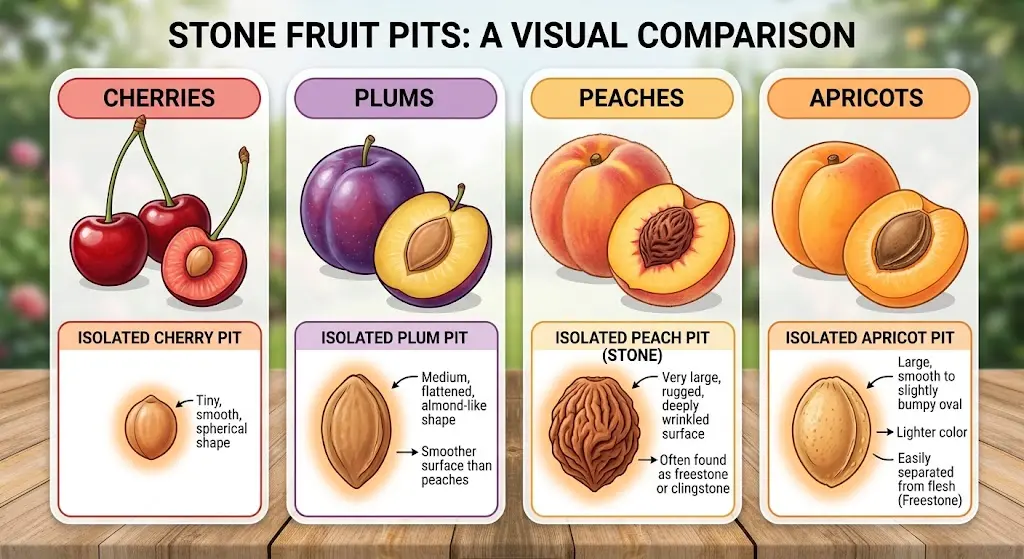
How many pits are actually dangerous? This is the question everyone wants answered but few articles actually address with numbers. Veterinary toxicology puts the lethal cyanide dose for dogs at roughly 2–4 mg per kilogram of body weight. A single cherry pit contains a relatively small amount of amygdalin, and most pits pass through a dog’s system whole — undigested and unchewed — without ever releasing meaningful cyanide. That’s why vets consistently say one or two accidentally swallowed pits are unlikely to cause poisoning. The real risk climbs when a dog chews through a large handful of pits at once, which is far less common but not impossible, especially with dogs who raid a cherry tree.
Cherries aren’t the only fruit with this problem. Cherries belong to the Prunus genus, which includes several other backyard fruits that share the exact same pit-toxicity mechanism.
| Fruit | Same Risk? | Notes |
|---|---|---|
| Cherries | Yes | Pit, stem, leaves contain amygdalin |
| Plums | Yes | Pit only |
| Peaches | Yes | Pit only |
| Apricots | Yes | Pit, and the kernel inside it |
| Apples | Partial | Seeds contain trace amygdalin, but far less risk in normal amounts |
If you’ve got any of these trees in your yard, the same “pick up fallen fruit” advice applies across the board — not just to cherries.
Safe vs. Unsafe Cherry Types
Not all “cherries” are created equal, and this is where a lot of well-meaning owners get tripped up.
| Type | Safe for Dogs? | Why |
|---|---|---|
| Fresh cherries (pitted, prepared) | Yes, in moderation | Flesh only, low risk when prepped correctly |
| Maraschino cherries | No | High sugar, artificial dye, sometimes alcohol |
| Canned cherries | No | Added sugar syrup and preservatives |
| Dried cherries | No | Sugar becomes more concentrated during drying |
| Cherry pie, cobbler, jam | No | Sugar, butter, sometimes xylitol or nutmeg |
| Cherry-flavored treats (sugar-free) | Caution | Check for xylitol — toxic even in small amounts |
If you’re ever unsure whether a product counts as “safe,” a simple rule works well: if it didn’t come straight off the stem, treat it as off-limits.
How to Prepare Cherries for Your Dog
If you decide to share a cherry, prep matters more than almost anything else in this article. Here’s the process:

- Wash thoroughly to remove dirt, pesticide residue, and bacteria.
- Cut the cherry in half so the pit is fully exposed.
- Remove the pit completely — check for fragments, not just the main stone.
- Remove the stem and any leaves.
- Chop the flesh into small, bite-sized pieces appropriate for your dog’s size.
- Serve immediately — don’t leave prepped cherries sitting out.
A few dog-friendly ways to serve it: mix chopped cherry flesh into plain, xylitol-free yogurt for a frozen treat, blend it with other dog-safe fruits like blueberries or banana for a smoothie topper, or freeze small pieces in a KONG for a slow, refreshing snack on a hot day.
How Many Cherries Can a Dog Eat? (Serving Guide)

Portion size really does depend on your dog’s size. Here’s a general starting point — always scale down if your dog has a sensitive stomach.
| Dog Size (Weight) | Safe Serving | Frequency |
|---|---|---|
| Toy/Small (under 22 lbs) | 1–2 small pieces | Occasional treat only |
| Medium (22–55 lbs) | 3–5 pitted cherries | Occasional treat only |
| Large (55+ lbs) | 5–8 pitted cherries | Occasional treat only |
| Puppies | A teaspoon of flesh, to test tolerance | Rarely, in very small amounts |
A good rule of thumb across the board: treats — including cherries — shouldn’t make up more than 10% of your dog’s daily calories. If your dog is overweight, diabetic, or has a history of pancreatitis, it’s worth skipping cherries entirely and choosing a lower-sugar fruit instead.
Cherries vs. Other Fruits — Which Is Safer?
| Fruit | Safe for Dogs? | Notes |
|---|---|---|
| Cherries | Yes (flesh only) | Pit/stem/leaf risk |
| Blueberries | Yes | No pit risk, low sugar, easiest “safe fruit” choice |
| Apples | Yes (no core/seeds) | Remove seeds and core |
| Watermelon | Yes (no seeds/rind) | High water content, good for summer |
| Grapes | No — never | Toxic in any amount, unlike cherries |
If you want a zero-hassle fruit treat, blueberries are hard to beat — no pitting, no prep, minimal risk. Cherries take more work for a comparable payoff, which is worth factoring into your decision.
Should You Feed Your Dog Cherries? (Quick Decision Guide)
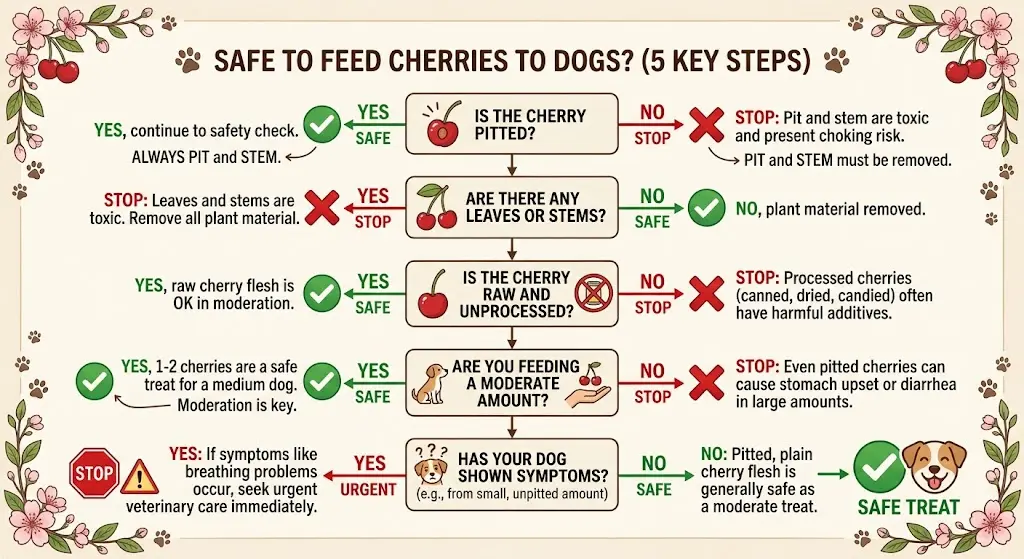
Should you feed your dog cherries decision tree
Walk through this in order:
- Is it a fresh cherry, not maraschino/canned/dried? If no — skip it.
- Are you willing to pit, de-stem, and chop it yourself? If no — skip it.
- Does your dog have a sensitive stomach, diabetes, or pancreatitis history? If yes — skip it.
- Is your dog a small or toy breed? If yes — smaller portion, extra caution with pits.
- All clear on the above? A couple of prepared pieces, occasionally, is fine.
Common Mistakes Pet Owners Make
- “It’s just one, the pit’s fine.” One pit usually is fine, but it’s a habit that eventually catches up with you — especially with small dogs.
- Assuming maraschino cherries are safe because there’s no pit. The sugar and additives are their own problem.
- Letting dogs roam freely under a cherry tree. Fallen fruit means uncontrolled pit and stem exposure — and possible fermentation risk.
- Feeding cherries daily as a “healthy snack.” Cherries are a treat, not a diet staple — daily feeding adds up in sugar over time.
- Not checking for xylitol in sugar-free cherry products. This one’s genuinely dangerous, even in small amounts.
Cherry Myths vs. Facts
Myth: “One cherry pit will kill my dog.” Fact: A single accidentally swallowed pit is very unlikely to cause cyanide poisoning. The bigger concern with one pit is choking or blockage, not toxicity.
Myth: “Cooked cherries in pie are always safe since they’re cooked.” Fact: Cooking doesn’t remove the sugar, butter, or potential xylitol in baked goods — the cyanide risk from any pit fragments also isn’t reliably neutralized by baking.
Myth: “Cherries have no benefit, so there’s no reason to ever feed them.” Fact: They do offer some vitamin C, fiber, and antioxidants — the benefit is just modest enough that it’s a personal choice, not a nutritional necessity.
Expert Tips
Veterinarians generally agree on a few practical points worth remembering: introduce any new fruit slowly to watch for digestive reactions, always err toward less rather than more when it comes to serving size, and treat any known ingestion of a handful of pits — not just one — as a reason to call your vet rather than wait and watch. If your dog has any pre-existing GI condition, it’s worth checking with your vet before adding cherries to their treat rotation at all.
Emergency Guide: My Dog Ate Cherries or Pits
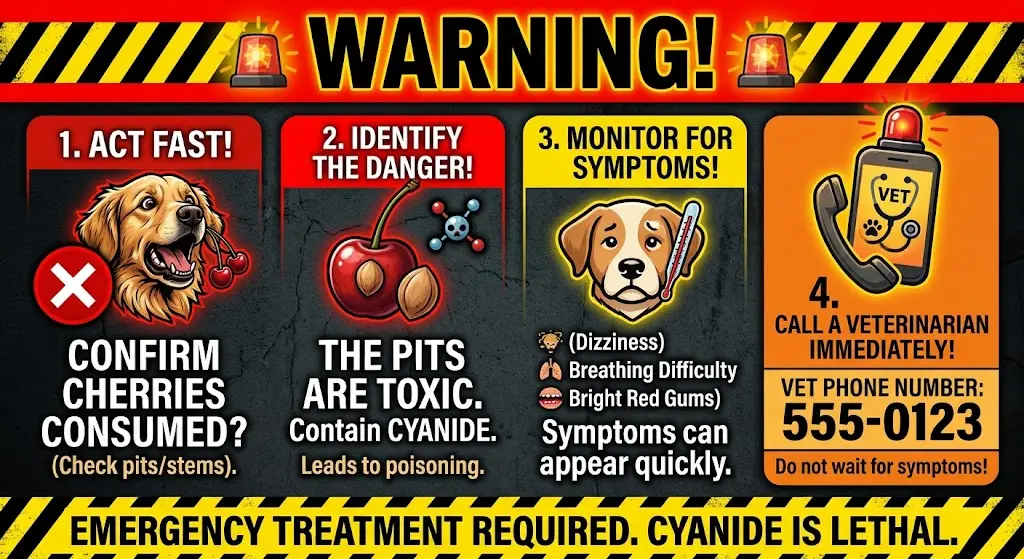
If they ate 1–2 cherries with pits: Stay calm. This is unlikely to cause serious harm. Watch for signs of blockage over the next 24 hours — vomiting, decreased appetite, straining, or constipation.
If they ate a handful or more: This is where cyanide exposure becomes a real possibility. Call your vet or the Pet Poison Helpline (855-764-7661) right away, even if your dog seems fine at the moment — symptoms can take a few hours to show.
If they ate only the flesh (no pits): No action needed beyond normal monitoring for an upset stomach.
When to call the vet immediately: Difficulty breathing, bright red gums, drooling, dilated pupils, vomiting, or noticeable weakness. These can be signs of cyanide exposure and warrant urgent care, not a wait-and-see approach.
Symptoms to Watch For
| Timeframe | Symptoms | Action |
|---|---|---|
| 0–4 hours | Vomiting, mild stomach upset, restlessness | Monitor closely |
| 4–24 hours | Bloating, diarrhea, lethargy, difficulty breathing | Call your vet |
| 24+ hours | Constipation, straining, loss of appetite, abdominal pain | Vet visit — possible blockage |
Breed & Size-Specific Guidance
Smaller dogs face a double disadvantage: their airways and intestines are narrower (higher blockage and choking risk), and cyanide dosing is weight-dependent, so the same number of pits affects them more than it would a large breed. If you have a toy or small breed, it’s worth being extra strict about pit removal and sticking to the lower end of the serving guide. Large and giant breeds have more margin for error, but “more margin” doesn’t mean “no limit” — the sugar and blockage risks still apply at any size.
FAQs
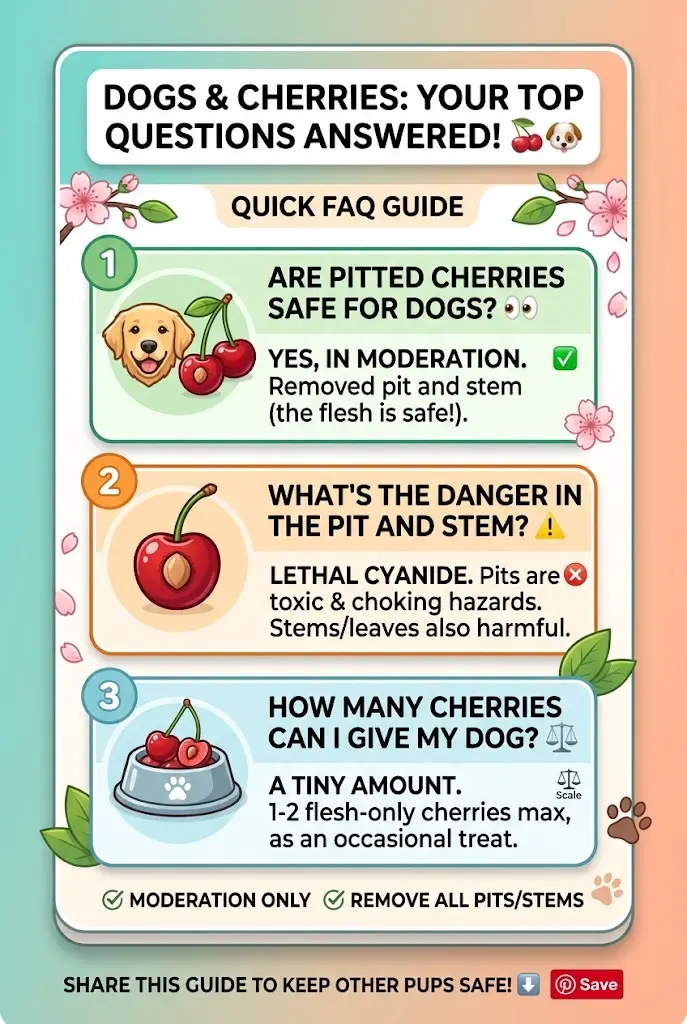
Can dogs eat cherry pits? No — pits should always be removed. An accidentally swallowed pit or two is unlikely to cause serious harm, but pits are a choking and blockage risk and contain amygdalin, which can convert to cyanide if chewed.
Can dogs eat maraschino cherries? It’s best to avoid them. They’re not immediately toxic, but the high sugar content and artificial additives make them a poor treat choice.
Can dogs eat dried cherries? No, they’re not recommended. Drying concentrates the sugar content, making dried cherries more likely to cause stomach upset than fresh ones.
Can dogs eat black cherries? Yes, the same rules apply — flesh only, with the pit, stem, and leaves removed first.
Can puppies eat cherries? Yes, in very small amounts. Puppies have more sensitive digestive systems, so start with a tiny piece to see how they react before offering more.
Can dogs eat cherry pie? No. Beyond the pit risk, pie filling is loaded with sugar and butter, and some recipes include nutmeg or other ingredients that aren’t dog-safe.
Are cherry trees poisonous to dogs? The tree itself poses a risk mainly through fallen fruit, pits, and leaves, which contain the same amygdalin compound. If you have a cherry tree and a dog, it’s worth picking up fallen fruit regularly.
Can dogs eat cherry tomatoes? This is a different food entirely — cherry tomatoes are a small tomato variety, not related to cherries. Ripe, red cherry tomatoes in small amounts are generally safe for dogs, though the plant’s stems and leaves should be avoided.
Final Verdict
Cherries sit in a gray area that’s easy to overthink: the flesh is a perfectly fine occasional treat, and the danger is almost entirely limited to the pit, stem, and leaves. If you’re willing to do the five minutes of prep work, a couple of pitted pieces now and then won’t hurt a healthy adult dog. If that sounds like more effort than it’s worth, there’s no harm in skipping cherries altogether and reaching for a lower-maintenance fruit like blueberries instead. Either way, keep whole cherries and cherry pits out of reach, and if your dog ever gets into more than a couple on their own, a quick call to your vet is always the safer move.