
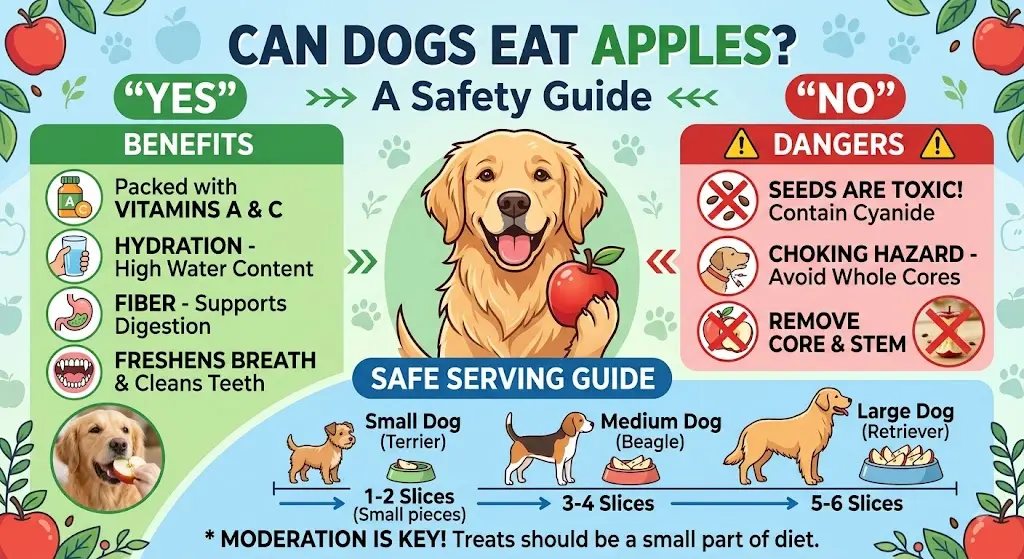
If you’re wondering, can dogs eat apples? The short answer is yes! Apples make a healthy, crunchy treat packed with vitamins. However, before tossing your pup a slice, every owner should know how to prepare them safely. Removing the seeds and core is essential to prevent choking and keep your furry friend healthy.
Introduction
If you’ve ever caught your dog eyeing a slice of apple off your cutting board, you’ve probably asked yourself: is this actually okay? It’s a fair question. Not every fruit that’s fine for humans is fine for dogs — grapes and raisins, for example, are toxic. The good news is that apples are one of the safer fruits to share, as long as you prep them correctly. This guide breaks down exactly what’s safe, what to avoid, how much to feed, and what to do if your dog eats an apple core or a handful of seeds.
Table of Contents
- Symptoms to Watch For
- Feeding Guidelines by Dog Size
- Why Apple Seeds Are a Concere
- How Vets Diagnose a Problem
- What to Do (Treatment)
- What the Research Says
- Possible Side Effects
- Prevention Tips
- FAQ
Feeding Guidelines by Dog Size
Treats—including fruits like apples—should never exceed 10% of your dog’s total daily calories.
| Dog Size | Average Weight | Safe Daily Portion |
| Extra Small / Toy | Under 10 lbs (under 5 kg) | 1 thin bite-sized slice |
| Small | 10–22 lbs (5–10 kg) | 1–2 small slices |
| Medium | 22–55 lbs (10–25 kg) | 2–4 small slices |
| Large / Giant | 55+ lbs (25+ kg) | 1/4 to 1/2 apple (cubed) |
Symptoms to Watch For
Most dogs who eat a slice or two of apple show no symptoms at all — that’s the normal outcome. Watch more closely if your dog eats a large amount of core, several seeds, or a whole apple in one sitting. Signs that warrant attention include vomiting, diarrhea, lethargy, difficulty breathing, bright red gums, or dilated pupils. These can point to either an upset stomach (the more likely cause) or, rarely, early cyanide exposure. A dog choking on a swallowed core may paw at its mouth, gag, or retch without producing anything.
Why Apple Seeds Are a Concern (Causes)
Apple seeds contain amygdalin, a compound that breaks down into hydrogen cyanide when chewed and digested. A few accidentally swallowed whole seeds are unlikely to cause harm, since intact seeds mostly pass through undigested and the toxin needs to be released by chewing. The real risk comes from a dog crunching through a large quantity of seeds, or eating a whole bag of apple cores from a baking project. Beyond the seeds, the core itself is dense and fibrous, making it a genuine choking and intestinal blockage risk, particularly in small breeds.
How Vets Diagnose a Problem
If you call your vet after your dog eats apple seeds or a core, they’ll usually ask how much was eaten, how long ago, and your dog’s size and breed. For a small ingestion, most vets will simply advise monitoring at home. For a large ingestion or any breathing difficulty, they may recommend inducing vomiting if it’s been under two hours, followed by a physical exam, and in more serious cases, bloodwork or an X-ray to check for a blockage. Cyanide toxicity in dogs from apple seeds is genuinely rare — it takes a large number of crushed seeds relative to body weight — but vets rule it out when symptoms match.
What to Do (Treatment)
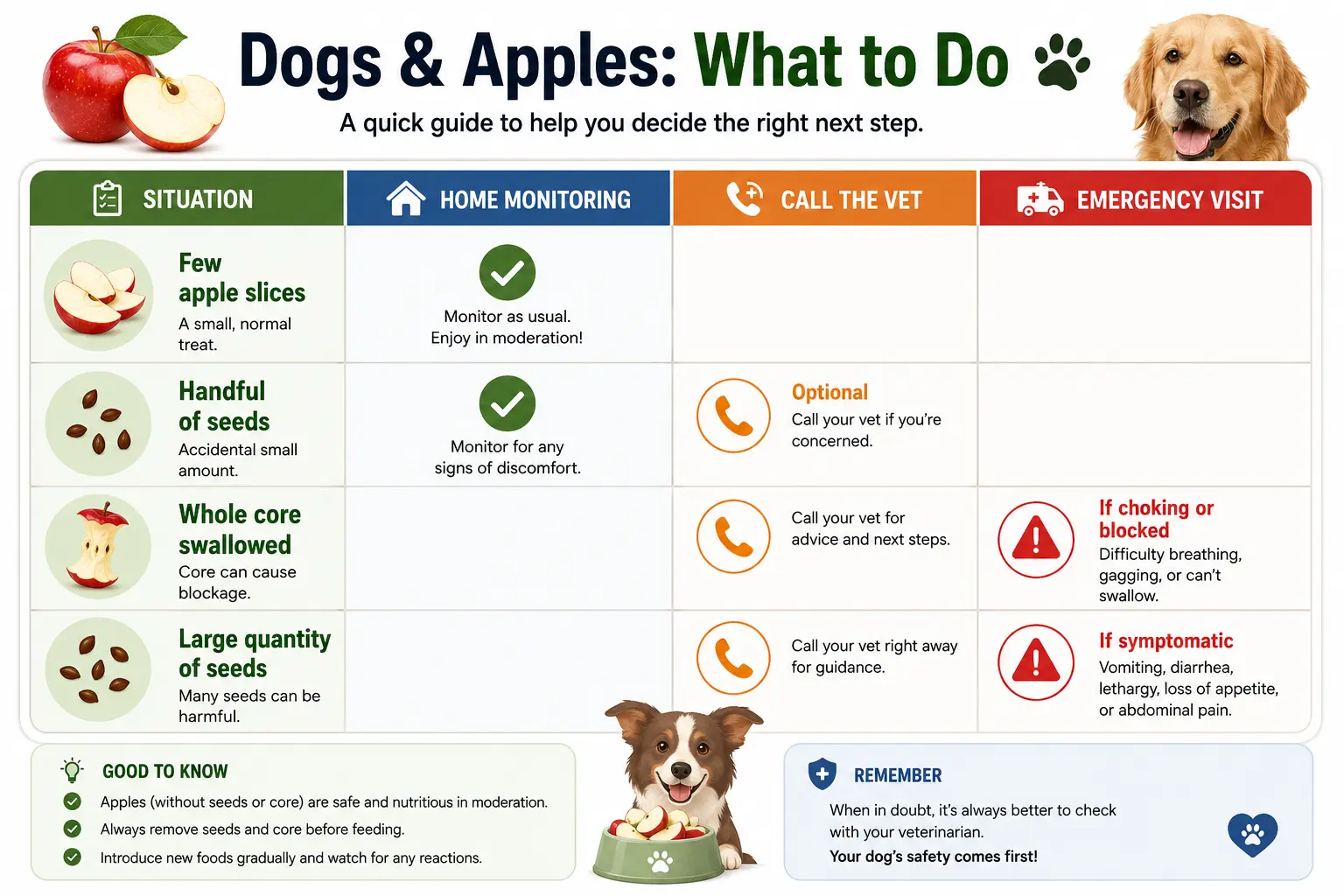
For most everyday apple mishaps, treatment is straightforward:
- A few slices of flesh: No action needed.
- Accidentally swallowed seeds (a handful or fewer): Monitor for 24 hours; no treatment usually required.
- A whole core or large quantity of seeds: Call your vet or a poison control hotline right away for guidance specific to your dog’s weight.
- Choking or gagging: Check the mouth for visible obstruction; seek emergency care if breathing is affected.
What the Research Says (Scientific Research)
Veterinary toxicology references, including guidance from the ASPCA Animal Poison Control Center, classify apple seeds as mildly toxic due to cyanogenic glycosides, but note that toxicity requires a substantial quantity relative to the animal’s size. Nutritional studies on fruit as a dog treat generally support apple flesh as a low-calorie source of dietary fiber and polyphenol antioxidants, which may support digestive and immune health when fed in moderation. As with most human-food-for-dogs topics, large-scale clinical trials specifically in dogs are limited, so most current guidance is extrapolated from toxicology data and general nutrition science rather than dog-specific trials.
Possible Side Effects
Even with the core and seeds removed, apples aren’t risk-free in excess. Because apples contain natural sugar and fiber, dogs that eat too much too fast can experience loose stools, gas, or stomach upset. Dogs with diabetes or those on a strict weight-management plan should get apple only occasionally and in small pieces, since the sugar content can affect blood glucose. Dogs with known fruit allergies (uncommon but possible) may show itching or mild GI upset after eating apple for the first time.
Reviewed by: [TALHA DR], DVM — Small Animal Practice, [3,Years] years of clinical experience. Reviewed for medical accuracy on August 12, 2026.
Prevention Tips
- Always slice the apple and remove the core, stem, and seeds before giving it to your dog.
- Cut pieces small enough to prevent choking, especially for small or toy breeds.
- Keep apple cores and seeds out of reach — don’t leave them in an accessible trash can.
- Introduce apple slowly the first time, watching for any digestive reaction.
- Stick to plain apple or unsweetened applesauce — skip pie filling, candy apples, or anything with added sugar or xylitol.
Key Takeaways
- Apple flesh and skin are safe for dogs and offer fiber, vitamin C, and antioxidants.
- Seeds, stems, and cores should always be removed before feeding.
- Apple seeds contain amygdalin, which releases cyanide when broken down — a small risk in small amounts, but worth avoiding.
- Moderation matters, especially for diabetic dogs, due to natural sugar content.
- Cooked, unsweetened apple (like plain applesauce) is also fine in small amounts.
FAQ
When should I see a vet?
Call your vet if your dog swallows a whole core, eats a large number of seeds, or shows vomiting, lethargy, or breathing changes after eating apple.
Is this actually dangerous?
In the amounts most dogs encounter — a slice dropped off a plate — no. The danger scales with quantity: a whole bag of cores or seeds is a real concern; a stray seed usually isn’t.
How long does recovery take?
Mild stomach upset from too much apple flesh typically resolves within 24 hours. Choking or blockage cases depend on severity and vet intervention, and recovery timelines should come directly from your vet.
Can puppies eat apples?
Yes, in small, well-prepped pieces, once they’re eating solid food. Their smaller size means portion control matters even more.
What about applesauce or apple juice?
Plain, unsweetened applesauce in small amounts is fine. Skip apple juice and sweetened sauces — the sugar concentration is much higher than in whole fruit.
Conclusion
Apples are one of the more dog-friendly fruits out there — crunchy, low-calorie, and genuinely good for your dog when you take two seconds to core and seed them first. The real risks aren’t from the fruit itself but from the parts around it: the seeds, the stem, and the core. Keep portions modest, prep it properly, and apple can be a solid go-to treat.
Emergency Notice: If your dog is choking, struggling to breathe, or shows signs of severe illness after eating apple seeds or a core, contact your veterinarian or an emergency animal hospital immediately, or call the ASPCA Animal Poison Control Center.