

Can Dogs Eat Pineapple?
Yes, dogs can safely eat fresh pineapple flesh in moderation. Pineapple is a tropical fruit rich in vitamin C, manganese, and the digestive enzyme bromelain. However, its tough core, spiky skin, and high sugar content mean careful preparation and portioning are essential.
Before sharing pineapple with your dog, it’s important to understand what type of preparation is safe, the benefits it offers, and how much fits into a balanced diet. For more dog-safe produce, see our master guide to safe fruits for dogs.
💡 Key Takeaways
- Fresh Flesh Only: Only the soft yellow flesh is safe; the core, skin, and crown are not appropriate for dogs to eat.
- Contains Bromelain: This natural enzyme may support digestion, though evidence in dogs specifically is limited.
- High in Natural Sugar: Pineapple is sweeter than many fruits, so portion control is essential.
- Skip Canned Pineapple: Canned pineapple in syrup contains far too much added sugar for dogs.
- Follow the 10% Rule: Pineapple treats should never exceed 10% of daily caloric intake.
Health Benefits of Pineapple for Dogs
When served fresh and in moderation, pineapple offers real nutritional value alongside its tropical appeal.
Key Vitamins and Enzymes
- Vitamin C: Supports immune health and antioxidant defense.
- Manganese: Plays a role in bone development and metabolic processes.
- Bromelain: A natural enzyme that may assist in breaking down proteins, though its digestive benefit specifically in dogs has not been extensively studied.
- Dietary Fiber: Supports digestive regularity when fed in small amounts.
A Hydrating, Tropical Treat Option
Fresh pineapple has a high water content, which can make it a refreshing warm-weather snack alongside other hydrating fruits like watermelon and cantaloupe.
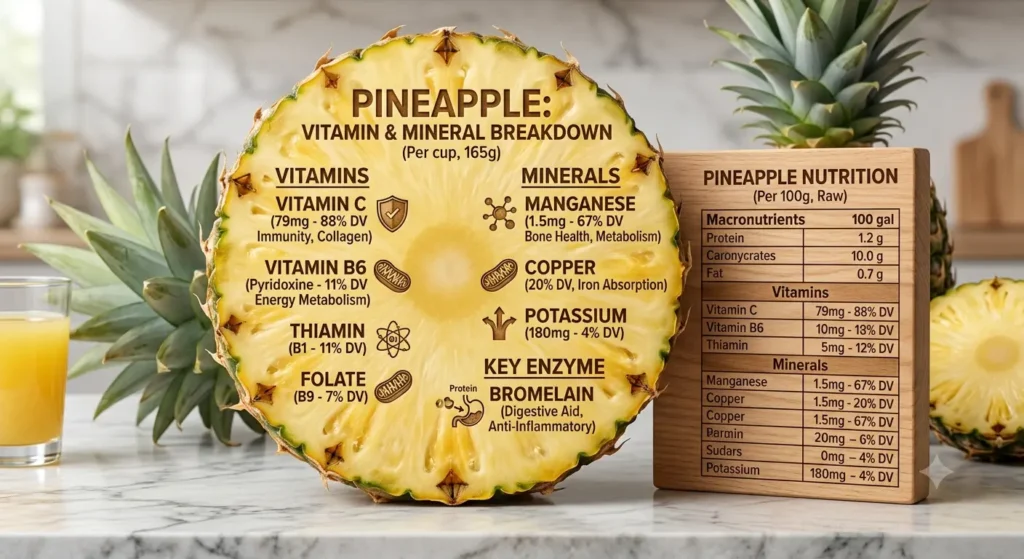
Nutritional Breakdown Per 100 Grams
The following table outlines the nutrient profile of raw pineapple flesh per 100-gram serving (~⅔ cup diced):
| Nutrient Component | Value per 100g | Direct Health Benefit for Canines |
| Water Content | ~86 g | Contributes to hydration. |
| Calories | 50 kcal | Moderate-calorie treat; portion carefully. |
| Natural Sugars | 9.9 g | Requires strict portioning, especially for diabetic dogs. |
| Dietary Fiber | 1.4 g | Supports digestive regularity. |
| Vitamin C | 48 mg | Supports immune function. |
The Hidden Dangers: Core, Skin, and Sugar
1. Why the Core and Skin Cause Choking and Blockages
The pineapple core is dense and fibrous, and the spiky outer skin is sharp and indigestible. Both can cause choking or intestinal obstruction and should never be fed to dogs.
2. Sugar Content and Special Health Conditions
Pineapple contains more sugar than fruits like watermelon or blueberries, so dogs with diabetes, obesity, or pancreatitis should avoid it or eat it only under veterinary guidance.
3. Canned and Dried Pineapple Risks
Canned pineapple is typically packed in sugary syrup, and dried pineapple often has concentrated sugar and sometimes added sulfites — both are best avoided in favor of fresh fruit.
How Much Pineapple Can a Dog Eat? (Weight-Based Portion Guide)
| Dog Size | Approximate Weight | Safe Pineapple Portion |
| Small | Under 20 lbs | 1–2 small diced pieces, 1–2 times per week |
| Medium | 20–50 lbs | 2–3 diced pieces, 1–2 times per week |
| Large | Over 50 lbs | 3–4 diced pieces, 1–2 times per week |
How to Safely Prepare Pineapple for Your Dog
- Remove the spiky skin and tough core completely.
- Dice the soft flesh into small, bite-sized pieces.
- Choose fresh pineapple over canned or syrup-packed varieties.
- Introduce a small amount first to check for digestive sensitivity.
2 Vet-Approved Frozen Pineapple Treat Ideas
- Frozen Pineapple Bites: Dice fresh pineapple and freeze on a tray for a cooling snack.
- Pineapple & Plain Yogurt Pupsicles: Blend diced pineapple with plain yogurt and freeze in small molds.
What to Do If Your Dog Ate the Core or Too Much Pineapple
Overeating fresh pineapple flesh typically causes mild stomach upset, while eating the core or skin raises the risk of a more serious blockage.
Warning Signs to Watch For
- Vomiting or diarrhea
- Straining, gagging, or repeated swallowing (possible obstruction from core or skin)
- Lethargy or loss of appetite
Contact your veterinarian promptly if you suspect your dog swallowed pineapple core or skin, especially if symptoms of obstruction appear.
Safe vs. Unsafe Pineapple Products
| Safe | Unsafe |
| Fresh, diced pineapple flesh | Canned pineapple in syrup |
| Plain frozen pineapple pieces | Pineapple upside-down cake or other desserts |
| Small amounts blended with plain yogurt | Pineapple core, skin, or crown |
Frequently Asked Questions
Does pineapple stop dogs from eating poop?
This is a popular claim, but there is no strong scientific evidence confirming that pineapple reliably deters coprophagia in dogs.
Can puppies eat pineapple?
Yes, in very small, diced amounts once puppies are eating solid food, introduced gradually to monitor tolerance.
Is pineapple juice safe for dogs?
Plain, unsweetened pineapple juice in tiny amounts is unlikely to cause harm, but most commercial juices contain added sugar and are not recommended.
Can dogs eat pineapple skin?
No, the spiky outer skin is tough, sharp, and indigestible, and should always be removed before serving.
What type of pineapple preparation is best for dogs?
Fresh, peeled, cored, and diced pineapple served plain — without syrup, sugar, or seasoning — is the safest preparation for dogs.
Pineapple joins mango and oranges as one of the sweeter tropical fruits dogs can enjoy in moderation. Read our guides to mango and oranges for comparison.
Final Verdict
Fresh pineapple flesh, properly peeled and cored, can be a vitamin-rich occasional treat for most dogs. Because of its sugar content and the choking risk from the core and skin, always prepare it carefully and serve in small, weight-appropriate portions.