
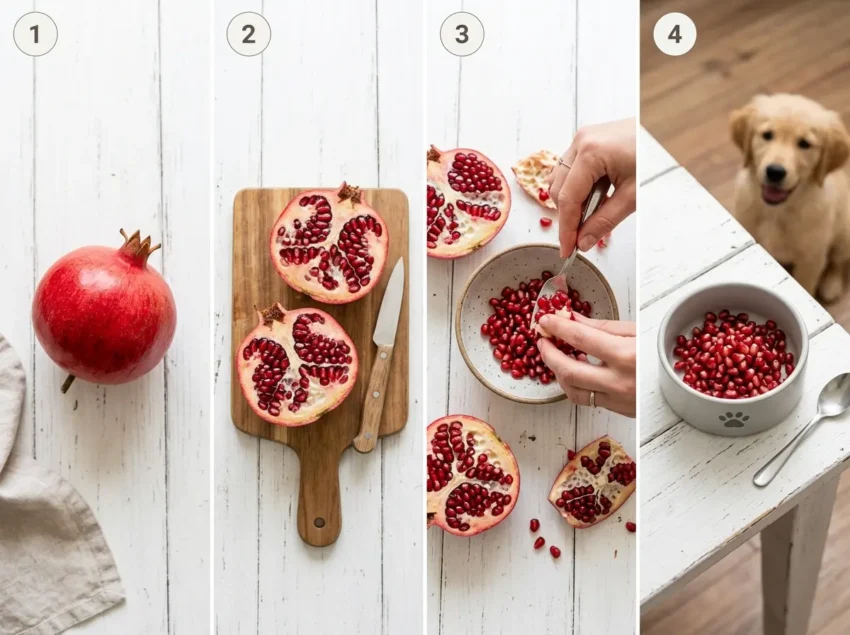
Quick answer:
Dogs should not eat pomegranates. While it isn’t classified as severely toxic, pomegranate contains tannins and ellagic acid that can cause vomiting, diarrhea, and stomach upset in dogs. The seeds also pose a choking risk. If your dog ate a small amount, monitor for symptoms. If they ate a lot, contact your vet.
Key Takeaways:
- Pomegranate is not recommended for dogs — tannins can irritate their digestive system
- Seeds (arils) are a choking hazard and hard for dogs to digest
- Pomegranate juice is high in sugar and concentrated tannins — avoid it entirely
- Pomegranate peel is the most problematic part — keep it away from your dog
- If your dog ate a small piece, monitor for vomiting or diarrhea for 24 hours
- Safe fruit alternatives exist — blueberries, watermelon, and apple slices are better choices
You’re enjoying a bowl of fresh pomegranate arils, and your dog is watching you with those soft, hopeful eyes. It feels harmless. One little piece — what’s the worst that could happen?
The honest answer: pomegranate is not safe for dogs. It’s not in the same category as grapes or xylitol, but it does contain compounds — primarily tannins and ellagic acid — that dogs process very differently from humans. For many dogs, even a modest amount can mean hours of stomach upset, vomiting, or diarrhea. For smaller dogs and puppies, the risk is higher still.
By the time you finish this page, you’ll know exactly what makes pomegranate a poor choice for your dog, which forms carry the most risk, what symptoms to watch for and when to expect them, and what to do if your dog already got into some. There’s no need to panic — but there is good reason to know the facts.
Why Pomegranate Is Not Safe for Dogs
Pomegranate (Punica granatum) contains two compounds that sit at the heart of the concern: tannins and ellagic acid.
Tannins are naturally occurring plant compounds found throughout the fruit — in the arils, the peel, and especially in pomegranate juice. In humans, tannins are well-tolerated and linked to antioxidant activity. In dogs, the story is different. Tannins bind to proteins in the digestive tract and cause gastrointestinal irritation. The result is often nausea, vomiting, and diarrhea — sometimes within a few hours of eating the fruit.
Ellagic acid is also present in pomegranate arils and juice. While it’s studied for antioxidant properties in humans, dogs metabolize it poorly. For many dogs, it contributes to digestive upset and, in higher amounts, potential oxidative stress on the gut lining.
One important clarification: pomegranate is not currently listed on the ASPCA’s toxic foods list as severely toxic. That distinction matters — it means pomegranate is not in the same emergency category as grapes, raisins, or xylitol. But “not severely toxic” does not mean safe. It means the risk profile is different, not absent. A dog that eats a handful of pomegranate arils is unlikely to need emergency care, but they may spend the next several hours feeling genuinely unwell.
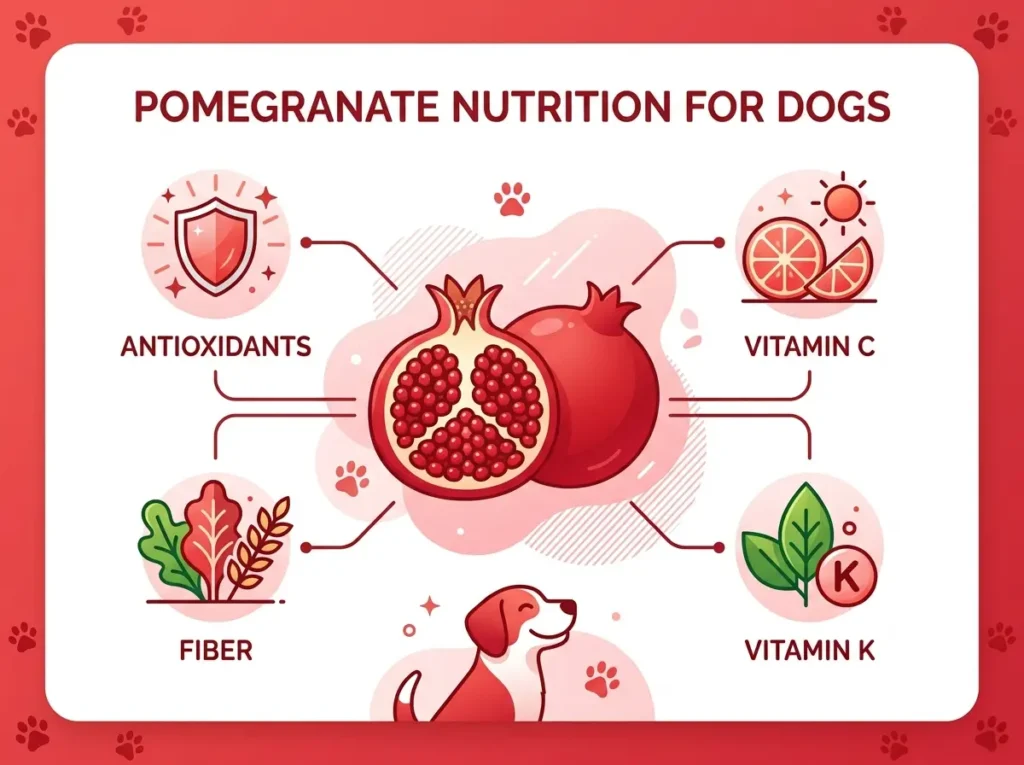
| Compound | Found In | Effect on Dogs |
| Tannins | Arils, peel, juice | GI irritation, vomiting, diarrhea |
| Ellagic acid | Arils, juice | Digestive upset, potential oxidative stress |
| Natural sugars | Juice, arils | Blood sugar spike; unsuitable for diabetic dogs |
| Fiber | Arils, peel | Can cause loose stools in large amounts |
Are Pomegranate Seeds Safe for Dogs?
The seeds inside pomegranate arils are small, hard, and not particularly digestible. For small breeds, they’re a genuine choking hazard. For any dog that eats a larger quantity, they can contribute to intestinal discomfort — and in significant amounts, there’s a risk of partial blockage.
That said, it’s worth calibrating this honestly. A healthy adult Labrador that snatches one or two arils off the floor is unlikely to suffer anything serious. The risk is real, but it scales with quantity and dog size. A Chihuahua or a puppy eating the same two arils faces a meaningfully higher risk from the same amount.
Quick size reference:
- Large/medium dogs — 1–2 arils: likely no serious symptoms; monitor closely
- Small dogs and puppies — 1–2 arils: possible mild GI upset; watch carefully for 24 hours
All the Forms of Pomegranate — Which Is Most Dangerous?
This is where most pet health articles fall short. Pomegranate comes in many forms, and the risk level varies significantly between them. Here’s what you need to know about each one.
Fresh Pomegranate Arils
Fresh arils carry the lowest risk of all pomegranate forms — but they’re still not recommended. The fleshy part contains tannins, and the hard seed inside each aril is a choking risk, particularly for smaller breeds. If your dog grabbed a couple of arils off the floor, stay calm and monitor. If they ate a significant portion, read on.
Pomegranate Juice
Pomegranate juice concentrates both tannins and natural sugars into liquid form — which means it’s absorbed faster and hits the digestive system harder than fresh fruit. Even a small amount can trigger stomach upset. Some commercial pomegranate juices also contain added sweeteners, including xylitol, which is acutely toxic to dogs. Always check the label before assuming any juice product is safe.
Dried Pomegranate
Drying concentrates everything — the sugar content rises, the tannin levels become more potent, and the chewy texture creates an added risk of the fruit sticking in the throat or between teeth. Dried pomegranate is a worse choice than fresh, not a safer one.
Pomegranate Peel and Rind
The peel is the most problematic part of the fruit. Tannin concentration is highest in the rind, and dogs that chew on discarded peels or dig through compost are at real risk of significant GI distress. Keep kitchen scraps and compost bins firmly secured — this is the form most likely to cause noticeable symptoms.
Pomegranate Extract and Supplements
Some veterinary-formulated dog supplements include pomegranate extract at carefully controlled, low concentrations — these are generally considered safe because the dosage is managed. Human pomegranate supplements are a different matter entirely. The concentration is formulated for human physiology and should never be given to your dog without explicit veterinary guidance. When in doubt, ask your vet before introducing any supplement.
What Happens If a Dog Eats Pomegranate?
The answer depends on how much your dog ate, which part of the fruit, and how big your dog is. Here’s a clear breakdown of what to expect and when.
Most reactions appear within 2 to 8 hours of ingestion. If your dog ate a small amount and shows no symptoms after 24 hours, they’ve likely cleared it without issue.
| Amount Eaten | Dog Size | Expected Symptoms | Action |
| 1–2 arils | Large/Medium | Likely none | Monitor for 24 hrs |
| 1–2 arils | Small/Puppy | Possible mild upset | Monitor closely |
| Small handful | Any size | Vomiting, diarrhea | Monitor; call vet if symptoms worsen |
| Peel/rind | Any size | Moderate to severe GI distress | Call your vet |
| Pomegranate juice (2+ tbsp) | Any size | GI upset, blood sugar spike | Call your vet |
Call your vet immediately if you notice:
- Repeated vomiting (more than 2–3 times)
- Bloody stool
- Visible signs of choking or throat irritation
- Lethargy lasting more than 24 hours
- Known ingestion of pomegranate juice containing xylitol
If you’re unsure whether the pomegranate product your dog consumed contained xylitol, treat it as an emergency and contact your vet or an animal poison control line without delay.
Can Puppies Eat Pomegranate?
No — and more firmly than for adult dogs. A puppy’s digestive system is still developing, which makes it significantly more sensitive to compounds like tannins. An amount that a healthy adult dog of medium or large size might handle without visible symptoms could cause real distress in a puppy of any breed. There’s no nutritional benefit for puppies that justifies the risk. Keep pomegranate — in all forms — entirely out of their reach.
Safe Fruit Alternatives for Your Dog
Your dog’s love of watching you eat fruit doesn’t have to go unrewarded. These options are genuinely dog-safe and genuinely enjoyable for most dogs:
- Blueberries — antioxidant-rich, low-calorie, and safe in moderate amounts. A great training treat. [Can dogs eat blueberries?
- Watermelon (seedless, no rind) — hydrating, sweet, and low in calories. Remove seeds and skip the rind entirely.
- Apple slices (no seeds, no core) — a good fiber source with natural sweetness. Apple seeds contain cyanogenic compounds and must always be removed. Can dogs eat apples?
- Mango (no pit, in small amounts) — sweet and safe in moderation. The pit is a choking hazard, so always remove it first. Can dogs eat mango?
Always avoid: grapes and raisins (highly toxic to dogs, even in small amounts), cherries (the pit, leaves, and stems are toxic), and citrus fruits in large quantities.
For a complete list, explore our full guide to [safe fruits for dogs →] and [foods dogs should never eat →].
FAQ — Can Dogs Eat Pomegranate?
Is pomegranate on the ASPCA toxic food list?
Pomegranate is not currently listed as severely toxic on the ASPCA’s toxic foods database. However, this does not mean it is safe for dogs. The ASPCA’s list focuses on acute, life-threatening toxicity. Pomegranate’s tannins and ellagic acid can still cause significant digestive distress — “not on the list” and “safe to eat” are not the same thing.
Can large dogs eat pomegranates safely?
Large dogs face lower risk from small amounts — one or two arils are unlikely to cause serious symptoms in a healthy adult Golden Retriever or Labrador. That said, “lower risk” is not the same as “no risk.” Pomegranate is still not recommended for large dogs, and larger quantities can cause vomiting and diarrhea in any size dog.
Can small dogs eat pomegranate seeds?
Small dogs should not eat pomegranate seeds. The hard inner seed is a choking risk for smaller breeds, and the tannin content in even a small serving can cause notable GI upset in a dog with a smaller body mass. The risk-to-benefit ratio offers nothing worth taking the chance.
Does pomegranate cause diarrhea in dogs?
Yes, it can. Tannins in pomegranate irritate the gastrointestinal lining, and diarrhea is one of the most commonly reported symptoms after a dog eats pomegranate. Symptoms typically appear within 2 to 8 hours of ingestion and may also include vomiting, stomach gurgling, and lethargy.
Is pomegranate extract safe for dogs?
It depends on the source. Veterinary-formulated supplements that include pomegranate extract are generally considered safe because the concentration is controlled for canine use. Human pomegranate supplements are not formulated for dogs and should never be given without veterinary guidance. Always check with your vet before introducing any supplement.
Can dogs eat pomegranate-flavored dog treats?
Some dog treats are formulated with small amounts of pomegranate as a flavoring agent, at concentrations generally considered safe for dogs. Always read the ingredient list and check that the treat has been formulated specifically for dogs. If you’re uncertain, contact the manufacturer or ask your vet.
Should I take my dog to the vet after eating pomegranate?
It depends on how much they ate and what symptoms they’re showing. If your dog ate one or two arils and is acting normally, calm monitoring at home for 24 hours is usually the right first step. If they ate a significant amount — especially peel or juice — or if they’re showing repeated vomiting, bloody stool, or prolonged lethargy, contact your vet. When in doubt, a quick phone call to your veterinary clinic costs nothing and gives you peace of mind.
Keep Your Dog Safe, One Snack at a Time
Pomegranate is not the most dangerous food your dog could encounter — but it’s not a safe snack either. Tannins irritate the digestive system, seeds pose a choking risk, and concentrated forms like juice and peel carry the highest risk of causing real discomfort. The good news: if your dog grabbed a stray rail off the kitchen floor, there’s no need to panic. Monitor calmly, watch for symptoms over the next 24 hours, and call your vet if anything looks off.
For future snack moments, blueberries, watermelon, and apple slices give your dog something genuinely enjoyable without the worry. Knowing what belongs in your dog’s bowl and what doesn’t is one of the simplest ways to look after them well.
Your dog’s wellbeing starts with knowing what’s on their plate. Explore our full guide to [dog-safe foods →] and feel confident about every treat you share.