

Can Dogs Eat Watermelon? How Much Is Safe and What to Avoid
Yes, dogs can safely eat watermelon flesh. Watermelon is a low-calorie, ultra-hydrating fruit packed with beneficial vitamins, antioxidants, and essential minerals. However, while the sweet pink or red flesh makes a fantastic summer snack, feeding your dog the seeds or green rind can lead to severe gastrointestinal distress, choking, or dangerous bowel obstructions.
Before sharing a slice with your canine companion, it is essential to understand how to prepare it properly, how to avoid hidden risks, and how much your dog can consume based on their body weight. Watermelon should always be served as an occasional treat within a balanced diet—explore our master guide to safe fruits for dogs to learn how other fruits fit into your pet’s daily routine.
💡 Key Takeaways
- Safe Parts Only: Dogs should only consume the soft red or yellow fruit flesh.
- Remove Seeds & Rind: Always peel off the tough outer skin and pick out black seeds to prevent intestinal blockages.
- Hydration Powerhouse: Watermelon is composed of 92% water, making it an ideal snack for warm weather and outdoor exercise.
- Follow the 10% Rule: Treats must never account for more than 10% of your dog’s total daily calories.
- Special Health Concerns: Dogs with canine diabetes, obesity, or chronic digestive issues require strict portion limits or vet consultation prior to feeding.
Health Benefits of Watermelon for Dogs
Watermelon is far more than a refreshing treat; it delivers meaningful nutritional advantages that support your dog’s overall wellness when served in moderation.
Key Vitamins and Antioxidants
- Vitamin A: Crucial for maintaining healthy vision, immune function, cell growth, and coat texture.
- Vitamin B6: Plays a critical role in brain development, red blood cell synthesis, nervous system balance, and hormone regulation.
- Vitamin C: A potent antioxidant that helps neutralize harmful free radicals, reduces systemic inflammation, and supports immune defense.
- Lycopene: The biological carotenoid pigment responsible for watermelon’s rich red color. Lycopene acts as a powerful cell-protective antioxidant that supports cardiovascular function.
Hydration and Electrolyte Support
Dehydration in active dogs during summer months can lead to lethargy, kidney strain, and heat distress. Because watermelon consists of 92% water, serving fresh or frozen watermelon cubes provides supplemental fluid intake. Furthermore, it naturally contains vital electrolytes—specifically potassium and magnesium—which assist in maintaining proper nerve transmission, fluid regulation, and muscle performance.
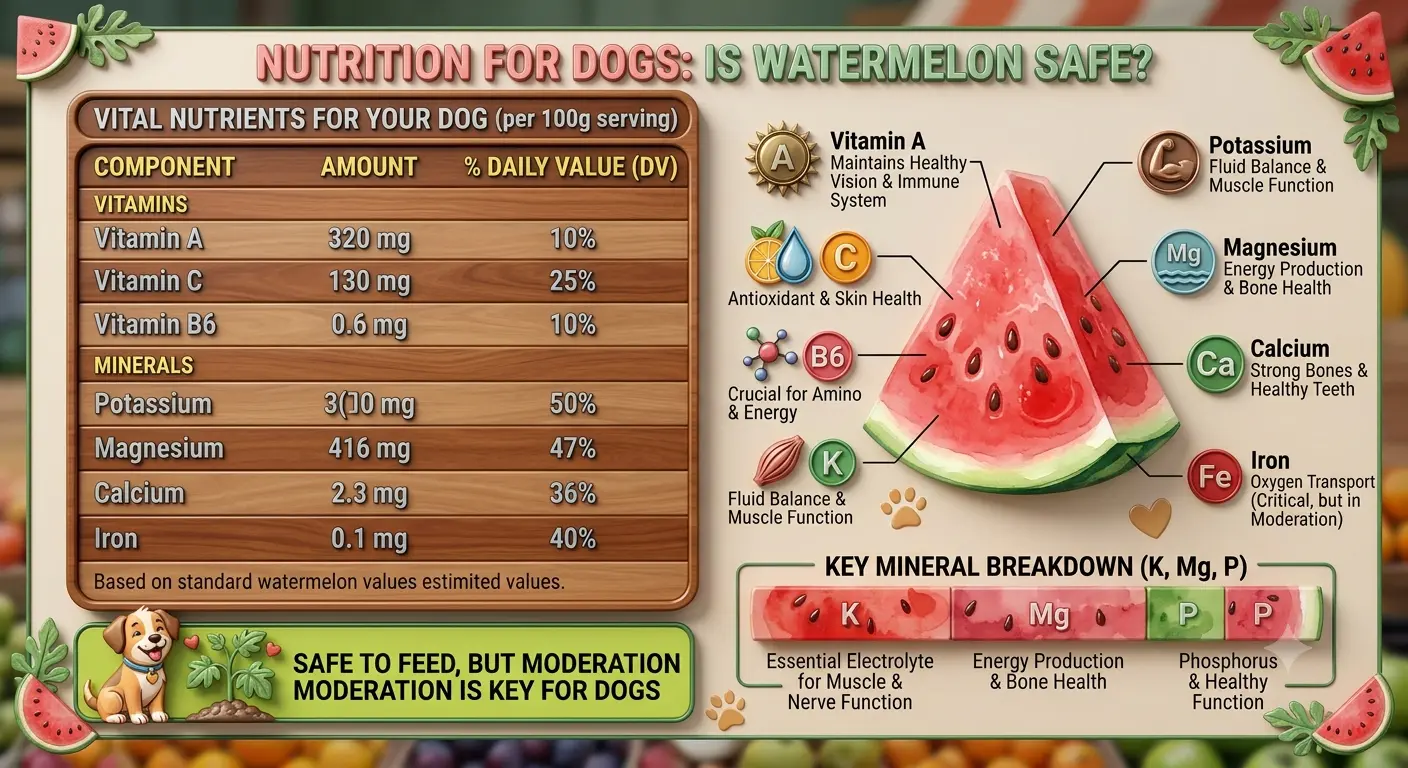
Nutritional Breakdown Per 100 Grams
The following table outlines the nutrient profile of raw, seedless watermelon flesh per 100-gram serving (~2/3 cup of cubed melon):
| Nutrient Component | Value per 100g | Direct Health Benefit for Canines |
| Water Content | ~91.4 g | Promotes hydration and supports cellular kidney flushing. |
| Calories | 30 kcal | Exceptionally low-calorie option for weight management. |
| Dietary Fiber | 0.4 g | Aids mild digestive regularity and colon health. |
| Natural Sugars | 6.2 g | Provides quick, digestible energy (requires strict portioning). |
| Potassium | 112 mg | Supports cardiac rhythm and neuromuscular balance. |
| Magnesium | 10 mg | Facilitates energy production and protein synthesis. |
| Vitamin A | 569 IU | Promotes clear ocular health and skin tissue repair. |
The Hidden Dangers: Seeds, Rinds, and Sugar
While the inner flesh is non-toxic and healthy, other structural parts of the fruit introduce significant medical hazards.
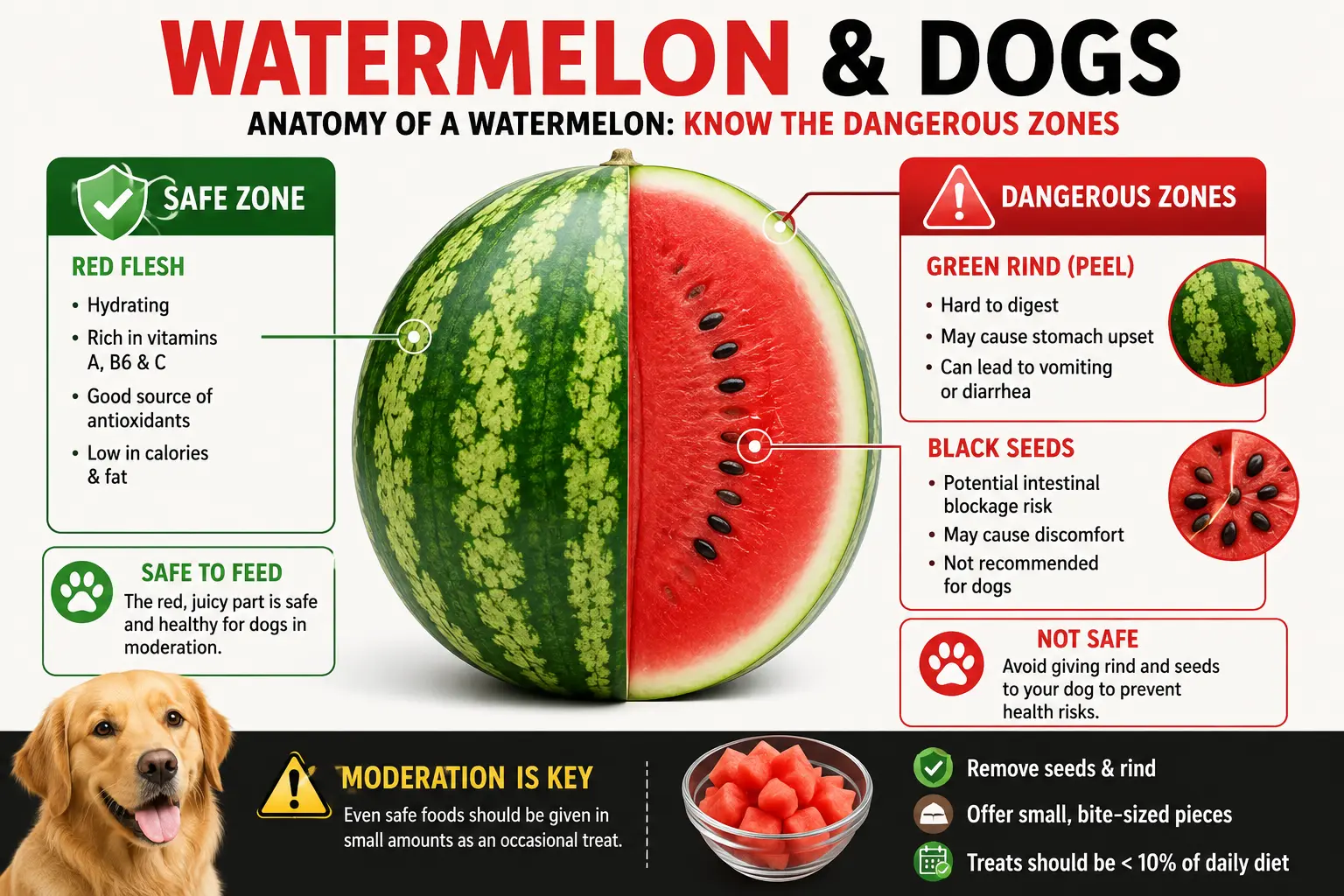
1. Why Watermelon Rinds Cause Intestinal Blockages
The thick, fibrous green outer skin (and the tough white inner rind) is extremely difficult for a dog’s digestive system to break down. Canine digestive enzymes cannot dissolve raw rind tissue.
If a dog swallows chunks of rind, the dense material can easily lodge in the stomach exit or small intestine, causing a foreign body obstruction. Gastrointestinal blockages are life-threatening medical emergencies that frequently require invasive surgical removal. Even if a small fragment passes through the intestines, its rough edges can cause severe mechanical irritation, triggering gastroenteritis, abdominal cramping, and intense vomiting.
2. Watermelon Seeds: Choking Risk vs. Cyanide Myths
- Physical Obstruction Risks: Hard, dark, mature watermelon seeds pass through the gut undigested. In toy and small breed dogs (such as Chihuahuas, Yorkies, or French Bulldogs), swallowed seeds can clump together with food material and block the intestinal lumen. They also present an immediate choking hazard for gulping eaters.
- Busting the Cyanide Myth: A common misconception among pet owners is that watermelon seeds contain dangerous levels of cyanide, similar to apple seeds or peach pits. In reality, watermelon seeds contain negligible amounts of cyanogenic compounds and do not pose a risk of chemical cyanide toxicity. The genuine threat remains strictly physical obstruction and choking.
- Soft White Seeds: The pale, underdeveloped white seeds present in seedless watermelons are soft, pliable, and generally pass without issue. However, picking out as many as possible is still best practice.
3. Natural Sugars & Special Canine Health Conditions
Watermelon contains natural fructose. While fructose is healthier than processed sugars, concentrated intake can cause metabolic issues in vulnerable dogs:
- Diabetic Dogs: Fructose triggers blood glucose spikes. Diabetic dogs require precise dietary control, and fruit treats should only be offered with direct veterinary approval.
- Overweight Dogs: Uncontrolled fruit treats add extra calories that can stall weight loss efforts.
- Sensitive Stomachs: Introducing high-water, high-sugar fruits rapidly can upset gut flora, resulting in osmotic diarrhea.
How Much Watermelon Can a Dog Eat? (Weight-Based Portion Guide)
Veterinary nutritionists emphasize the 10% Rule: complementary treats—including fresh fruits and vegetables—must never exceed 10% of a dog’s daily caloric requirement. The remaining 90% must come from a complete and balanced, age-appropriate dog food.
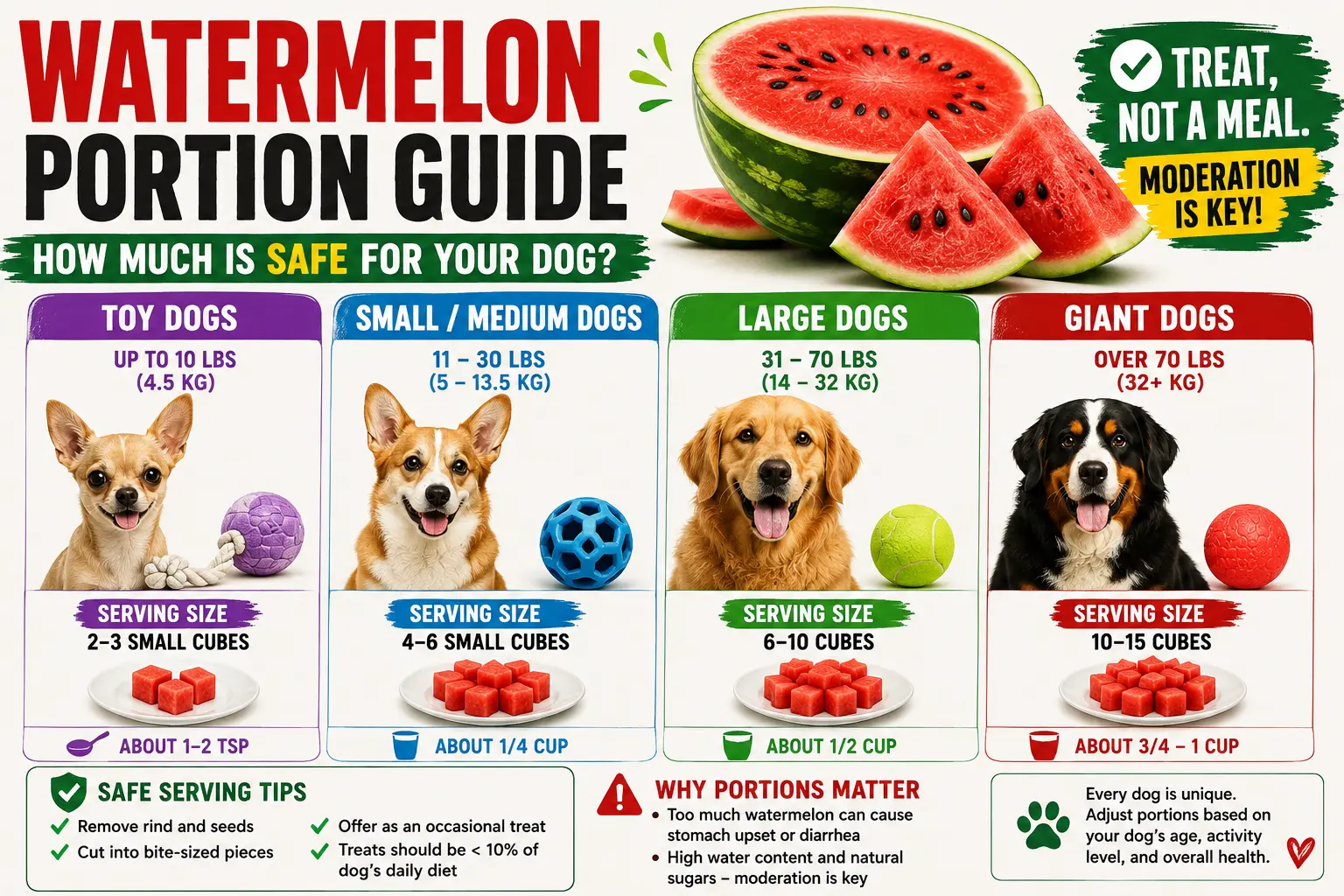
Assuming a standard bite-sized, seedless, rindless cube of watermelon weighs approximately 15 grams and contains ~4.5 calories, follow this weight-based serving table:
| Dog Weight Category | Representative Breeds | Daily Portion Limit | Total Caloric Impact |
| Toy Breed (< 10 lbs) | Chihuahua, Pomeranian, Maltese | 1 small cube | ~4.5 kcal |
| Small Breed (11 – 20 lbs) | French Bulldog, Shih Tzu, Pug | 1 to 2 small cubes | ~4.5 – 9 kcal |
| Medium Breed (21 – 50 lbs) | Beagle, Border Collie, Cocker Spaniel | 2 to 4 cubes | ~9 – 18 kcal |
| Large Breed (51 – 90 lbs) | Golden Retriever, Labrador, Boxer | 5 to 6 cubes | ~22.5 – 27 kcal |
| Giant Breed (90+ lbs) | German Shepherd, Great Dane, Mastiff | 6 to 8 cubes | ~27 – 36 kcal |
⚠️ Special Note for Puppies: Puppies have developing digestive tracts. Introduce watermelon only after 12 weeks of age, limiting the portion to a single half-inch bite to test tolerance.
How to Safely Prepare Watermelon for Your Dog
Preparing watermelon for canines requires four straightforward safety steps:
[Image Placement: Step-by-Step Preparation Diagram – Wash, Peel, Seed, Cube]
- Wash the Exterior Skin: Thoroughly scrub the outside rind under cool running water before cutting. This prevents bacteria, dirt, or pesticides on the surface from transferring to the flesh via the knife blade.
- Remove All Rind and Skin: Cut away the green skin and all of the tough white inner rim, leaving only the soft red or yellow center.
- De-Seed Thoroughly: Carefully slice through the flesh and flick out hard black seeds. Selecting seedless varieties minimizes prep time.
- Cut into Bite-Sized Cubes: Slice the fruit into 1-inch or smaller cubes (1/2-inch for small dogs) to prevent choking and allow precise portion tracking.
3 DIY Vet-Approved Frozen Watermelon Treat Recipes
Hydrating DIY treats are simple to prepare at home and make summer enrichment easy. For more safe options, check out our guide on feeding strawberries to dogs.
1. Pureed Frozen “Watermelon Pupsicles”
- Ingredients: 2 cups seedless watermelon flesh, 1/2 cup unsweetened, xylitol-free pure coconut water.
- Instructions: Add ingredients to a blender and process until smooth. Pour the mixture into silicone dog-treat molds or standard ice cube trays. Freeze for 4 hours until solid. Serve one cube as a cooling treat.
2. Watermelon & Greek Yogurt Coolers
- Ingredients: 2 cups seedless watermelon flesh, 1/2 cup plain, unsweetened non-fat Greek yogurt.
- Instructions: Blend the melon and Greek yogurt together until creamy. Greek yogurt adds digestive probiotics and calcium. Pour into molds and freeze. (Avoid if your dog is lactose intolerant).
3. Fresh Summer Fruit Salad Topper
- Ingredients: 1/2 cup cubed seedless watermelon, 1/4 cup fresh blueberries, 1/4 cup diced cucumber.
- Instructions: Toss ingredients together. Sprinkle a small spoonful over your dog’s regular dinner bowl on warm days as an appetite stimulant. You can also mix in small portions of other hydrating melons like cantaloupe.
What to Do If Your Dog Ate Watermelon Seeds or Rind
Accidents happen quickly. If your dog gets into the compost bin or snatches a watermelon rind off a picnic table, follow this clinical triage assessment:
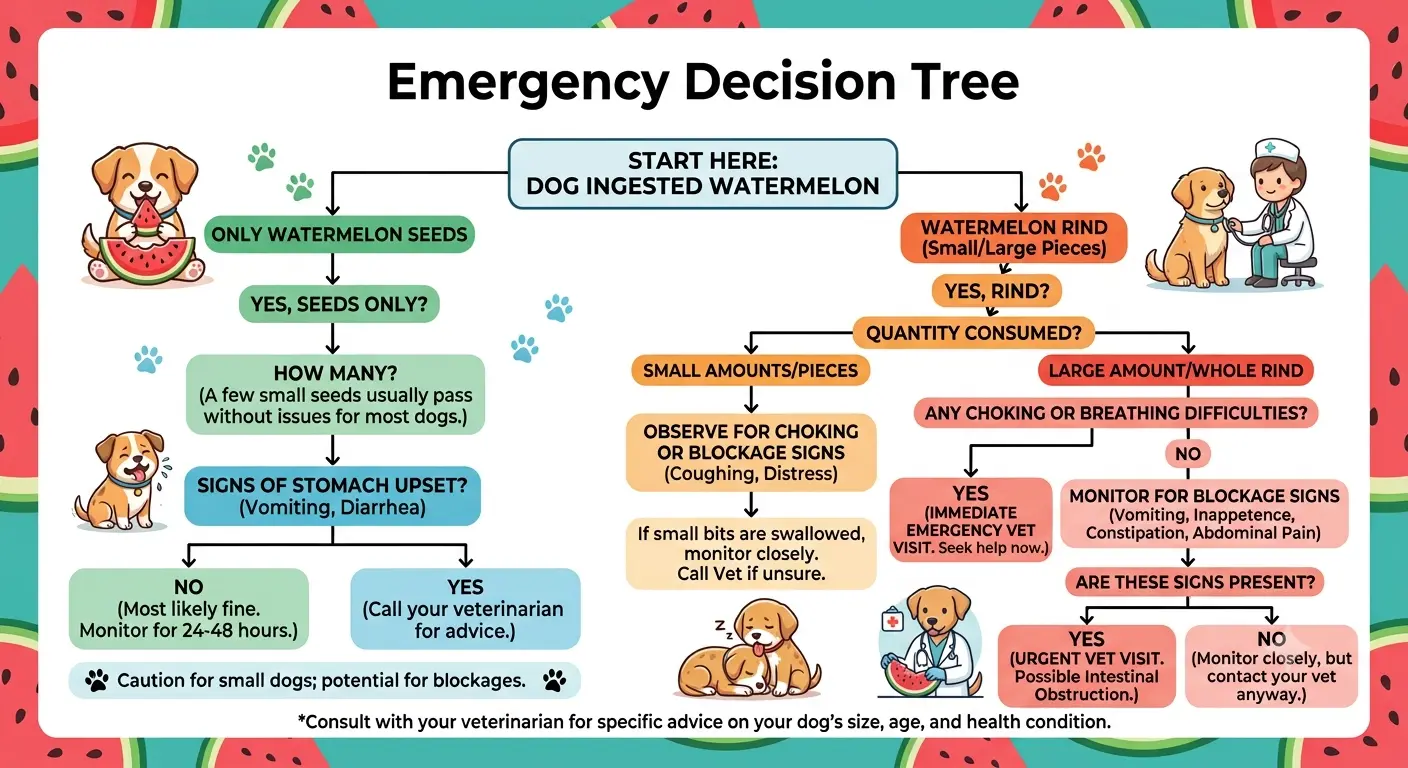
Warning Signs of an Intestinal Obstruction
If your dog consumed watermelon rind or a large volume of seeds, monitor them continuously over the next 24 to 48 hours. Contact a veterinarian or emergency clinic immediately if you note any of the following symptoms:
- Repeated Vomiting or Dry Heaving: The stomach attempting to clear a blocked passage.
- Lethargy and Weakness: Noticeable drop in energy or refusal to move.
- Abdominal Pain: Whining, restlessness, or adopting a “prayer position” (front legs down, rear end up) to relieve pressure.
- Loss of Appetite: Complete refusal of normal food or water.
- Stool Changes: Severe straining to defecate, painful diarrhea, or total absence of bowel movements.
- Abdominal Distension: A swollen, firm, or tight stomach area.
(Note: Always guard against accidental ingestion of toxic fruits like grapes and raisins, which carry severe kidney toxicity risks far beyond mechanical obstruction).
Safe vs. Unsafe Watermelon Products
Not all watermelon-flavored foods are created equal. Use this safety lookup matrix before sharing:
| Watermelon Product / Type | Safe for Canines? | Operational Notes & Warnings |
| Red Seedless Watermelon Flesh | YES (Recommended) | Ideal choice. Highly nutritious and safe when cubed. |
| Yellow / Orange Watermelon | YES | Identical nutritional safety profile; rich in beta-carotene. |
| Frozen Watermelon Cubes | YES | Excellent summer treat. Avoid oversized frozen blocks that could chip teeth. |
| Watermelon Rind / Outer Skin | NO | High risk of choking, dental fracture, and intestinal blockage. |
| Store-Bought Watermelon Juice | NO | Often loaded with added sugars, artificial flavors, or toxic sweeteners like Xylitol (Birch Sugar). |
| Watermelon Candy / Popsicles | NO | High sugar density, artificial dyes, and potential chemical toxicity. |
Frequently Asked Questions
Can puppies eat watermelon?
Yes, puppies can eat small amounts of fresh watermelon flesh once they are weaned onto solid food (typically after 8 to 12 weeks of age). Because puppy digestive systems are sensitive, limit serving sizes to a single 1/2-inch cube and monitor for loose stools over the following 24 hours. Always remove all seeds and rinds completely.
Can watermelon give a dog diarrhea?
Yes. Eating too much watermelon can cause loose stools or acute diarrhea. Watermelon contains a high percentage of water and dietary fiber; a sudden influx of either can speed up bowel transit time. Always adhere strictly to portion guidelines based on your dog’s weight.
Is yellow watermelon safe for dogs?
Yes! Yellow and orange watermelons are completely safe for dogs. They possess the same high water content, vitamins, and minerals as red watermelon, differing only in their natural pigment profile (containing higher levels of beta-carotene rather than lycopene). The same safety rules apply: remove all seeds and rind.
Can dogs drink pure, fresh watermelon juice?
If you juice 100% fresh, seedless watermelon flesh at home with no added ingredients, sugars, or water, a few tablespoons are safe for your dog. Never feed store-bought commercial watermelon juices, as they frequently contain artificial preservatives, excess sodium, or toxic artificial sweeteners like Xylitol.
Can dogs eat cooked or blended watermelon rind?
No. Even when cooked or blended, watermelon rind remains excessively fibrous and dense for the canine gut. Cooking does not sufficiently break down the tough cellular matrix of the rind to guarantee safe digestion, so it should always be discarded.
Watermelon isn’t the only fruit worth exploring for your dog’s treat rotation. See how it compares to our guide on cantaloupe, or check out blueberries for another hydrating, antioxidant-rich option. And before your next fruit bowl trip, make sure you know why grapes are dangerous for dogs.
Final Verdict
Watermelon is a healthy, low-calorie, and deeply hydrating treat that most dogs love. As long as you strictly remove the hard black seeds and green rind, cut the flesh into bite-sized cubes, and keep portion sizes within the 10% daily treat rule, you can safely share this delicious summer fruit with your four-legged best friend!