
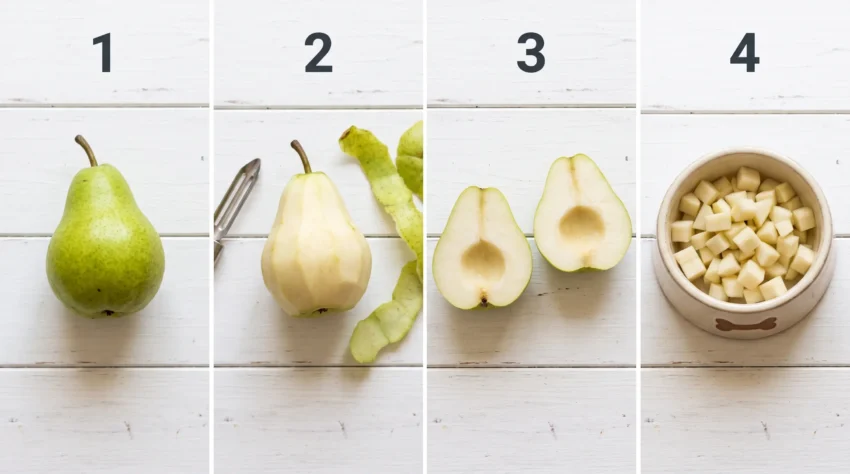

Quick answer: Yes,
Dogs can safely eat pears in moderation.
Fresh pear flesh is low in calories and rich in fiber, vitamin C, and vitamin K.
Always remove the seeds, core, and stem before serving — pear seeds contain trace amounts of cyanide. Serve in small, bite-sized pieces as an occasional treat.
Key Takeaways:
- Pear flesh is safe for most dogs — seeds, core, and stem are not
- Pear seeds contain amygdalin, which releases cyanide when digested
- Serve fresh, ripe pear in small amounts — no more than a few small slices per day
- Avoid canned pears in syrup — the added sugar is harmful
- Dogs with diabetes, pancreatitis, or kidney disease should check with a vet first
- Puppies and senior dogs can eat pear, but in smaller amounts
You’re slicing a pear at the kitchen counter. Your dog sits nearby, eyes locked on every move. You break off a small piece and pause — is pear one of the safe ones?
The short answer is yes. According to the American Kennel Club (AKC) and PetMD, pears are safe for dogs to eat. Fresh pear flesh is non-toxic, gentle on digestion, and genuinely nutritious in the right amounts. The risk doesn’t come from the fruit itself — it comes from the seeds, the core, and serving too much too often.
This guide covers everything you need to know: the real health benefits, which parts are safe, exact portion sizes by your dog’s weight, how different pear types compare, and what to do if something goes wrong. No vague advice like “give in moderation.” Just clear, practical answers you can actually use.
Are Pears Safe for Dogs?
Yes — pear flesh is non-toxic and widely recognized as dog-safe. The AKC and PetMD both confirm that fresh pear is a fine occasional treat for healthy adult dogs. Your dog is not in danger from the fruit itself.
The concern comes from the seeds and core. Pear seeds contain a compound called amygdalin, which breaks down into a form of cyanide during digestion. One or two seeds from a single piece of pear is unlikely to seriously harm a large dog, but it’s a cumulative risk — and not one worth taking. Remove the seeds every single time.
The other consideration is size, breed, and existing health conditions. A Great Dane and a Chihuahua don’t need the same serving size, and a dog managing diabetes needs a different approach than a healthy two-year-old Labrador. Those nuances are covered in detail below.
Safe parts of a pear:
- ✅ Fresh pear flesh (ripe, peeled)
- ✅ Pear skin (in small amounts for healthy dogs, though peeling is better practice)
Unsafe parts of a pear:
- ❌ Seeds — contain amygdalin (cyanide precursor)
- ❌ Core — choking hazard, also contains seeds
- ❌ Stem — hard, indigestible, potential choking risk
Nutritional Benefits of Pears for Dogs
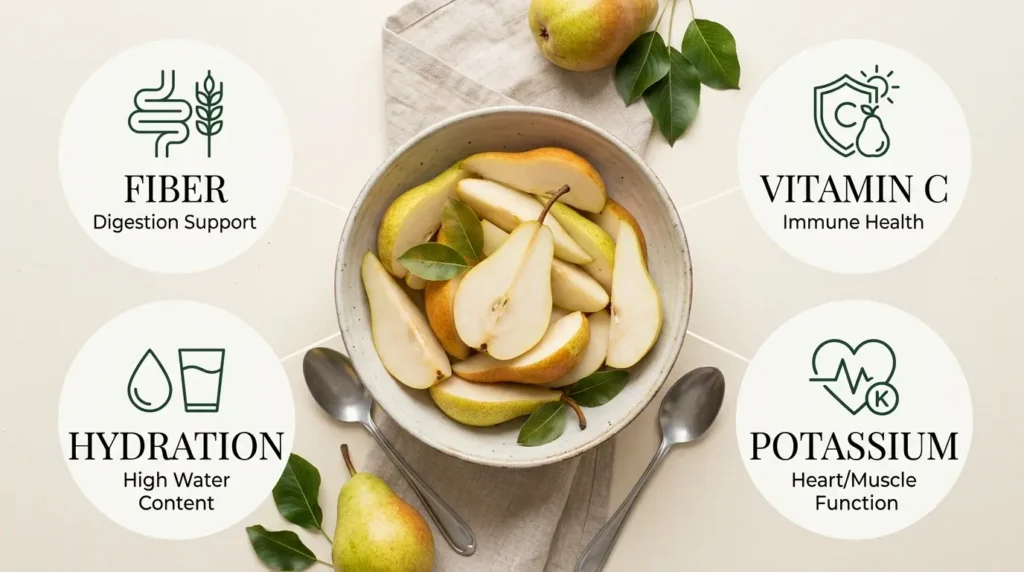
Pear isn’t just a safe treat — it brings genuine nutritional value to your dog’s diet when served correctly. Fresh pear flesh offers fiber, key vitamins, and a high water content that supports hydration, especially on warm days.
Here’s what’s inside a fresh pear and why it matters for your dog:
| Nutrient | Benefit for Dogs | Notes |
| Dietary Fiber | Supports digestion and gut motility | Too much can cause loose stools |
| Vitamin C | Antioxidant support, immune health | Dogs produce their own; pear adds a small bonus |
| Vitamin K | Blood clotting and bone health | — |
| Vitamin A | Vision and immune function | — |
| Water Content | Hydration | Especially useful as a summer snack |
These benefits apply specifically to fresh pear. Canned, dried, or syrup-packed pear forms lose much of this value and often introduce sugar or additives that cancel out any nutritional gain.
What Parts of a Pear Can Dogs Eat?
This is where most dog owners have questions — and where most other guides fall short. Here’s a clear breakdown of every part of the pear.
Can Dogs Eat Pear Flesh?
Yes. The flesh of a ripe pear is the safest and most beneficial part. It’s soft, easy to digest, and packed with the nutrients listed above.
Ripe pears are best. Overripe pears are high in fermented natural sugars, which can upset your dog’s stomach. Unripe pears are harder, more acidic, and harder to digest — neither ideal nor necessary when ripe pears are readily available.
Can Dogs Eat Pear Skin?
Technically, pear skin is not toxic to dogs. However, it’s harder to digest than the flesh and can cause GI upset in sensitive dogs, small breeds, and puppies. The skin may also carry pesticide residue even after washing.
Best practice: peel the pear before serving. It takes ten seconds and removes the guesswork entirely.
Can Dogs Eat Pear Seeds?
No — and this one matters. Pear seeds contain amygdalin, a naturally occurring compound that metabolizes into hydrogen cyanide during digestion. A large dog eating one or two seeds from a single serving is unlikely to show serious symptoms, but the risk compounds with repeated exposure.
If your dog ate a pear and you’re not sure whether they swallowed seeds, monitor them closely. Signs to watch for include rapid breathing, excessive drooling, dilated pupils, and weakness. If you notice any of these, call your vet or the ASPCA Animal Poison Control Center at (888) 426-4435 immediately.
Remove seeds before every serving — no exceptions.
Can Dogs Eat the Pear Core or Stem?
No. The core is a choking hazard, especially for smaller dogs, and it contains seeds. The stem is hard and indigestible. Both should be removed and discarded before you offer your dog any piece of pear.
If your dog grabbed a pear off the counter and ate the core whole, check for choking first. If they seem fine physically, monitor for digestive symptoms — loose stool, vomiting, or stomach gurgling — over the next 24 hours. If symptoms appear or worsen, call your vet.
How Much Pear Can a Dog Eat?
Treats — including fruit — should make up no more than 10% of your dog’s daily caloric intake. Pear is low in calories, but its natural sugar content adds up quickly if you’re generous with portions.
Here’s a practical serving guide based on your dog’s size. These are general recommendations — dogs with health conditions should follow vet-specific guidance.
| Dog Size | Weight Range | Safe Serving Size | Frequency |
| Toy / Extra Small | Under 10 lbs | 1 small slice (no skin or seeds) | Occasionally |
| Small | 10–25 lbs | 1–2 small slices | 2–3x per week max |
| Medium | 25–60 lbs | 2–3 slices | A few times per week |
| Large | 60–100 lbs | 3–4 slices | A few times per week |
| Giant | 100+ lbs | Up to a small handful of slices | A few times per week |
Watch for signs that your dog has had too much: loose stools, gas, vomiting, or stomach gurgling. If any of these appear, scale back the portion and wait a few days before offering pear again.
Types of Pears — Which Are Safe for Dogs?
Not all pears are equal. Fresh pear is very different from canned pear in syrup, and the distinction matters.
Fresh Pears (Bartlett, Bosc, Asian, Green)
All fresh pear varieties are safe for dogs in flesh form, with seeds and core removed. Bartlett and Bosc are widely available and a solid choice. Asian pears have a higher water content than most Western varieties, making them a particularly hydrating summer snack. Green or unripe pears are harder and more acidic — ripe pears are a better option when available.
Canned Pears
Avoid canned pears packed in syrup or fruit juice. Even “light syrup” contains enough fructose to spike your dog’s blood sugar and, over time, contribute to weight gain and dental problems. If a can of pears contains nothing but pears and water — no added sugar, no preservatives — it’s technically safer, but fresh is always the better choice.
Dried and Dehydrated Pears
Drying concentrates natural sugars dramatically. A small amount of plain, unsweetened dehydrated pear is less harmful than syrup-packed canned pear, but dried pear should not be a regular treat. Avoid any dried pear with added sugar, sulfites, or artificial preservatives.
Frozen Pears
A great summer option. Freeze peeled, seed-free pear slices for a cooling treat your dog will love. No preparation needed beyond the standard seed and core removal.
Pear Baby Food and Puree
Only safe if the ingredient list contains pear and water — nothing else. Check labels carefully for xylitol (an artificial sweetener that is highly toxic to dogs), onion powder, garlic, or added sugar. If you see any of those on the label, skip it entirely.
Pears for Dogs with Health Conditions
Most healthy adult dogs tolerate fresh pear without any issues. Dogs managing certain conditions need a more careful approach.
Diabetic Dogs
Pears contain natural fructose, which affects blood sugar. Pear isn’t forbidden for diabetic dogs, but it’s not a treat to offer without consulting your vet first. If your vet clears it, keep portions very small and monitor your dog’s response.
Dogs with Pancreatitis
High-fiber fruits can aggravate a sensitive digestive system, particularly during a flare. Avoid pear entirely during active pancreatitis episodes. During remission, a small amount may be acceptable — but check with your vet before reintroducing any new food.
Dogs with Kidney Disease
Pears contain potassium and phosphorus, both of which may be a concern for dogs managing kidney disease. This is one case where self-prescribing is genuinely risky. Your vet can give you a clear answer based on your dog’s current bloodwork and dietary restrictions.
Dogs with Sensitive Stomachs or IBS
Start with a very small piece — one thin slice, peeled, with seeds fully removed. Wait 24 hours and watch for gas, loose stools, or vomiting. If your dog tolerates it well, you can slowly work up to a normal portion over time.
Pears for Puppies and Senior Dogs
Can Puppies Eat Pears?
Yes, but with extra care. Puppies’ digestive systems are still developing, so even a small amount of a new food can cause temporary upset. Offer a very small piece of peeled, seed-free pear — roughly half the portion you’d give a small adult dog of the same size. Watch for any reaction within the first 24 hours before making pear a regular treat.
Can Senior Dogs Eat Pears?
Generally yes. Fiber supports digestion, which tends to slow with age, so pear can actually be a practical addition to a senior dog’s treat rotation. If your older dog has tender gums or dental issues, ripe — or even slightly overripe — pear is easier to chew than harder fruits. Adjust portion sizes to account for lower activity levels.
Signs to watch for in both puppies and senior dogs:
- Loose stools or diarrhea
- Vomiting
- Excessive gas or stomach gurgling
- Loss of appetite after eating pear
If any of these appear, skip the pear for a few days and reint produce in a smaller amount.
How to Safely Prepare Pears for Your Dog
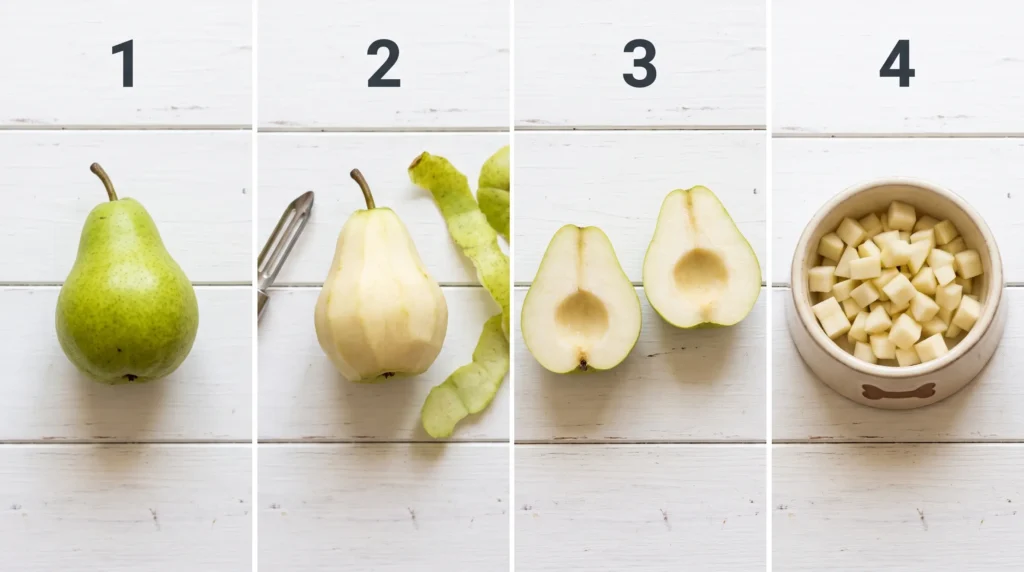
Preparation is simple. Follow these steps every time:
- Wash the pear thoroughly — rinse under cold running water to remove pesticide residue and surface bacteria
- Peel the skin — especially important for small breeds, puppies, and dogs with sensitive stomachs
- Remove the core, all seeds, and the stem — cut around the core completely and discard it
- Cut into small, bite-sized pieces — size them proportionally to your dog; a Chihuahua’s piece should be much smaller than a German Shepherd’s
- Serve plain and fresh — no sugar, no seasoning, no honey, no additions of any kind
- Introduce slowly — if it’s your dog’s first time eating pear, start with one small piece and wait a day before offering more
Signs Your Dog Ate Too Much Pear (Or Had a Bad Reaction)
Most dogs handle pear without any issues. But knowing what to look for puts you in control if something feels off.
| Symptom | What It May Indicate |
| Loose stools or diarrhea | Too much fiber or sugar; reduce portion size |
| Gas or bloating | Digestive upset from new food; normal in small amounts |
| Vomiting | Too much at once, or sensitivity to pear |
| Itching, hives, swollen face | Possible allergic reaction — contact your vet |
| Difficulty breathing | Allergic reaction — seek emergency vet care immediately |
| Rapid breathing, dilated pupils, excessive drooling, weakness | Possible cyanide concern from seeds — call ASPCA Poison Control immediately |
Emergency contacts:
- ASPCA Animal Poison Control Center: (888) 426-4435
- Pet Poison Helpline: (855) 764-7661
One or two pear seeds in a large dog is unlikely to cause serious harm. That said, if your dog ate a pear core or a significant number of seeds, call the poison helpline rather than waiting to see if symptoms appear.
Pears vs. Other Dog-Safe Fruits — How Do They Compare?
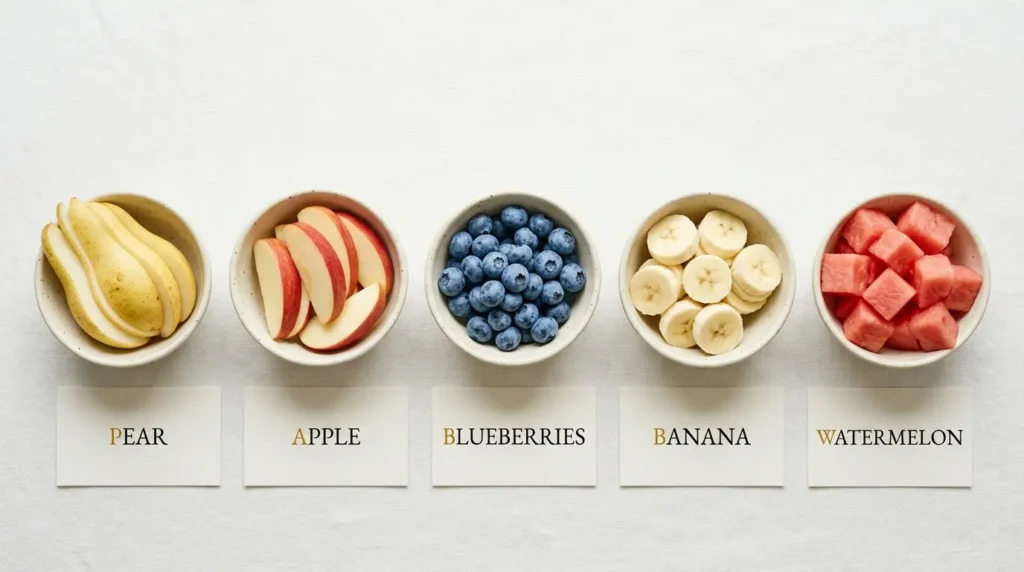
Pear is a solid mid-tier fruit treat — not the highest in antioxidants, not the most hydrating, but nutritious, widely available, and genuinely enjoyed by most dogs. Here’s how it compares to other commonly offered fruits.
| Fruit | Safe for Dogs? | Seed / Pit Risk | Sugar Level | Best For |
| Pear | Yes (flesh only) | Seeds — remove | Moderate | Digestion, vitamins |
| Apple | Yes (flesh only) | Seeds — remove | Moderate | Fiber, dental health |
| Blueberry | Yes | None | Low | Antioxidants |
| Watermelon | Yes (flesh only) | Seeds — remove | Low-moderate | Hydration |
| Peach | Yes (flesh only) | Pit — toxic, remove | High | Occasional treat only |
If you’re already offering your dog apples. pear makes a natural addition to the rotation — both carry similar seed risks and nutritional profiles . Blueberries are a lower-sugar option with a higher antioxidant content if that’s your priority.
Frequently Asked Questions About Dogs and Pears
Can dogs eat pears every day?
No — pears are a treat, not a daily staple. Their natural sugar content adds up over time. A few times per week is plenty for most dogs.
Can dogs eat pears raw?
Yes. Raw, fresh pear is the best form to offer your dog. It retains full nutritional value and contains no additives. Just peel it, remove the core and seeds, and cut it into small pieces.
Can dogs eat green or unripe pears?
Unripe pears are harder, more acidic, and harder to digest than ripe pears. They’re not toxic, but they’re not ideal either. Ripe pears are always a better choice.
Can dogs eat pear jam?
No. Pear jam contains added sugar, and many varieties include preservatives. Some may also contain xylitol, which is toxic to dogs. Avoid all jam products.
Is pear juice safe for dogs?
No. Pear juice is concentrated sugar with none of the fiber that helps moderate sugar absorption. It offers no meaningful benefit and can spike blood sugar quickly.
Can dogs eat pear yogurt?
Only if the yogurt is plain, unsweetened, and xylitol-free — and the “pear” component is actual fruit, not flavoring. Most commercial pear-flavored yogurts contain added sugar or artificial sweeteners. Plain Greek yogurt with a small piece of fresh pear on the side is a safer approach.
Can dogs eat dehydrated pears?
In very small amounts, unsweetened dehydrated pear without additives is less harmful than syrup-packed canned pear. Still, the concentrated sugar makes it a treat to offer sparingly — not regularly.
My dog stole a whole pear from the counter — should I worry?
Check your dog first for any signs of choking. If the pear was ripe and your dog ate the flesh, they’ll likely be fine — expect potential loose stools for a day or two from the extra fiber and sugar. If they ate the core and seeds, monitor closely for signs of digestive distress, and call your vet or the ASPCA Poison Control line if you’re concerned.
Can dogs eat pear baby food?
Only if the ingredient list reads “pears” and “water” — nothing else. Many baby foods contain xylitol, onion powder, or added sugar. Read the label carefully before offering any.
Can a Chihuahua or small breed eat pears?
Yes, but in much smaller portions than larger dogs. One thin slice, peeled and seed-free, is enough. Small breeds are more sensitive to sugar and high-fiber foods, so start with a tiny amount.
Are pear tree leaves toxic to dogs?
Pear tree leaves and bark are not well-studied in dogs and are best avoided. If your dog chews on pear tree leaves or bark, monitor for GI symptoms and contact your vet if any appear.
Can dogs eat pears on a raw diet (BARF)?
Yes, fresh pear can be included in a raw diet as an occasional fruit addition. Follow the same preparation rules — peel, remove seeds and core, serve in appropriate portions. Align portion sizes with your dog’s overall daily caloric balance.
The Bottom Line on Pears for Dogs
Fresh pear is a wholesome, dog-safe treat when prepared properly — and your dog’s excitement at the kitchen counter is completely justified. The flesh offers real nutritional value: fiber for healthy digestion, vitamin C for immune support, vitamin K for blood and bone health, and plenty of water to keep your dog hydrated.
The non-negotiables are simple. No seeds, no core, no stem — every single time. Peel the skin for small breeds, puppies, and sensitive dogs. Skip canned pears in syrup entirely. And keep portions in line with your dog’s size.
For healthy adult dogs, pear is a genuinely enjoyable treat you can feel good about offering a few times a week. For dogs managing diabetes, pancreatitis, or kidney disease, a quick check-in with your vet before introducing pear is the right move — not because pear is dangerous, but because their dietary needs deserve a tailored answer.
Your dog trusts you to make good choices on their behalf. With pear, that choice is easy: peel it, core it, slice it small, and enjoy the moment together.
Looking for more safe snack ideas?
Explore our guides on safe fruits for dogs ,