

Quick answer: Yes, kiwi is safe for most dogs when served in small amounts with the skin removed. It offers vitamin C, potassium, and dietary fiber. However, the skin and seeds can pose a choking risk, and the actinidin enzyme may upset sensitive stomachs. Always introduce new fruits gradually and consult your vet if unsure.
Your dog is watching you slice kiwi. Those hopeful eyes are hard to ignore. So before you hand over a piece, here’s what you need to know: kiwi is safe for dogs — but only when it’s prepared the right way.
This guide covers everything a caring dog owner needs. You’ll learn the real nutritional benefits of kiwi, which risks to watch for, exactly how much to give based on your dog’s size, and how to serve it safely the first time. Whether your dog already sneaked a bite or you’re planning ahead, you’re in the right place.
Key takeaways before you read on:
- ✅ Kiwi flesh is non-toxic and safe for dogs in small portions
- ⚠️ Always remove the skin — it’s tough, hard to digest, and a choking risk for small dogs
- ⚠️ Seeds are small but worth removing as a precaution
- 🐾 Offer kiwi as an occasional treat, not a daily snack — sugar content adds up
- 🐶 Introduce slowly and watch for signs of stomach upset or allergic reaction
- 📋 Both golden kiwi and green kiwi are safe; portion size and preparation matter more than variety
Is Kiwi Safe for Dogs?
Kiwi is not on the ASPCA‘s toxic foods list for dogs. That’s reassuring news — and it means you don’t need to panic if your dog already got hold of a small piece.
That said, “non-toxic” doesn’t mean “serve freely.” Safe depends on how you prepare it, how much you give, and your individual dog’s age, size, and stomach sensitivity. A Great Dane can handle a tablespoon of diced kiwi without flinching. A tiny Chihuahua is a completely different story.
Kiwi flesh ✅ — safe, nutritious, and easy to digest in small amounts. Kiwi skin — fibrous, hard to break down, and a real choking risk. Kiwi seeds — small and not toxic, but worth removing as a precaution. The rule for any new food applies here too: start small, go slow, and pay attention to how your dog responds.
What Nutrients Does Kiwi Offer Your Dog?
Kiwi brings more than just sweetness to the table. Here’s what’s actually inside it — and why it can benefit your dog in the right portions:
| Nutrient | Amount per 100g Kiwi | Potential Benefit for Dogs |
| Vitamin C | ~93mg | Supports immune health |
| Potassium | ~312mg | Promotes heart and muscle health |
| Dietary Fiber | ~3g | Supports digestive regularity |
| Calories | ~61 kcal | A genuinely low-calorie treat option |
| Natural Sugar | ~9g | Moderate — portion control matters |
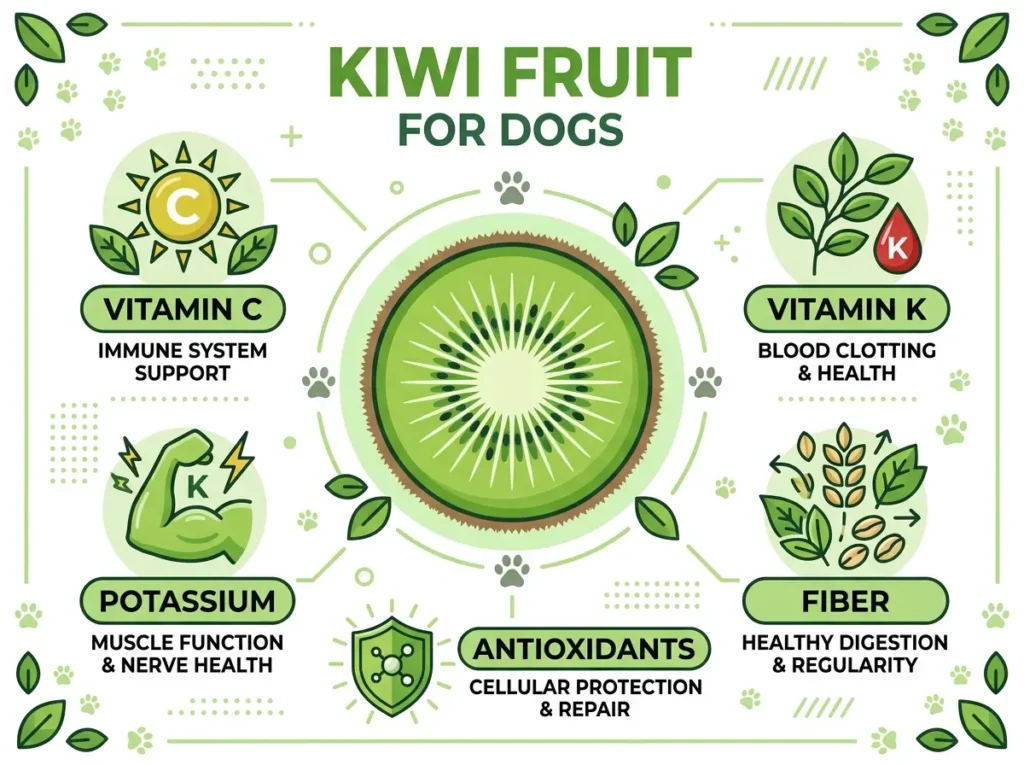
A few honest notes on these nutrients:
- Vitamin C: Dogs produce their own vitamin C naturally, so kiwi won’t fix a deficiency. A little extra, though, supports immune function and does no harm in small amounts.
- Potassium: Supports your dog’s heart rhythm and muscle function — especially useful for active dogs.
- Dietary fiber: Aids digestion and may gently ease mild constipation. Kiwi can help things move along, which is great — until too much fiber causes the opposite problem.
- Natural sugar: Kiwi contains roughly 9 grams of sugar per 100 grams. That’s moderate, not alarming, but dogs with diabetes or weight concerns should avoid it. Kiwi is a decent occasional treat, not a superfood.
Risks of Feeding Kiwi to Dogs
Kiwi is safe — but that comes with real conditions. Here’s what to watch out for, explained plainly.
Should You Peel Kiwi Before Giving It to Your Dog?
Yes, always peel the kiwi. The skin is tough, fibrous, and difficult for your dog’s digestive system to break down. For small dogs especially, an unpeeled piece of kiwi is a genuine choking hazard and could cause an intestinal blockage if swallowed. It’s simply not worth the risk when peeling takes five seconds.
Are Kiwi Seeds Safe for Dogs?
Kiwi seeds are tiny and not classified as toxic. But tiny doesn’t mean harmless — particularly for small dogs who might struggle to pass them. Remove the seeds when you can, especially if your dog is on the smaller side. It’s a simple precaution that takes moments.
What Is Actinidin and Why Does It Matter?
Kiwi contains a natural enzyme called actinidin. Actinidin is a proteolytic enzyme — meaning it breaks down protein. In humans, it aids digestion. In dogs with sensitive stomachs, it can cause mild irritation, gas, or loose stools. This is why first servings should always be small. Give one bite, wait 24 hours, and see how your dog’s stomach handles it before offering more.
Can Kiwi Cause an Allergic Reaction in Dogs?
Allergic reactions to kiwi are rare in dogs, but they do happen. Watch for these signs after your dog eats kiwi for the first time:
- Excessive scratching or licking
- Hives or red, irritated skin
- Swollen face or muzzle
- Vomiting or diarrhea
If you notice any of these, stop feeding kiwi and call your vet. Swelling around the face or difficulty breathing warrants an immediate vet call — don’t wait.
How Much Kiwi Can a Dog Eat? (Size-Specific Guide)
This is where most guides fall short. Telling every dog owner to give “a small piece” ignores the fact that a small piece for a Labrador is vastly different from a small piece for a Yorkshire Terrier.
Follow the 10% treat rule: all treats combined — kiwi included — should make up no more than 10% of your dog’s daily caloric intake. Here’s how that breaks down by size:
| Dog Size | Weight Range | Recommended Portion | Frequency |
| Extra Small | Under 10 lbs | ½ tsp, peeled, diced | 1–2x per week |
| Small | 10–25 lbs | 1 tsp, peeled, diced | 2–3x per week |
| Medium | 25–60 lbs | 1–2 tsp, peeled, diced | 2–3x per week |
| Large | 60–90 lbs | 1 tbsp, peeled, diced | 2–3x per week |
| Extra Large | 90+ lbs | 1–2 tbsp, peeled, diced | 2–3x per week |
Even for large dogs, kiwi should stay an occasional treat — not an everyday snack. The sugar content accumulates, and your dog’s primary nutrition should always come from a well-balanced diet.
How to Safely Serve Kiwi to Your Dog
Ready to give your dog their first taste? Here’s exactly how to do it safely:
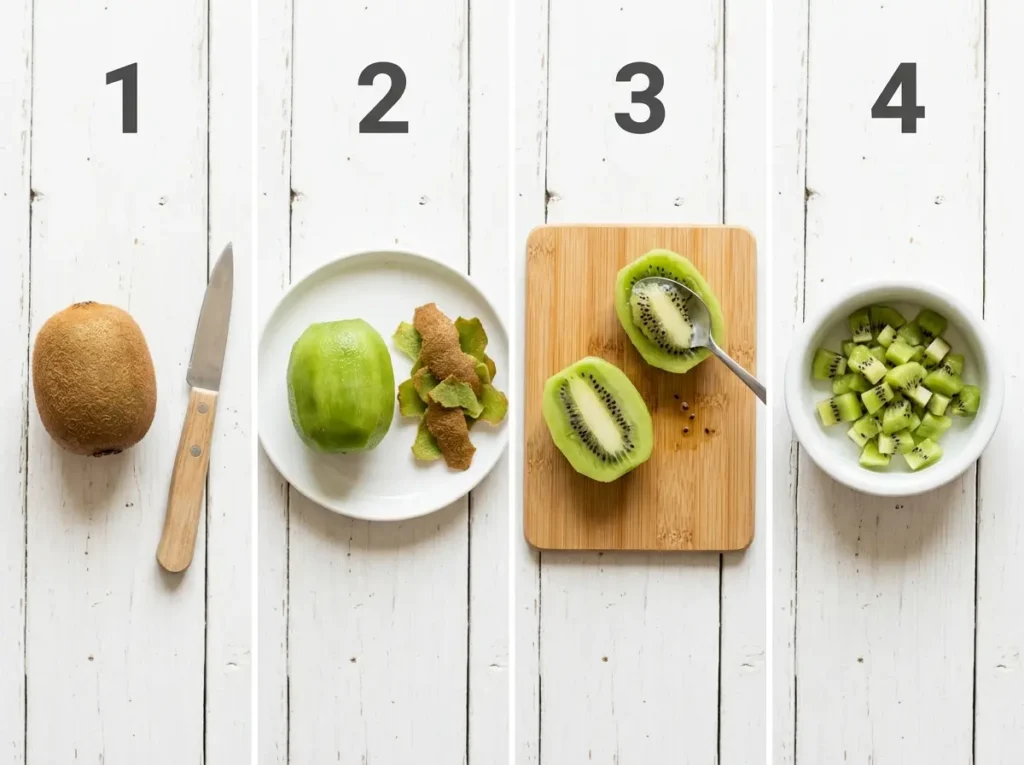
- Wash the kiwi thoroughly — remove any surface residue before cutting.
- Peel the skin completely — remove all skin and fuzzy outer layer. No exceptions.
- Remove the seeds — scoop them out, particularly for small or extra-small dogs.
- Cut into bite-sized pieces — match the size to your dog. Tiny dogs need tiny pieces.
- Serve fresh — never serve canned kiwi, which often contains added sugar or heavy syrup.
- Introduce it alone — don’t mix kiwi into your dog’s food the first time. Serve it separately so you can monitor how your dog reacts.
- Wait 24 hours — give one small piece, then observe. Look for digestive upset, unusual scratching, or changes in stool before offering more.
What about frozen kiwi? Frozen kiwi makes a refreshing treat on a warm day. Thaw it slightly for small dogs to reduce the choking risk, and keep portions the same as fresh.
What about dried kiwi? Skip it. Dried kiwi contains concentrated sugar and often includes additives or preservatives that your dog doesn’t need. Fresh or frozen is always the better choice.
Can Puppies Eat Kiwi?
Puppies can eat kiwi — but their digestive systems are considerably more sensitive than an adult dog’s, so extra care is needed.
Wait until your puppy is at least 8 weeks old and fully weaned before introducing any fruit. When you do offer kiwi, give an even smaller portion than you’d give an adult dog of the same size, and watch closely for any sign of stomach upset. Puppies are still building digestive tolerance, and a food that’s perfectly fine for your adult dog might cause loose stools in a young puppy.
Above all, a vet-approved puppy diet comes first. Kiwi — and fruit in general — is supplementary. Think of it as an occasional reward, not a nutritional strategy.
Green Kiwi vs. Golden Kiwi — Does the Variety Matter?
Both green kiwi and golden kiwi are safe for dogs, and neither variety is harmful when prepared correctly.
That said, there are a few minor differences worth knowing:
| Feature | Green Kiwi | Golden Kiwi |
| Vitamin C Content | Higher | Slightly lower |
| Actinidin Enzyme | Higher | Lower |
| Sweetness | Tangier | Sweeter |
| Best for Sensitive Stomachs | Not ideal | Slightly gentler |
If your dog has a sensitive stomach or reacts to acidic foods, golden kiwi may be the gentler starting point — its lower actinidin content makes it a little easier to digest.
What about kiwi berries? Mini kiwi (kiwi berries) are safe for dogs. The skin is thin enough for humans to eat, but it’s still worth removing for dogs, particularly smaller breeds. Serve them halved and peeled, the same as regular kiwi.
The bottom line: variety matters less than preparation and portion size. Peel it, cut it small, and don’t overdo it — and either type of kiwi is a perfectly fine treat.
Other Fruits That Are Safe for Your Dog
Kiwi is one of many fruits your dog can enjoy safely. Here are a few other dog-friendly options worth keeping in your kitchen:
Safe fruits for dogs (in moderation):
- Apples (remove seeds and core — the flesh is safe and lower in sugar than kiwi)
- Bananas (high in potassium, but also higher in calories — keep portions small)
- Blueberries (excellent antioxidant source, easy to serve)
- Watermelon (remove seeds and rind — a hydrating warm-weather treat)
- Mango (remove the pit and peel — high in natural sugar, so go easy)
- Strawberries (a good source of fiber and vitamin C)
Fruits to avoid — always:
- Grapes and raisins — even small amounts can cause sudden kidney failure in dogs. Never give these.
- Cherries — the pits, stems, and leaves contain cyanide. The flesh alone isn’t worth the risk.
For a complete breakdown of fruits dogs can and cannot eat, visit our full fruit safety guide for dogs (link).
The Right Way to Think About Kiwi for Your Dog
Kiwi is a safe, nutritious treat when you prepare it with care. Peel it, remove the seeds, cut it into pieces that match your dog’s size, and keep it occasional rather than daily. That’s really all it takes.
If your dog already ate a small piece of kiwi skin or a seed or two, take a breath — they’ll very likely be fine. Watch for any unusual symptoms over the next 24 hours, and call your vet if something seems off. You’re doing the right thing by checking first, and that care is exactly what your dog deserves.
Curious about what else your dog can safely snack on? Read our complete guide to fruits dogs can and cannot eat (link) for a full breakdown, or bookmark this page for the next time a fruit question comes up at your cutting board.
Frequently Asked Questions
Can dogs eat kiwi skin?
No — always remove the skin before serving kiwi to your dog. Kiwi skin is tough, fibrous, and hard for dogs to digest. It’s also a choking risk for smaller breeds and can cause stomach upset or intestinal blockage if swallowed.
Is kiwi high in sugar for dogs?
Kiwi contains about 9 grams of natural sugar per 100 grams, which is moderate. For healthy dogs, this isn’t a problem in small portions. Dogs with diabetes or weight issues should avoid kiwi altogether, as the sugar adds up quickly.
What happens if a dog eats too much kiwi?
Too much kiwi can cause stomach upset, loose stools, or diarrhea — mainly due to the fiber content and actinidin enzyme. These symptoms usually resolve on their own. If vomiting or diarrhea is severe or persists beyond 24 hours, contact your vet.
Can kiwi cause allergies in dogs?
Allergic reactions to kiwi are uncommon but possible. Signs include itching, hives, facial swelling, vomiting, or diarrhea. If you notice any of these after your dog eats kiwi, stop feeding it immediately and speak to your vet.
Is kiwi better than apples for dogs?
Both kiwi and apples are safe, nutritious treat options. Apples are lower in natural sugar and widely well-tolerated, making them a slightly safer starting point. Kiwi offers more vitamin C but requires more prep work. Choose based on what your dog enjoys and tolerates well.
What fruits should dogs never eat?
Grapes and raisins are the most dangerous — even a small amount can cause kidney failure. Cherries are also unsafe due to cyanide in the pits, stems, and leaves. Read our complete fruit safety guide for dogs (link) for a full list of what to avoid.
Can small dogs eat kiwi?
Yes, but in very small amounts. Extra-small dogs (under 10 lbs) should receive no more than half a teaspoon of peeled, diced kiwi at a time. The choking risk is higher for small breeds, so cut pieces as small as possible and always remove the skin and seeds.