
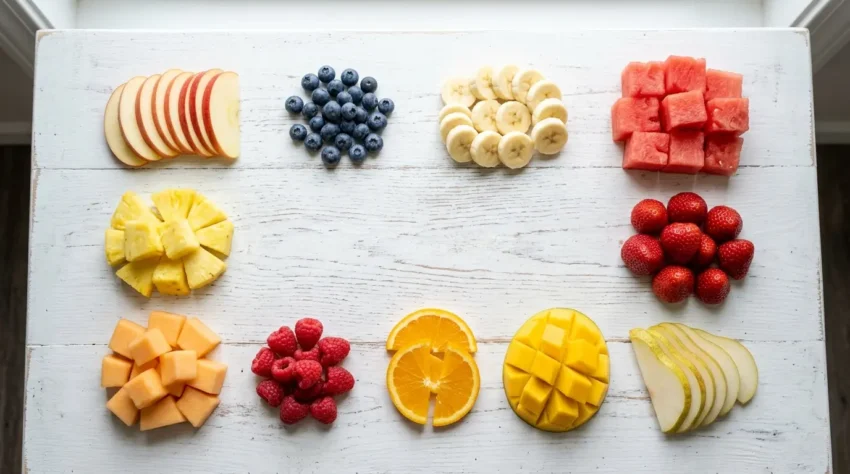
Quick answer: Many human foods are safe for dogs in moderation — including carrots, blueberries, cooked chicken, plain rice, and eggs. Others are seriously toxic, including grapes, chocolate, onions, garlic, and anything containing xylitol. Portion size and preparation method matter just as much as the food itself. When in doubt, check before you share.
Key Takeaways:
- Many whole foods make excellent, vet-approved dog snacks — not all human food is harmful
- Toxic foods like grapes, xylitol, onions, and chocolate can cause serious or fatal harm, even in small amounts
- Preparation matters: cooked garlic and onion powder are significantly more dangerous than their raw counterparts
- Serving size is critical — what’s a harmless nibble for a 70-pound Labrador may be a dangerous dose for a 10-pound Chihuahua
- If your dog eats something toxic, contact the ASPCA Animal Poison Control Center immediately: 888-426-4435
- Use this guide as a trusted reference — not a substitute for vet advice, especially if your dog has an existing health condition
- Safe vs. unsafe human foods for dogs: Many human foods are safe in moderation (e.g., carrots, plain cooked chicken, rice, eggs), while others are toxic (grapes, chocolate, onions, garlic, and xylitol). Preparation and portion matter just as much as the food itself.
You know that look. Your dog settles beside you at the kitchen table, eyes locked on your plate, waiting patiently for something — anything — to come their way. You want to share. The question is whether it’s safe.
The honest answer: some human foods are genuinely good for your dog in the right amounts. Others are far more dangerous than most owners realize, and the difference isn’t always obvious. A food that’s perfectly fine for your 60-pound Golden Retriever can send a small Chihuahua to the emergency vet. Preparation matters too — cooked garlic is not the same risk as raw garlic, and garlic powder is far more concentrated than either.
This guide gives you both lists — clearly, completely, and with the kind of practical detail that helps you make good decisions at the kitchen table. You’ll learn exactly what’s safe to share, what to keep off the floor, how much is too much, and what to do if something goes wrong. Think of it as the kitchen-table reference you’ll want bookmarked before you need it.
What Human Foods Are Safe for Dogs to Eat?
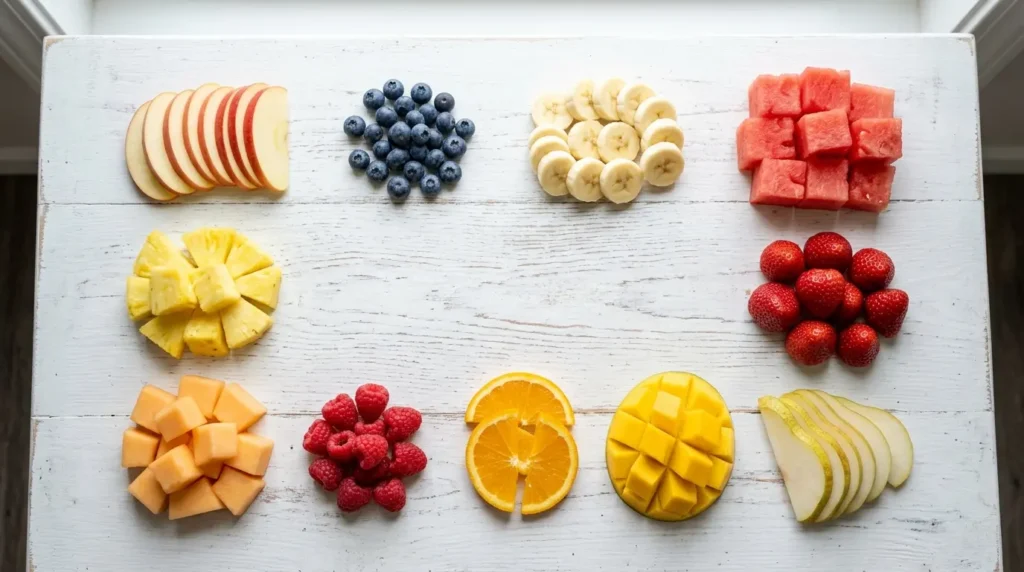
This is the section most readers came for. Below you’ll find a full reference table organized by food category, followed by short notes on the foods that need a little extra context. Use it to check before you share — it takes ten seconds and can save your dog from real harm.
Safe Human Foods for Dogs at a Glance
| Food | Safe? | Serving Notes | Caveats |
| Carrots | ✅ Yes | Raw or cooked, bite-sized pieces | Low calorie — great as a daily snack |
| Apples | ✅ Yes | Sliced, skin on | Remove seeds and core — they contain cyanide compounds |
| Blueberries | ✅ Yes | Fresh or frozen | Antioxidant-rich; limit the quantity you give at once |
| Watermelon | ✅ Yes | Seedless, no rind | The rind can cause digestive upset |
| Bananas | ✅ Moderate | Small amounts only | High in sugar — treat these as an occasional snack, not a daily habit |
| Strawberries | ✅ Yes | Fresh, hulled | High in natural sugar; keep portions small |
| Cooked chicken | ✅ Yes | Plain, boneless, skinless | No seasoning, no garlic, no onion — ever |
| Cooked salmon | ✅ Yes | Fully cooked only | Raw salmon can carry harmful parasites like Neorickettsia helminthoeca |
| Eggs | ✅ Yes | Cooked | Raw egg whites can interfere with biotin absorption over time |
| Plain rice | ✅ Yes | Cooked, plain | Particularly gentle on upset stomachs |
| Peanut butter | ✅ Yes | Unsalted, plain | Must be xylitol-free — check the label every single time |
| Plain yogurt | ✅ Moderate | Small amounts | Avoid flavored or sweetened varieties; not all dogs tolerate dairy |
| Cottage cheese | ✅ Moderate | Small amounts | Low-fat is preferred |
| Oatmeal | ✅ Yes | Plain, cooked | No added sugar, honey, or flavoring |
| Pumpkin | ✅ Yes | Plain canned or cooked | Excellent for digestive health |
| Sweet potatoes | ✅ Yes | Cooked, plain | No butter, seasoning, or marshmallow toppings |
| Green beans | ✅ Yes | Fresh or plain cooked | A great low-calorie snack option |
| Broccoli | ✅ Moderate | Small amounts | Can cause gas in larger quantities; the florets are safer than the stalk |
| Cucumbers | ✅ Yes | Sliced | Low calorie and hydrating |
| Peas | ✅ Yes | Fresh or frozen, plain | Avoid canned peas — they’re high in sodium |
| Coconut (plain) | ✅ Moderate | Small amounts, unsweetened | High in fat; use sparingly, especially in breeds prone to pancreatitis |
| Honey | ✅ Moderate | Very small amounts | High sugar content; not suitable for diabetic dogs |
| Plain popcorn | ✅ Moderate | Air-popped, unsalted | No butter, no oil, no flavoring — plain only |
| Corn kernels | ✅ Yes | Kernels only, off the cob | The cob is a serious choking and intestinal blockage hazard |
A Few Foods That Deserve Extra Explanation
Peanut butter sits at the top of nearly every “safe foods” list — and it is safe, provided it contains no xylitol. Some brands of peanut butter use xylitol as a sugar substitute, and xylitol can kill a dog quickly. Read the label every time, even if you’ve bought the same brand before. Formulations change.
Salmon is genuinely nourishing for dogs — rich in omega-3 fatty acids and great for coat health — but it must always be fully cooked. Raw salmon from the Pacific Northwest can carry a parasite that causes salmon poisoning disease, which is fatal if untreated. Cook it plain, remove all bones, and serve it in small portions.
Eggs are a wholesome source of protein, but cook them before serving. Consistently feeding raw egg whites can block your dog’s ability to absorb biotin, a B vitamin essential for skin and coat health.
Plain pumpkin (not pumpkin pie filling, which contains sugar and spices) supports healthy digestion. A tablespoon or two of plain canned pumpkin can help settle an upset stomach. It’s one of the most genuinely useful additions to a dog’s diet from the human pantry.
What Human Foods Are Toxic to Dogs — Never Feed These
These are not foods to avoid out of an abundance of caution. These are foods that can cause kidney failure, seizures, liver damage, and death — sometimes from amounts smaller than you’d expect. Read this section carefully.
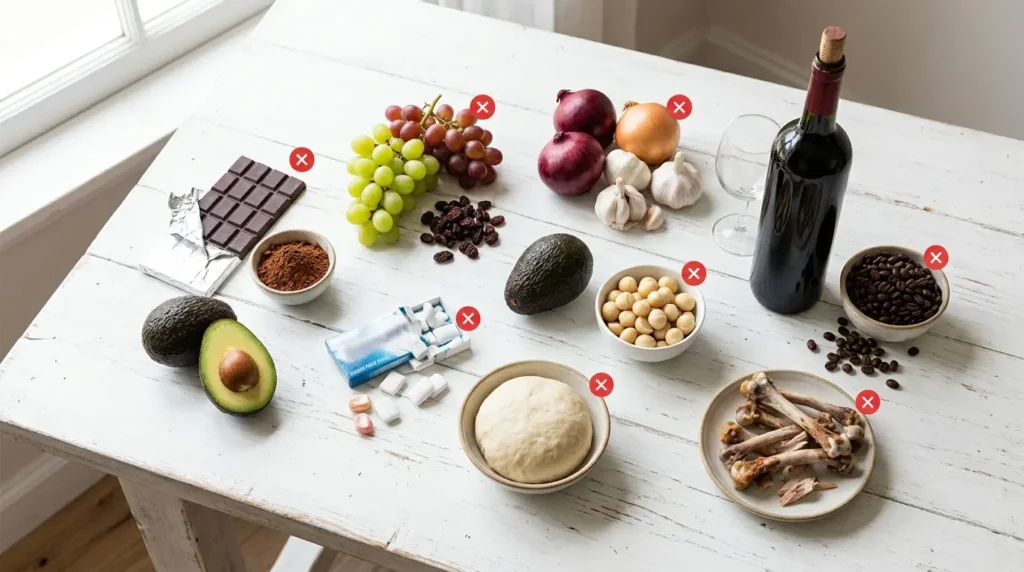
Foods Dogs Should Never Eat
| Food | Why It’s Dangerous | Symptoms to Watch For | Severity |
| Chocolate | Contains theobromine, which dogs metabolize slowly; dark chocolate and baking chocolate are the most dangerous | Vomiting, restlessness, muscle tremors, rapid heartbeat, seizures | 🔴 High |
| Grapes & raisins | An unidentified compound causes sudden kidney failure — even a small amount can be fatal in some dogs | Vomiting, lethargy, loss of appetite, decreased urination | 🔴 High |
| Xylitol | Triggers rapid insulin release; can cause hypoglycemia and liver failure within 30 minutes | Vomiting, weakness, seizures, collapse | 🔴 High |
| Onions & garlic (all forms) | Damage red blood cells, leading to hemolytic anemia; affects dogs whether raw, cooked, or powdered | Weakness, pale or yellowish gums, vomiting, lethargy | 🔴 High |
| Macadamia nuts | Unknown mechanism; causes neurological effects | Hind leg weakness, hyperthermia, tremors, vomiting | 🔴 High |
| Avocado | Contains persin, which causes vomiting and fluid accumulation around the heart and lungs | Vomiting, diarrhea, difficulty breathing | 🟠 Moderate–High |
| Alcohol | Causes rapid, severe toxicity even in tiny amounts | Disorientation, vomiting, slow breathing, coma | 🔴 High |
| Caffeine | Acts similarly to theobromine; affects the nervous system and heart | Restlessness, rapid heart rate, tremors, seizures | 🔴 High |
| Raw yeast dough | Expands in the stomach and produces alcohol as it ferments | Bloating, disorientation, collapse | 🔴 High |
| Nutmeg | Contains myristicin, a compound that causes hallucinations and neurological effects | Tremors, disorientation, seizures | 🟠 Moderate–High |
| Cooked bones | Splinter easily and can puncture the digestive tract | Choking, internal bleeding, digestive perforation | 🟠 Moderate–High |
| Fruit pits & apple seeds | Contain cyanide compounds | Difficulty breathing, collapse | 🟠 Moderate |
| Salty snacks (large amounts) | Cause sodium ion poisoning | Excessive thirst, vomiting, tremors, seizures | 🟡 Moderate |
| Wild mushrooms | Many species are highly toxic and can cause liver failure | Vomiting, lethargy, liver failure, neurological symptoms | 🔴 High |
| Tomato leaves & green tomatoes | Contain solanine; ripe red tomato flesh is generally safe in small amounts | Gastrointestinal distress, lethargy, drooling | 🟡 Moderate |
The Details That Actually Matter
Grapes and raisins are one of the most misunderstood items on this list. Raisins are simply dried grapes — they’re not a milder version of the same risk. Because raisins are concentrated, they’re arguably more dangerous by volume. Never feed your dog either. Even one or two grapes have caused acute kidney failure in documented cases, according to the ASPCA.
Garlic powder is not the same as raw garlic — and this distinction matters. Garlic powder is significantly more concentrated than a clove of raw garlic. One teaspoon of garlic powder contains the toxic equivalent of several cloves. Many competitors gloss over this. Don’t. If a recipe, treat, or meal was cooked with garlic in any form — powder, minced, roasted — don’t share it with your dog.
Xylitol hides in products you wouldn’t expect. It appears in sugar-free peanut butter, baked goods, some vitamins, chewable medications, and sugar-free gum. Always read ingredient labels on any human product before giving it to your dog. A small dog can be critically harmed by a single stick of sugar-free gum.
Chocolate toxicity is dose-dependent and form-dependent. Dark chocolate and baking chocolate contain far more theobromine than milk chocolate. A small piece of milk chocolate may cause mild digestive upset in a large dog; the same amount of dark chocolate could trigger seizures in a small dog. There’s no safe amount to experiment with.
Important: Symptoms from some toxins — particularly grapes and xylitol — can appear within 30 minutes. Others, like chocolate, may take several hours. Do not wait for visible symptoms before calling for help.
The “Gray Area” Foods — Safe for Some Dogs, Not All
Not every food fits neatly into a yes or no category. These foods aren’t acutely toxic for most dogs, but that doesn’t make them universally safe. Breed, size, health history, and preparation all change the equation.
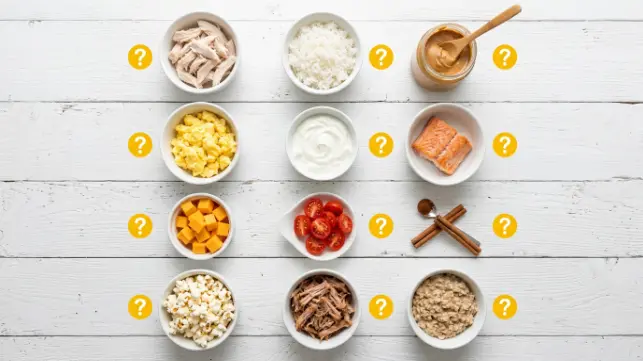
- Dairy (cheese, milk, plain yogurt): Many dogs tolerate small amounts of dairy without issue. Others are lactose intolerant and will experience gas, bloating, and diarrhea. Start with tiny amounts and watch how your dog responds. Hard cheeses like cheddar tend to be lower in lactose than milk or soft cheese.
- Raw meat and fish: Interest in raw diets has grown, but raw meat and fish carry real risks — Salmonella, Listeria, and parasites — for both your dog and your household. The American Veterinary Medical Association (AVMA) advises against raw meat diets due to these health risks. If you’re considering a raw food diet for your dog, consult your vet before making the switch.
- Almonds and cashews: Neither is acutely toxic, but almonds can be difficult for dogs to digest and pose a choking risk, especially for small breeds. Cashews, in very small amounts, are less problematic — but their high fat content makes them a poor regular choice. Neither belongs in your dog’s regular diet.
- Peanut butter (revisited): Worth repeating here — peanut butter is safe only when it’s xylitol-free. Some brands that were previously safe have reformulated. Check the label every time, including products like Justin’s, Jif Reduced Fat, and store-brand alternatives, which have historically been flagged.
- Bread and plain pasta: Not harmful in small amounts, but they offer very little nutritional value for dogs. Occasional plain pasta or a small piece of plain bread won’t hurt your dog, but there’s little reason to make a habit of it.
- Canned tuna: Fine as an occasional treat, but not as a dietary staple. The sodium content and potential mercury accumulation in canned tuna make it an impractical regular addition to your dog’s diet.
- Deli meat, hot dogs, and beef jerky: Not toxic, but typically high in sodium, preservatives, and additives. These are not good choices even as occasional snacks. If you’re looking for a protein-based treat, a small piece of plain cooked chicken is far better.
Dogs with existing health conditions face a different set of rules entirely. A food that’s perfectly fine for a healthy adult dog may be contraindicated for a dog with pancreatitis, kidney disease, diabetes, or a sensitive stomach. If your dog has any diagnosed health condition, talk to your vet before adding human food to their diet.
How Much Human Food Can Dogs Eat?
“In moderation” is the answer you’ll find on most websites. It’s not enough. Moderation means something very different depending on whether your dog weighs 8 pounds or 80. Here’s what it actually looks like in practice.
The 10% Rule
Treats — including human food — should make up no more than 10% of your dog’s total daily calorie intake. The remaining 90% should come from complete, balanced dog food. This rule comes from veterinary nutritionists, and it exists for good reason: human food is not nutritionally balanced for dogs. It supplements their diet; it doesn’t replace it.
Human Food Portion Guide by Dog Size
| Dog Size | Weight Range | Max Daily Treat Calories | Example Human Food Serving |
| Toy | Under 10 lbs | ~25–50 cal | 1–2 small blueberries; ½ baby carrot |
| Small | 10–25 lbs | ~50–100 cal | 1–2 baby carrots; one small apple slice |
| Medium | 25–60 lbs | ~100–200 cal | A small handful of blueberries; 1 cooked egg |
| Large | 60–100 lbs | ~200–300 cal | ¼ cup plain rice; a small piece of cooked chicken |
| Giant | 100+ lbs | ~300–400 cal | Adjust based on your vet’s specific guidance |
A few things worth keeping in mind as you use this table. First, frequency matters as much as quantity. A daily habit of cheese cubes adds up quickly — even if each individual portion seems harmless. Second, high-fat foods like peanut butter, cheese, and coconut carry an elevated risk of pancreatitis in certain breeds, including Miniature Schnauzers, Cocker Spaniels, and Yorkshire Terriers. If your dog belongs to a breed with that predisposition, keep high-fat human foods off the menu entirely.
Safe Human Foods by Life Stage
What Human Foods Are Safe for Puppies?
A puppy’s digestive system is still developing, which means their tolerance for human food is lower than an adult dog’s — even for foods that are otherwise safe. Stick to softer textures and smaller portions than you’d offer an adult dog of the same size.
Foods like plain cooked chicken, cooked carrot, and plain pumpkin are gentle enough for most puppies. Avoid all raw meat, raw fish, cooked bones, and high-fat foods. A small puppy can become seriously ill from foods that would cause only mild upset in an adult.
What Human Foods Are Safe for Senior Dogs?
Older dogs often have reduced kidney and liver function, which means some foods that were safe throughout adulthood become less ideal in their senior years. Foods high in phosphorus — including dairy and some fish — may need to be limited for dogs with age-related kidney changes. Talk to your vet about adjusting your senior dog’s diet as they age.
On the positive side, foods with natural anti-inflammatory properties — cooked salmon, blueberries, and sweet potatoes — are worth incorporating in appropriate amounts. Omega-3 fatty acids from salmon support joint health, and the antioxidants in blueberries may help with cognitive aging. Senior dogs are also often less active, so calorie density matters more than it used to.
What Human Foods Are Safe for Dogs with Health Conditions?
Dogs with diagnosed health conditions need condition-specific guidance — not general safe food lists:
- Pancreatitis: Avoid all high-fat human foods, including peanut butter, cheese, coconut, and fatty cuts of meat. Even foods on the “safe” list above can trigger a flare-up in a dog with pancreatitis history.
- Kidney disease: Limit phosphorus-rich foods, including most dairy, certain fish, and high-protein treats. Your vet may recommend a specific low-phosphorus diet.
- Diabetes: Avoid high-sugar fruits — bananas, mangoes, grapes (which are toxic anyway), and honey. Focus on low-glycemic vegetables like green beans and cucumbers.
If your dog has any existing health condition, consult your vet before introducing any new human food, even one from the “safe” list in this guide.
What to Do If Your Dog Eats Something Toxic
This section is for the moment you realize your dog just ate something they shouldn’t have. Stay calm. Panic slows you down, and speed matters here.
Follow these steps:
- Stay calm and act quickly. Your dog needs you focused, not panicked.
- Identify exactly what was eaten. Note the food, the approximate amount, and how long ago it happened. If there’s packaging, keep it nearby.
- Do not induce vomiting unless a vet or poison control specialist tells you to. Inducing vomiting at the wrong time — or with the wrong substance — can make the situation significantly worse.
- Call for professional help immediately:
- ASPCA Animal Poison Control Center: 888-426-4435 (available 24/7; a consultation fee may apply)
- Pet Poison Helpline: 855-764-7661 (available 24/7)
- Follow their instructions exactly. These specialists will tell you what to do based on the specific substance, your dog’s size, and the time elapsed. Do not guess and do not search for home remedies.
- Monitor your dog closely and be ready to go to an emergency vet clinic if directed. Note any symptoms that develop — vomiting, lethargy, tremors, unusual behavior.
- Bring the packaging or a photo of the food to the vet. This helps them assess the specific formulation, especially for products that may contain hidden toxins like xylitol.
Do not search for symptoms and attempt to treat at home. Call poison control first — always.
Keep in mind that some toxins move fast. Xylitol can cause hypoglycemia within 30 minutes of ingestion. Grapes may trigger the early signs of kidney failure within hours. Chocolate symptoms may take longer — but waiting for symptoms to appear is not a safe strategy. If you know your dog ate something potentially toxic, call for help immediately.
Seasonal and Holiday Food Safety for Dogs
Certain times of year bring a surge of food-related emergencies in dogs — not because owners intend to cause harm, but because holiday tables are filled with ingredients that look harmless and aren’t. Save this section and check it before the holiday weekend.
Thanksgiving Foods — What’s Safe and What Isn’t for Dogs
Safe: Plain roasted turkey (no skin, no bones), plain sweet potato (no butter or seasoning), plain green beans, plain canned pumpkin.
Unsafe: Stuffing — almost always made with onions and garlic. Gravy — typically contains onions and high fat. Casseroles — usually seasoned with garlic or onion. Pies — contain nutmeg, sugar, and sometimes xylitol in “sugar-free” versions. Turkey skin — too high in fat. Cooked turkey bones — always a splintering hazard.
Christmas and Winter Holiday Foods — What’s Safe and What Isn’t for Dogs
Safe: Small pieces of plain cooked meat (no seasoning), raw carrots, apple slices (no seeds or core).
Unsafe: Chocolate — it’s everywhere in December, and that makes it particularly dangerous. Fruitcake — contains raisins, which can cause kidney failure. Holiday cookies — sugar-free versions may contain xylitol. Eggnog — contains alcohol and nutmeg, both toxic to dogs. Macadamia nut cookies or mixed nut trays — macadamia nuts cause rapid neurological symptoms.
Easter Candy and Spring Foods — What’s Safe and What Isn’t for Dogs
Safe: Plain hard-boiled eggs (the inside only, cooked), fresh strawberries in small amounts.
Unsafe: Easter chocolates — milk, dark, and especially hollow filled chocolates. Xylitol-sweetened candies — these are common in “sugar-free” Easter basket items. Artificial sweeteners in seasonal treats generally.
BBQ and Summer Foods — What’s Safe and What Isn’t for Dogs
Safe: Plain grilled chicken or lean beef (no marinade, no seasoning), seedless watermelon, fresh blueberries.
Unsafe: Anything marinated — marinades almost always contain garlic, onion, or both. Corn on the cob — the kernels are fine, but the cob is a serious choking and intestinal blockage risk. Onion-heavy side dishes like French onion dip or caramelized onion burgers. Alcohol — even a small amount is toxic. Grapes at the fruit table.
Frequently Asked Questions
What human foods are toxic to dogs?
The most dangerous human foods for dogs include grapes, raisins, chocolate, xylitol (found in sugar-free products), onions, garlic (in all forms), macadamia nuts, avocado, alcohol, caffeine, raw yeast dough, and nutmeg. Many of these can cause kidney failure, liver damage, seizures, or death — sometimes from amounts far smaller than you’d expect.
Can dogs eat leftover human food?
Some leftovers are safe; most aren’t. Plain cooked chicken, plain rice, or plain cooked vegetables are generally fine. But most cooked meals contain ingredients — garlic, onion, seasoning, sauces, cooking fats — that make them unsafe for dogs. The safest approach is to offer plain, separately prepared portions rather than table scraps.
Is peanut butter safe for all dogs?
Peanut butter is safe for most dogs when it contains no xylitol, no added salt, and no artificial sweeteners. However, it’s high in fat, which makes it a poor choice for dogs prone to pancreatitis. Always read the label carefully — xylitol is now used in some major peanut butter brands.
What foods cause pancreatitis in dogs?
High-fat foods are the most common trigger: fatty cuts of meat, cheese, peanut butter, fried foods, and foods cooked in oil or butter. Even a single high-fat meal can trigger acute pancreatitis in predisposed dogs. Miniature Schnauzers, Cocker Spaniels, and Yorkshire Terriers are among the breeds with higher susceptibility.
Can dogs eat canned tuna or sardines?
Canned tuna is safe occasionally and in very small amounts, but not as a regular treat — the sodium and potential mercury content make it an impractical staple. Sardines canned in water with no added salt are a better option. Both should be treated as occasional additions, not everyday food.
What is xylitol, and why is it dangerous for dogs?
Xylitol is an artificial sweetener used in sugar-free products, including some peanut butter brands, chewing gum, baked goods, vitamins, and certain medications. In dogs, xylitol triggers a rapid release of insulin, which causes a dangerous drop in blood sugar. It can also cause liver failure. Even small amounts — like a single stick of sugar-free gum — can be life-threatening for a small dog.
Can dogs eat food cooked with garlic or onions?
No. Garlic and onions are toxic to dogs in all forms — raw, cooked, powdered, or dehydrated. Garlic powder is particularly dangerous because it’s far more concentrated than raw garlic. If a meal was prepared with either ingredient, don’t share it with your dog, even if the garlic or onion isn’t visible in the final dish.
How quickly does food poisoning affect dogs after eating something toxic?
It depends on the substance. Xylitol can cause hypoglycemia within 30 minutes. Grapes and raisins may show early symptoms — vomiting, lethargy — within a few hours, with kidney failure developing over 24–72 hours. Chocolate symptoms can take 6–12 hours to appear. Never wait for visible symptoms before calling poison control.
Are raw carrots or cooked carrots better for dogs?
Both are safe and nutritious. Raw carrots are firmer and can help clean teeth; cooked carrots are softer and easier to digest, making them a better option for puppies, senior dogs, or dogs with digestive sensitivities. Cut them into bite-sized pieces regardless of preparation to avoid a choking risk.
Can dogs eat almond butter instead of peanut butter?
Almond butter is not toxic to dogs, but it’s not a great alternative. Almonds are difficult for dogs to digest, and almond butter tends to be just as high in fat as peanut butter. If you’re looking for a safe spreadable treat, plain, xylitol-free peanut butter remains the better option.
What vegetables can dogs eat every day?
Carrots, green beans, cucumbers, and plain peas (fresh or frozen, not canned) are all suitable for daily feeding in appropriate amounts. They’re low in calories, easy to digest, and offer real nutritional value. Broccoli and sweet potatoes are fine regularly too, but in smaller quantities given their fiber content and caloric density respectively.
What should I do if my dog eats something poisonous?
Don’t wait for symptoms. Call the ASPCA Animal Poison Control Center at 888-426-4435 or the Pet Poison Helpline at 855-764-7661 immediately. Have the food (or its packaging) in front of you, and know your dog’s approximate weight. Follow their instructions exactly — don’t try to treat your dog at home.
Feed Your Dog Well, Feed Them Safely
Many human foods are genuinely good for your dog — nourishing, wholesome, and worth sharing in the right amounts. Carrots, blueberries, plain cooked chicken, eggs, plain pumpkin — these are foods your dog can enjoy and benefit from. The list of what’s safe is longer than most people realize.
But the list of what’s dangerous is also longer — and more serious — than most owners know going in. Grapes, xylitol, garlic powder, chocolate: these aren’t just foods to avoid out of caution. They cause real, sometimes irreversible harm. The difference between a harmless treat and a vet emergency often comes down to one ingredient, one preparation method, or one overlooked label.
The single most important habit you can build is this: check before you share. It takes a moment and it matters every time.
Save the ASPCA Animal Poison Control number in your phone right now, before you need it: 888-426-4435. Keep this guide bookmarked as your kitchen reference. And if you’re looking for wholesome ways to treat your dog with human-sourced ingredients, explore our [homemade dog treat recipes using vet-approved safe ingredients], or browse our [dog nutrition basics guide] to understand how human food fits into a complete, balanced diet.
Your dog trusts you with every bite. That’s a responsibility worth taking seriously — and one you’re clearly already thinking about.