
Quick answer: Yes, dogs can safely eat fresh peach flesh in small amounts. Peaches offer fiber, vitamin A, and antioxidants that support your dog’s health. However, the pit contains amygdalin, which breaks down into cyanide and is toxic to dogs. Always remove the pit before serving, and avoid canned peaches due to their high sugar content.
Key Takeaways:
- Fresh peach flesh is safe in moderation — the pit is toxic and a choking hazard
- Always remove the pit and wash the skin before serving
- Limit to 1–4 small slices depending on your dog’s size
- Canned and dried peaches are high in sugar — skip them entirely
- If your dog swallowed a peach pit, contact your vet or ASPCA Poison Control at (888) 426-4435 immediately
- Dogs with diabetes or weight concerns should avoid peaches or check with a vet first

It’s a warm summer afternoon. You’re sitting outside, biting into a ripe, juicy peach — and your dog is staring up at you with those eyes. You know the ones. Before you hand over a slice, you want to know: is this safe?
The good news is that fresh peach flesh is perfectly safe for most dogs. The concern isn’t the fruit itself — it’s the pit, the leaves, and certain peach products that can cause real harm. This guide breaks down every part of the peach so you know exactly what’s safe, what to avoid, and what to do if something goes wrong.
By the time you finish reading, you’ll know how much peach to feed your dog by weight, which peach products are off-limits, and — most importantly — what steps to take if your dog swallows a pit.
Are Peaches Safe for Dogs?
Fresh peach flesh is non-toxic to dogs. Small amounts can actually offer some real nutritional value — fiber, vitamins, and antioxidants that support your dog’s health in modest but meaningful ways.
That said, the fruit alone isn’t the whole story. The pit, leaves, and stems of a peach contain amygdalin, a compound that breaks down into hydrogen cyanide inside the body. That’s not a risk worth taking.
Natural sugars in peach flesh can also cause digestive upset if your dog eats too much. Every dog is different — some handle fruit well, others don’t. If it’s your dog’s first time eating peach, start small and watch how their stomach responds over the next 24 hours.
Every Part of the Peach — What’s Safe and What Isn’t
Most articles treat a peach as one thing: safe or not safe. The truth is more specific than that. Here’s a part-by-part breakdown.
| Part of the Peach | Safe for Dogs? | Notes |
| Flesh | ✅ Yes (in moderation) | Remove pit; serve plain and fresh |
| Skin | ⚠️ With caution | Wash well; peel for sensitive dogs |
| Pit | ❌ No | Toxic + choking and blockage hazard |
| Leaves & Stems | ❌ No | Contain amygdalin — keep dogs away |
Peach Flesh
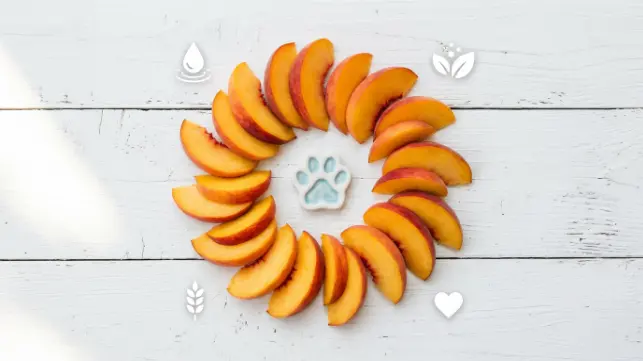
This is the safe part. Fresh peach flesh is rich in fiber, vitamin A, vitamin C, and antioxidants. Serve it in small, bite-sized slices with the pit and stem fully removed. Plain and fresh — nothing added.
Peach Skin
Peach skin is not toxic, but the fuzzy texture can irritate sensitive stomachs. There’s also the issue of pesticide residue on the surface. Wash the peach thoroughly before serving, and if your dog has a sensitive stomach or is a small breed, peeling the skin is the safer choice.
Peach Pit
This is where the real danger lives. Peach pits contain amygdalin, which your dog’s body metabolizes into hydrogen cyanide. Even chewing on a pit is a problem — cracking it open increases toxin exposure. Beyond the chemical risk, pits are also a choking hazard and can cause serious intestinal blockages, especially in smaller dogs.
Never let your dog play with or chew on a peach pit. Treat it the same way you’d treat a grape or a piece of chocolate — something to keep entirely out of reach.
Peach Leaves and Stems
Like the pit, peach leaves and stems also contain amygdalin. This matters most if you have a peach tree in your yard. Fallen peaches, branches, and leaves are all potential hazards. Keep your dog away from peach trees, and pick up fallen fruit before your dog finds it first.
Health Benefits of Peaches for Dogs
When prepared properly, peaches offer a few genuine nutritional benefits. These are treat-sized benefits — not a reason to overdo it — but they’re real.
- Vitamin A supports eye health, immune function, and a healthy skin and coat
- Vitamin C acts as an antioxidant (dogs produce their own, but an extra boost from food doesn’t hurt)
- Dietary fiber supports healthy digestion and regular bowel movements
- Low calories make peaches a better occasional treat than many commercial snack options
- Antioxidants may help support healthy cell function over time
Peaches are a wholesome snack when served right — not a superfood, not a supplement, but a genuinely good treat in the right amounts.
How Much Peach Can a Dog Eat? Serving Size by Weight
This is where most advice falls short. “A few slices” isn’t specific enough, especially if you have a small dog. Use this table as your guide, and remember the 10% rule: treats should never make up more than 10% of your dog’s daily calorie intake.
| Dog Size | Weight | Max Serving |
| Small | Under 20 lbs | 1 small slice |
| Medium | 20–50 lbs | 2–3 slices |
| Large | 50+ lbs | 3–4 slices |
Peaches are not an everyday food for your dog. A few times per week is plenty. The first time you offer peach, start with a single small piece and watch for loose stools, vomiting, or unusual behavior over the next day.
What About Canned, Frozen, and Dried Peaches?
Fresh peach is one thing. Processed peach products are a different story — and this is where many well-meaning owners make mistakes.
Canned Peaches
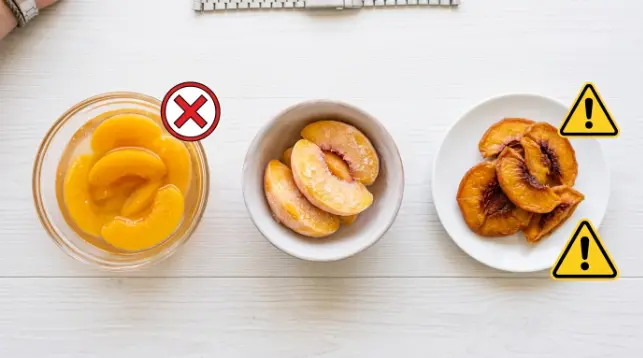
Canned peaches are not safe for dogs. Even varieties labeled “light syrup” contain far more sugar than a dog’s body should handle. The sugar load can cause digestive upset, weight gain, and blood sugar spikes. For dogs with diabetes, canned peaches should be avoided entirely — the risk to blood glucose levels is too significant.
Frozen Peaches
Plain frozen peach slices — no added sugar, no sweeteners — are generally safe and can make a refreshing summer treat. The catch: always check the ingredient list first. Some frozen peach products contain xylitol, an artificial sweetener that is highly toxic to dogs, even in tiny amounts. If you see xylitol on the label, keep it away from your dog entirely.
Dried Peaches
Dried peaches concentrate the natural sugars into a much smaller serving, making them far too sweet for dogs. Many also contain sulfites or other preservatives. Skip dried peaches altogether.
Peach Yogurt, Ice Cream, and Jam
These products are made for human taste buds, not dogs. Most contain added sugar, artificial flavors, and often xylitol. Peach-flavored yogurt, ice cream, and jam are all off the menu for your dog.
My Dog Ate a Peach Pit — What Do I Do Right Now?
🚨 Emergency Contact: ASPCA Animal Poison Control Center — (888) 426-4435
Call your vet or this number immediately if your dog has swallowed a peach pit.
Stay calm, but act quickly. Here’s what to do:
Step 1: Assess the situation
Did your dog swallow the pit whole, or did they chew it?
- Swallowed whole → Primary risk is intestinal blockage, especially in small or medium breeds
- Chewed and cracked → Higher cyanide exposure risk from amygdalin release
Step 2: Watch for symptoms
Symptoms of cyanide poisoning include:
- Dilated pupils
- Difficulty breathing
- Excessive drooling
- Vomiting
- Lethargy or weakness
- Seizures
Symptoms of intestinal blockage include:
- Vomiting
- Loss of appetite
- Bloating or swollen abdomen
- Straining to defecate
- Pain when the belly is touched
Step 3: Call for help
Contact your vet or the ASPCA Animal Poison Control Center at (888) 426-4435. Do not wait for symptoms to appear before calling — early intervention matters.
Step 4: Do NOT induce vomiting
Unless your vet explicitly tells you to, do not try to make your dog vomit. It can make certain situations worse.
How to Safely Prepare Peaches for Your Dog
Once you know what to avoid, preparing peach for your dog is simple. Follow these steps every time:
- Choose a ripe, fresh peach — not overripe, bruised, or moldy
- Wash it thoroughly to remove pesticide residue from the skin
- Remove the pit completely — check for fragments, especially near the center
- Peel the skin if your dog has a sensitive stomach or is a small breed
- Cut into small, bite-sized pieces appropriate for your dog’s size
- Serve plain — no sugar, syrup, seasoning, or toppings of any kind
- First time? Offer just one small piece and observe your dog for 24 hours
That’s it. Fresh, plain, pit-free peach flesh is a treat your dog can enjoy safely.
Puppies, Senior Dogs, and Diabetic Dogs
Generic advice doesn’t always fit every dog. Here’s what you need to know if your dog falls into one of these groups.
Can Puppies Eat Peaches?
Puppies have more sensitive digestive systems than adult dogs. Peaches aren’t a necessary part of a puppy’s diet, and the natural sugars can be harder for young stomachs to process. If you do offer a tiny piece, introduce it very slowly and monitor closely. When in doubt, wait until your puppy is fully grown.
Can Senior Dogs Eat Peaches?
Older dogs may have slower digestion or underlying health conditions that make new foods harder to tolerate. Before adding peaches to a senior dog’s diet, check with your vet — especially if your dog is on medication or managing a health condition. A small amount may be fine, but it’s worth asking first.
Can Diabetic Dogs Eat Peaches?
The natural sugar in peaches can cause blood glucose spikes in diabetic dogs. Unless your vet has specifically cleared it, peaches are best avoided for dogs managing diabetes. Safer low-sugar alternatives include cucumber slices or blueberries, which offer nutritional value without the sugar load.
FAQ — Your Peach Questions, Answered
Can dogs eat peach skin?
Peach skin is not toxic, but the fuzzy texture can cause digestive irritation in some dogs. There’s also pesticide residue to consider. Wash the peach well before serving, and peel the skin for dogs with sensitive stomachs or small breeds.
Can dogs eat white or yellow peaches?
Both white and yellow peaches are safe for dogs in the same way — the flesh of either variety is non-toxic when the pit, skin, and stem are properly removed. The nutritional profile is similar between the two.
Are peach leaves toxic to dogs?
Yes. Peach leaves contain amygdalin, the same compound found in the pit that breaks down into hydrogen cyanide. If you have a peach tree in your yard, keep your dog away from the leaves, stems, and fallen fruit.
Can dogs eat peaches every day?
No. Peaches are a treat, not a daily staple. The natural sugar content can cause digestive upset or weight gain with regular feeding. A few times per week, in appropriate portions, is a reasonable limit.
Can dogs be allergic to peaches?
It’s uncommon, but possible. Signs of a food reaction include itching, hives, swelling, or digestive upset after eating. If your dog shows any of these after trying peach for the first time, stop offering it and check in with your vet.
Can peaches cause diarrhea in dogs?
Yes, especially if your dog eats too much. The fiber and natural sugar in peaches can loosen stools if the serving size is too large. Start with a small piece, and if soft stools appear, reduce the amount next time.
What fruits are safe for dogs besides peaches?
Many fruits are safe for dogs in moderation, including blueberries, watermelon (seedless, no rind), apples (no seeds or core), and bananas. Always research individual fruits before sharing, as some — like grapes and cherries — are toxic to dogs.
Can dogs eat peach yogurt or peach ice cream?
No. Most peach-flavored yogurts and ice creams contain added sugar, artificial flavors, and sometimes xylitol — a sweetener that is extremely toxic to dogs. These products are not safe for your dog, even in small amounts.
Peaches and Your Pup — The Simple Version
Fresh peach flesh, prepared properly, is a wholesome treat your dog can enjoy with your confidence. Remove the pit, wash the skin, cut it into small pieces, and keep the serving size appropriate for your dog’s weight. That’s all it takes.
The pit is the line you never cross. It’s a choking hazard, a blockage risk, and a source of real toxicity. If your dog gets into a peach pit, call your vet or the ASPCA Poison Control Center at (888) 426-4435 right away — don’t wait.
Canned, dried, and flavored peach products belong on your plate, not your dog’s. Stick to fresh, plain, and simple — and peaches become exactly what they should be: a sweet little summer treat your dog will love.
For more trusted guidance on what your dog can and can’t eat, explore our safe fruits for dogs guide and our complete list of foods toxic to dogs. And whenever a new food leaves you uncertain, your vet is always the best resource — because your dog deserves answers you can count on.